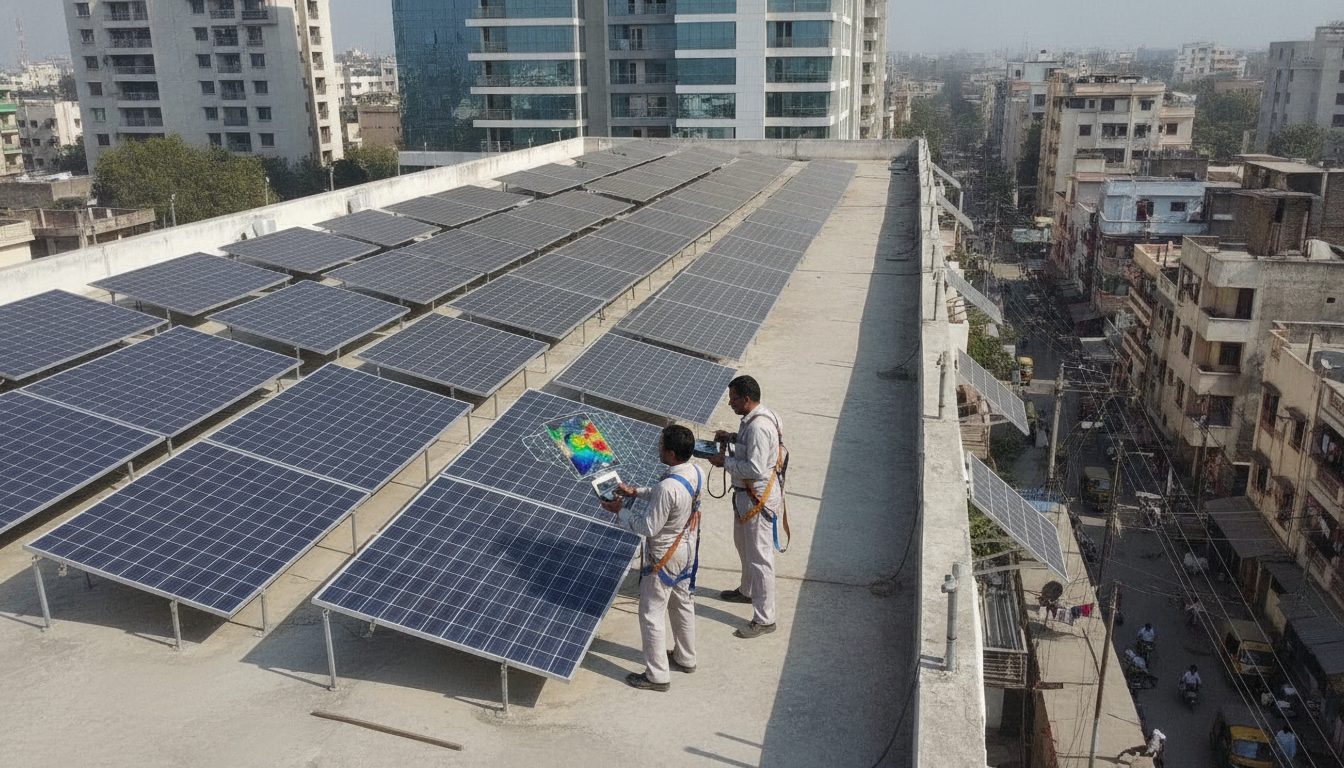
Understanding Obstructions and Solar Generation Loss
Carrying out a proper solar shadow analysis generation loss check before installation protects your long-term financial returns. Adjacent building expansions and tree growth frequently create partial shading issues that severely impact string inverter performance. When even one panel in a string falls into shadow, the current of the entire string drops to match the shaded module.
Property owners planning a new installation should first check their available space using a solar roof area calculator to understand how physical boundaries affect panel placement. Spotting future obstacles early prevents costly relocations later.
To check the numbers for your own home, try the solar calculator — enter your electricity bill and get system size, subsidy and payback in seconds.
Tools Used for Site Assessment and Shadow Mapping
Accurate site assessments require specific physical and digital instruments. Installers rely on solar pathfinders to trace the horizon and map out annual shade patterns. Smartphone sun-tracker apps also help visualize the sun path during different months of the year.
Mapping out seasonal changes ensures that high-rises or growing trees do not block peak sunlight hours. This physical check forms the baseline for all subsequent design choices.
Mitigation Technologies for Shaded Roofs
When surrounding high-rises cast unavoidable morning or evening shadows, standard string setups alone fall short. Optimizer technologies and microinverters allow individual panels to operate independently. If one module is shaded by a nearby structure, the remaining panels continue producing at maximum capacity.
Evaluating these hardware additions early prevents long-term return on investment shortfalls. Homeowners can plan their overall budget by running an initial check on the main solar system cost, savings, and subsidy calculator to balance equipment expenses against projected generation.
🌟 Ready to Go Solar? Get 3 Free Quotes
Connect with verified, MNRE-empanelled solar installers near you — free, no obligation.
Get Free Solar Quotes →