Understanding Group Net Metering for Cooperative Housing Societies
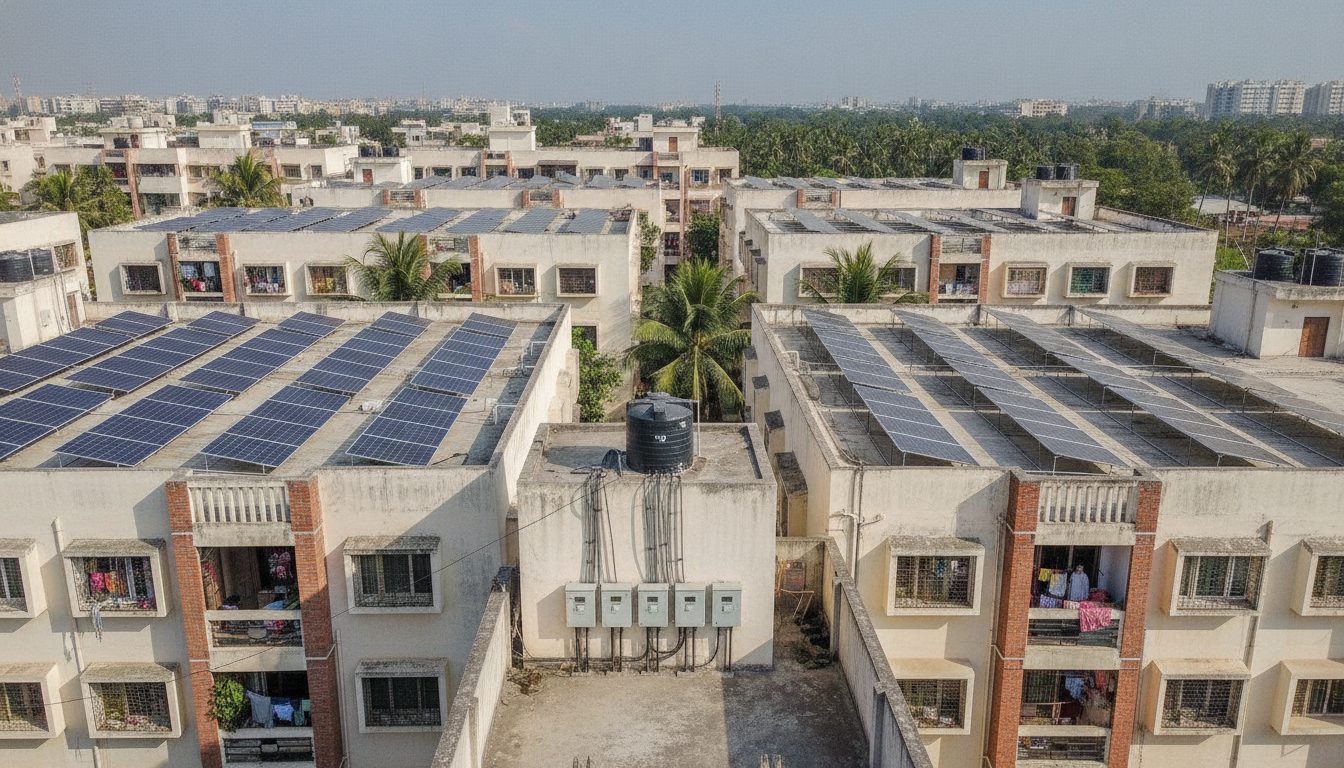
Adopting housing society rooftop solar group net metering India regulations enables apartment complexes to share clean energy benefits across the entire residential community. Group net metering allows cooperative housing societies (CHSs) to offset common area loads like elevators, water pumps, and corridor lighting using a single large rooftop solar plant.
Instead of installing individual panels for every flat, the society sets up a central generation system on the roof. State electricity boards then credit the generated units against the registered common utility meters. To plan the physical layout of your panels accurately, you can review your available space using a solar roof area calculator before speaking with your local distribution company.
Managing Common Area Loads and Billing Processes
Apartment buildings consume significant electricity to run essential daily amenities. Common area billing processes aggregate these utility meters under the group net metering arrangement so that excess solar generation offsets the daytime consumption of lifts, deep tube wells, and security gate lighting.
The common billing process calculates total generation from the central rooftop system against total consumption registered on the society utility accounts. If generation exceeds consumption during billing cycles, state regulations dictate how the surplus is handled. You can analyze your consumption patterns and potential tariff reductions by utilizing the solar bill simulator to understand your society utility bills better.
State Regulations, Banking Charges, and Financial Savings Split
State electricity boards have varying regulations regarding virtual net metering and banking charges for housing society installations. Some states permit excess solar units to be carried forward or compensated at specific rates, while others levy distinct banking fees or grid connectivity charges for stored energy.
The financial savings split for apartment residents depends on how the cooperative housing society committee decides to distribute the monetary benefits. Savings from reduced common area electricity bills typically reduce the monthly maintenance charges collected from each resident, ensuring that the financial returns from the rooftop solar investment are shared fairly across the entire community.
🌟 Ready to Go Solar? Get 3 Free Quotes
Connect with verified, MNRE-empanelled solar installers near you — free, no obligation.
Get Free Solar Quotes →