Upfront Price Versus Long-Term Value
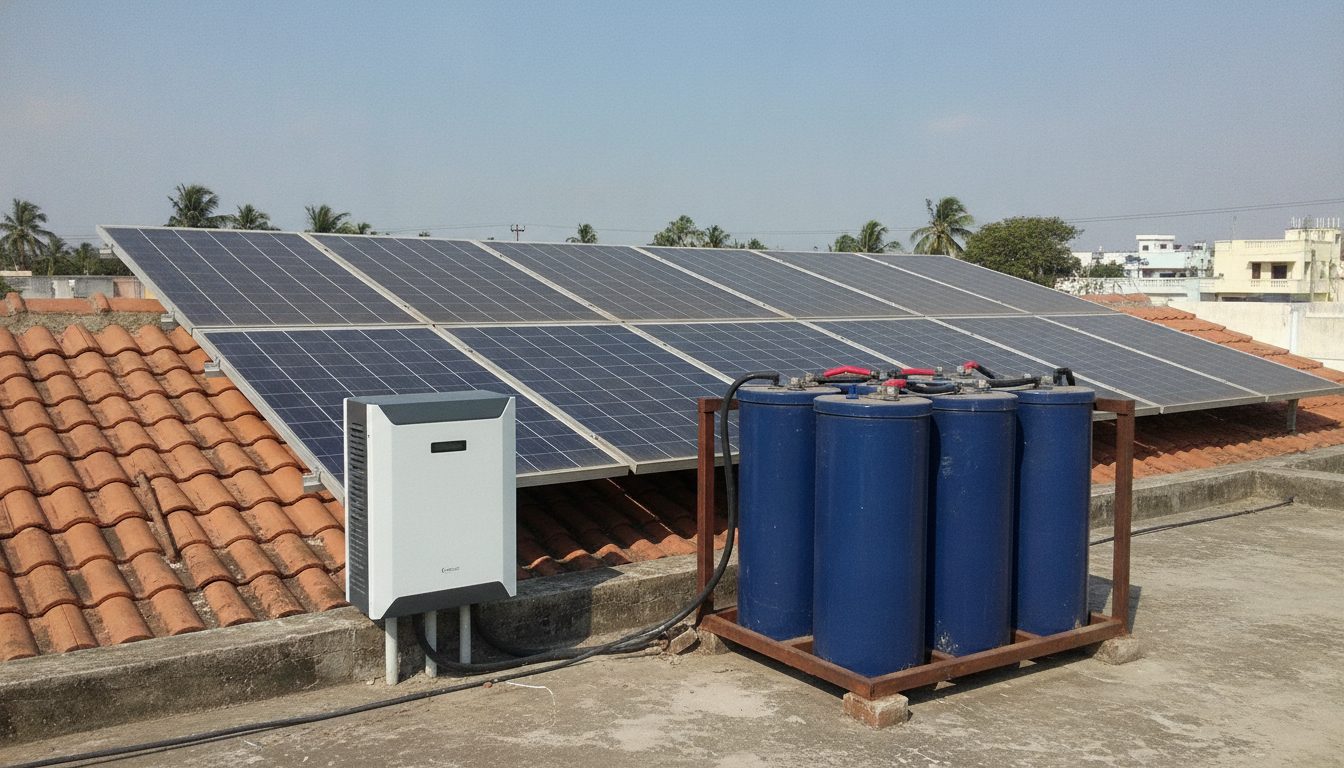
When homeowners evaluate the lithium ion vs tubular battery for home solar India debate, the initial purchase price is usually the first factor examined. Tubular lead-acid batteries require a lower upfront capital outlay, making them attractive for tighter installation budgets. However, examining only the initial expense leads to miscalculated long-term costs over a 10-year horizon. Because lead-acid models degrade faster, replacement expenses typically occur multiple times within a decade. Homeowners looking to understand how battery choice impacts total expenses can run figures through the solar system cost and savings calculator to plan their initial layout.
Want to see what this means for your roof? Use our free solar calculator for India to estimate system size, cost after the ₹78,000 subsidy and payback period.
Lifespan and Cycle Count Differences
Battery longevity depends directly on how many charge and discharge cycles a chemistry can handle before capacity drops significantly. Tubular lead-acid options generally deliver around 1,500 cycles under standard operating conditions. In contrast, Lithium Iron Phosphate (LiFePO4) units provide 4,000 to 6,000 cycles. This large difference means a lithium setup often outlasts the typical replacement cycle of lead-acid alternatives by many years, reducing frequent replacement headaches and disposal logistics for residential properties.
Depth of Discharge and Round-Trip Efficiency
Performance metrics dictate how much stored electricity is actually usable in daily operation. Depth of Discharge (DoD) defines how far a battery can be drained without causing permanent damage. Lead-acid variants usually restrict DoD to about 50 percent to protect plate health, while lithium options routinely support much higher discharge levels safely. Furthermore, round-trip efficiency is superior in lithium systems, meaning less energy is lost as heat during the charging and discharging process. This translates to higher usable backup power from the same amount of solar generation.
Physical Footprint and Space Requirements
Residential setups often face severe space constraints, particularly in urban apartments or compact independent houses. Tubular lead-acid systems require bulky setups with adequate ventilation due to gassing during charging, along with dedicated floor space for multiple units. Lithium batteries are much more compact and lightweight, often wall-mounted or stored in sleek rack enclosures. Homeowners planning their installation layout should verify available space before finalizing equipment choices.
🌟 Ready to Go Solar? Get 3 Free Quotes
Connect with verified, MNRE-empanelled solar installers near you — free, no obligation.
Get Free Solar Quotes →