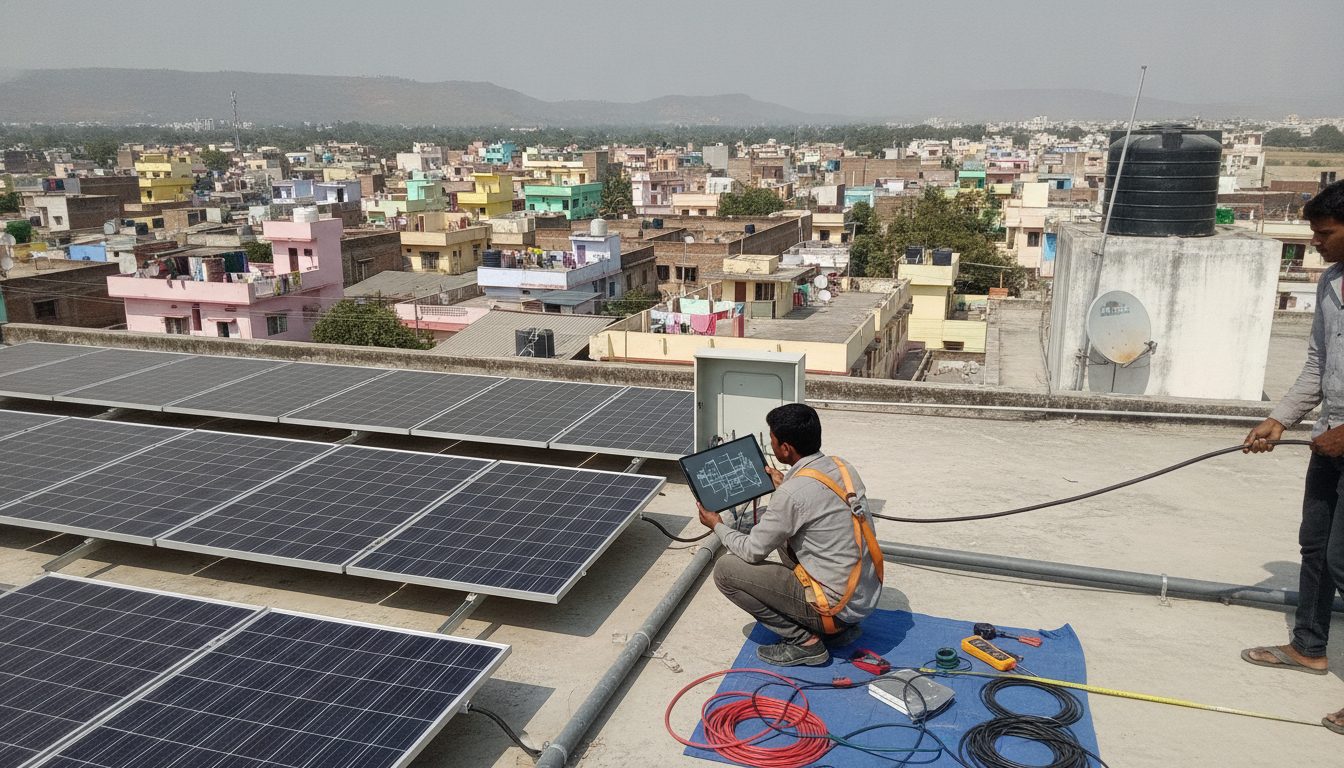
Understanding DC Cable Standards and Voltage Limits
Proper rooftop solar installation requires limiting total voltage drop below 1 percent between the photovoltaic array and the inverter to ensure optimal conversion efficiency. When planning your system layout, you can check your overall layout requirements using a solar roof area calculator alongside your electrical blueprints. Compliance with International Electrotechnical Commission (IEC) and Bureau of Indian Standards (BIS) specifications ensures that your direct current cables handle thermal and electrical stress safely over decades of operation.
Voltage drop directly reduces the power reaching your inverter. A higher drop means wasted generation capacity. Electrical designers calculate the exact cross-sectional area in square millimeters based on the maximum circuit current, the one-way cable length, and the conductivity of the chosen conductor material.
To check the numbers for your own home, try the solar calculator — enter your electricity bill and get system size, subsidy and payback in seconds.
Technical Steps for Sizing Copper and Aluminum Solar DC Cables
Begin the sizing process by determining the maximum continuous current from your solar string configuration. Next, select either copper or aluminum conductors based on your project budget and installation constraints. Copper offers higher conductivity and flexibility for tight residential spaces, while aluminum provides a lighter, cost-effective alternative for larger runs.
Apply the applicable voltage drop formula using the current, length, and conductor resistivity. Once you obtain a baseline cross-section, verify that the selected cable size meets or exceeds the current-carrying capacity requirements under standard test conditions specified by BIS guidelines.
Factoring in Temperature and Conduit Grouping Corrections
Ambient temperature significantly impacts current-carrying capacity. Rooftop environments often experience high heat, which increases cable resistance and degrades insulation performance. You must multiply the base ampacity by temperature correction coefficients corresponding to local climatic conditions.
Conduit grouping factors must also be applied when multiple cables run inside the same protective pipe or cable tray. Bundling cables together reduces heat dissipation. Applying these derating factors prevents premature insulation breakdown and maintains safety margins mandated by regulatory standards.
🌟 Ready to Go Solar? Get 3 Free Quotes
Connect with verified, MNRE-empanelled solar installers near you — free, no obligation.
Get Free Solar Quotes →