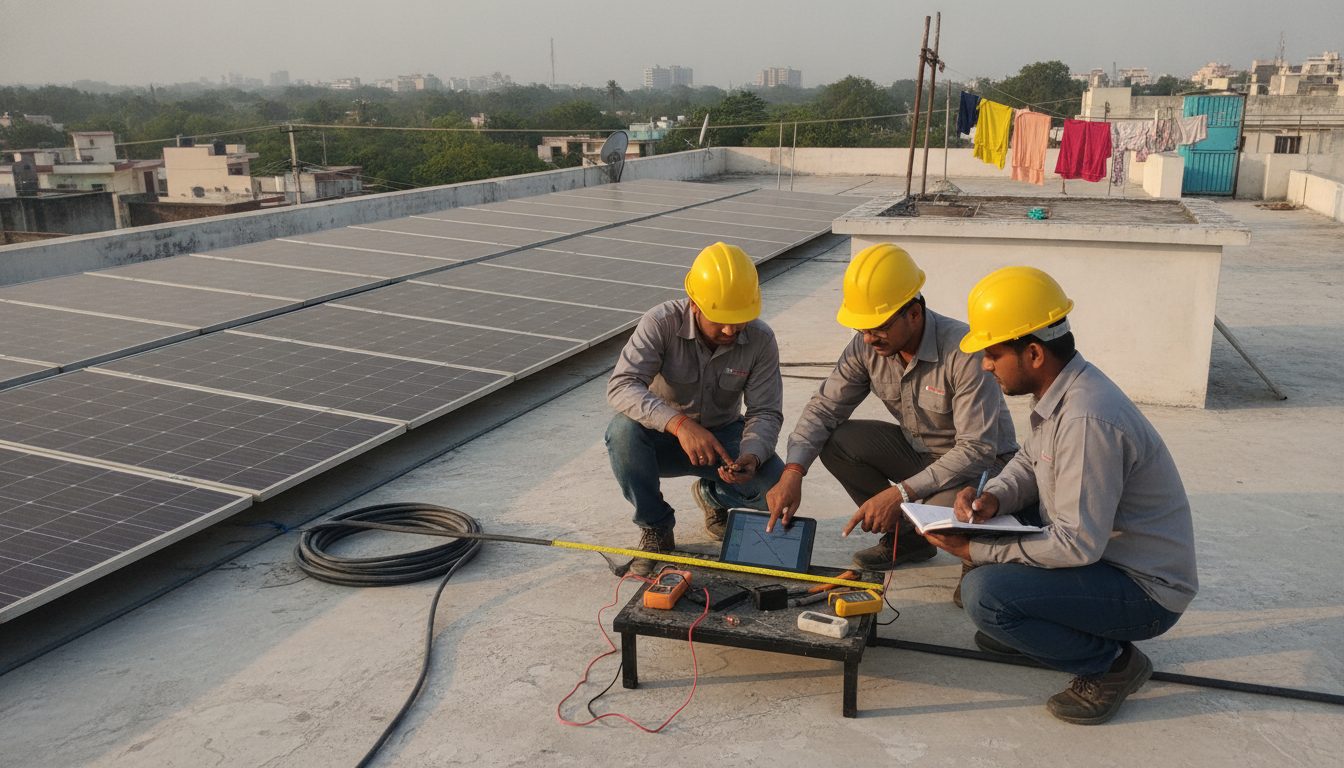
Understanding DC Cable Sizing and Voltage Drop Limits
Limiting voltage drops below 2% prevents system inefficiency and reduces fire hazards in Indian rooftop solar installations. Using a solar dc cable sizing voltage drop calculator helps installation engineers and technicians select the proper copper and aluminum cable gauges for photovoltaic arrays.
Installers must account for current carrying capacity, ambient temperature derating factors, and total circuit length. Proper sizing directly impacts the overall energy yield before power reaches the inverter. Before finalizing structural layouts, check your available space using the solar roof area calculator to ensure accurate wire run estimates.
Not sure what size you need? Our free solar calculator works out system size, cost after subsidy and payback from your monthly electricity bill.
Core Formulae for Cable Gauge Selection
Calculating the correct conductor cross-section requires specific electrical inputs, including maximum operating current, circuit length, and system voltage. Engineers apply standard resistance formulas for copper and aluminum conductors to determine the minimum safe cross-sectional area.
The calculation must factor in both positive and negative DC runs from the solar array to the junction box or inverter. Keeping resistance minimal ensures that thermal heating remains within safe operating limits under peak solar irradiance.
Compliance with CEA Safety Regulations
The Central Electricity Authority (CEA) sets strict technical standards for grid-connected rooftop solar photovoltaic systems in India. Compliance requires proper insulation ratings, UV-resistant sheathing for outdoor DC runs, and secure mechanical termination practices.
Adhering to these safety norms prevents electrical faults, short circuits, and premature degradation of wiring infrastructure. Proper cable management protects the physical asset and ensures approval during mandatory electrical inspectorate audits.
🌟 Ready to Go Solar? Get 3 Free Quotes
Connect with verified, MNRE-empanelled solar installers near you — free, no obligation.
Get Free Solar Quotes →