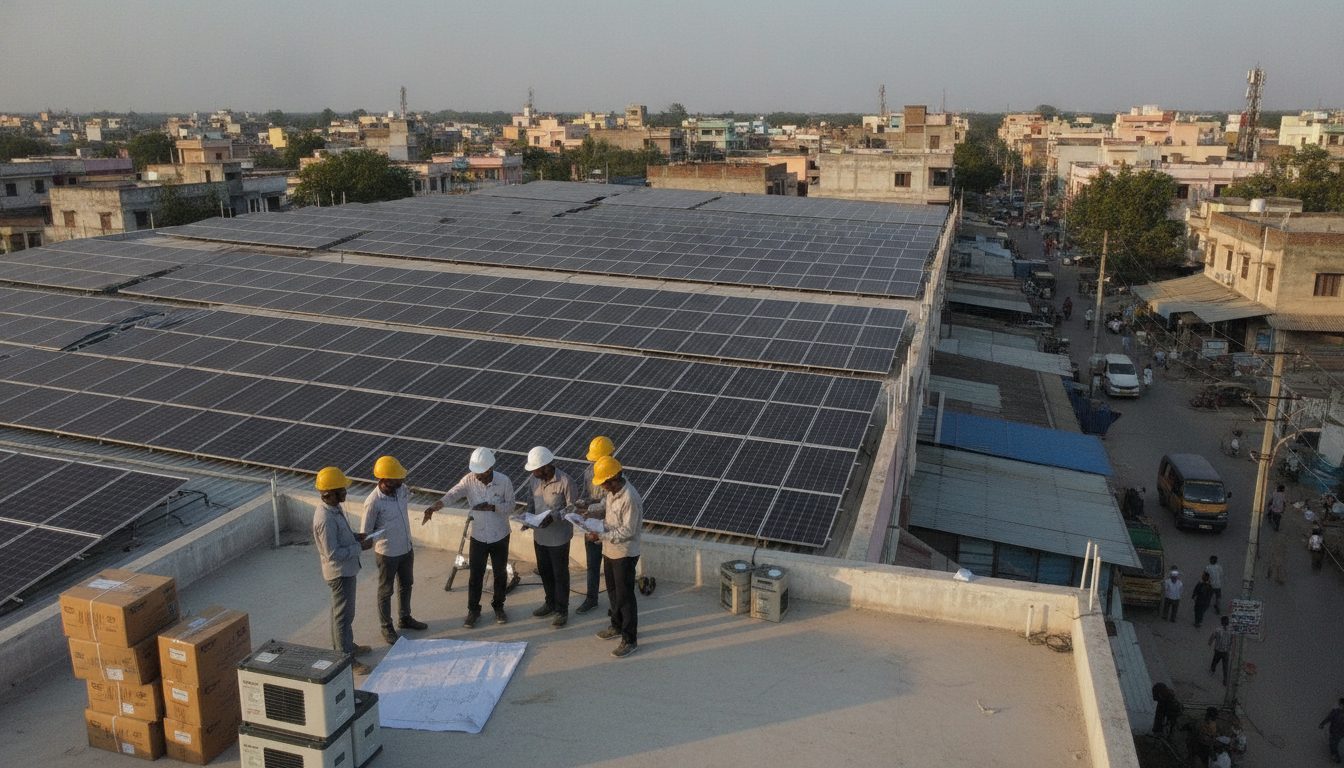
Managing Tier-1 Manufacturer Relationships and Procurement
Optimizing solar module distributor procurement india requires direct alignment with Tier-1 manufacturers to secure reliable supply lines and stable pricing. Dealers must negotiate supply agreements that include clear clauses for volume rebates, delivery schedules, and quality benchmarks. Maintaining strong factory relationships helps secure priority allocation during market crunches, reducing lead times for residential installations.
Before finalizing bulk orders, homeowners and contractors often evaluate physical constraints using a solar roof area calculator to determine precise module counts. Aligning your procurement volume with actual site requirements prevents excess inventory buildup and preserves working capital.
To check the numbers for your own home, try the solar calculator — enter your electricity bill and get system size, subsidy and payback in seconds.
Hedging Against Polysilicon and Freight Price Volatility
Raw material fluctuations in polysilicon production and unpredictable ocean freight rates directly impact wholesale equipment costs. Dealers can protect profit margins by utilizing forward-buying contracts and locking in material prices ahead of peak installation seasons. Diversifying supplier portfolios across multiple Tier-1 brands prevents operational bottlenecks when regional supply chains face sudden disruptions.
Predictable equipment costs allow dealers to provide accurate pricing to buyers, especially when customers use a solar system cost, savings, and subsidy calculator to plan their initial capital expenditure and long-term financial returns.
Executing Back-to-Back RMA and Warranty Claims
Defective string inverters and PV modules create immediate customer dissatisfaction and tie up dealer capital if warranty replacements stall. Establishing back-to-back RMA agreements ensures that every warranty claim honored by the dealer for an end-user is fully covered by the original Tier-1 manufacturer. Clear documentation protocols, including serial number tracking, photographic evidence of failure, and standardized testing logs, speed up manufacturer approvals.
- Document exact error codes and fault logs for string inverters before dismantling units.
- Maintain photographic records of module junction box damage or glass breakage upon initial delivery.
- Use manufacturer portals for automated RMA tracking to minimize manual follow-up delays.
Protecting Operational Cash Flows in Equipment Distribution
Delayed warranty replacements and tied-up inventory directly strain the working capital of solar distribution businesses. Structuring credit terms and holding buffer stock for high-failure components helps maintain service level agreements with installers. Clear internal tracking of defective inventory ensures that replacement units arrive from manufacturers before client dissatisfaction impacts repeat business.
Managing cash flow efficiently allows dealers to offer reliable support and structured hardware delivery without absorbing the financial penalties of unexpected equipment failures.
🌟 Ready to Go Solar? Get 3 Free Quotes
Connect with verified, MNRE-empanelled solar installers near you — free, no obligation.
Get Free Solar Quotes →