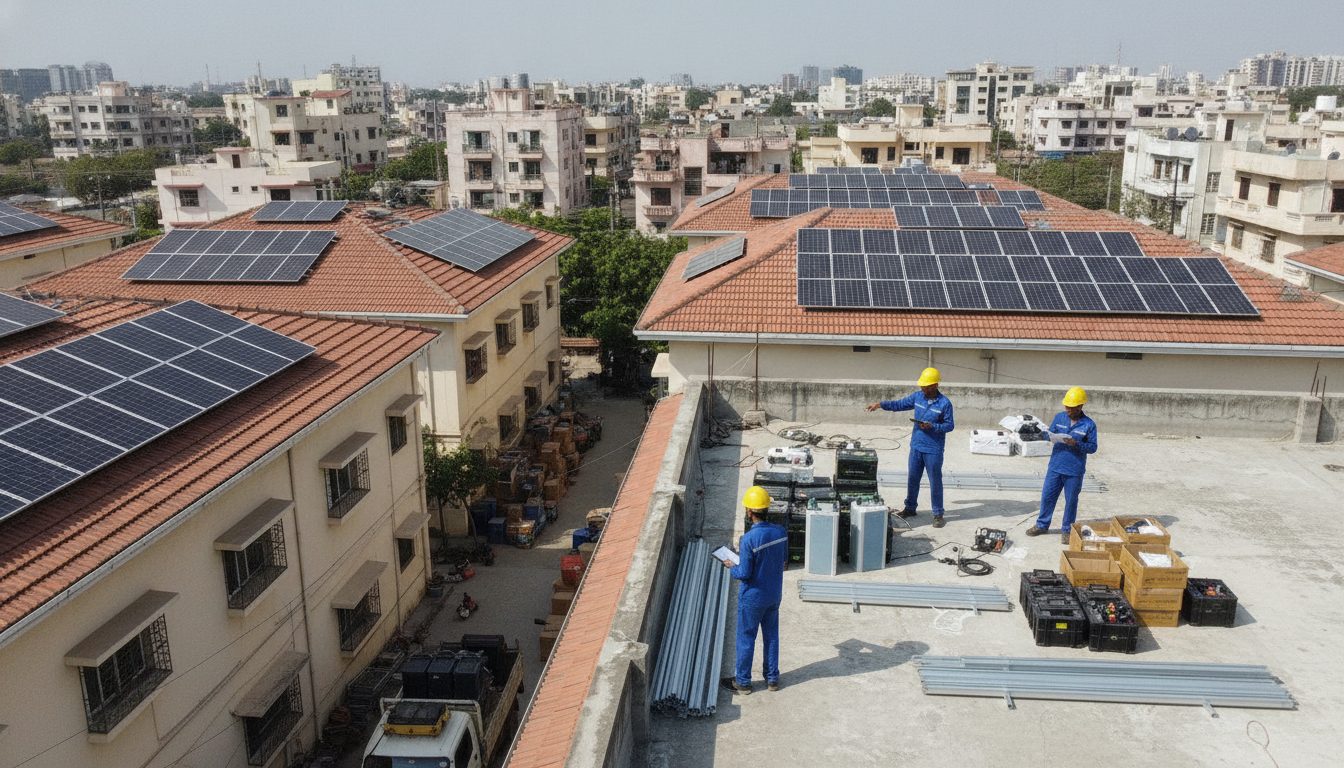
The Working Capital Challenge in Solar EPCs
Solar EPC companies frequently face severe cash flow crunches. These financial strains typically stem from delayed milestone payments combined with heavily blocked capital in modules and mounting structures. When funds remain locked up in physical inventory sitting at various project sites, daily operations stall. Homeowners evaluating residential projects often use a solar system cost and savings calculator to understand upfront expenses, but engineering firms must manage far more complex supply chains behind the scenes.
Without clear visibility into material flow, procurement teams tend to over-order components to prevent project delays. This practice ties up valuable liquidity that could otherwise support business expansion. Managing cash conversion cycles requires precise tracking of material intake, storage duration, and final installation milestones.
Tracking Inventory Turns with Specialized Software
Implementing solar epc inventory management software allows growing firms to replace manual spreadsheets with automated stock tracking. Solar ERP systems monitor inventory turns in real time, showing exactly how fast modules, inverters, and balance-of-system components move from warehouse shelves to client rooftops.
Accurate digital tracking prevents stockouts while highlighting slow-moving inventory items. Operations managers can view precise stock aging reports. This data-driven visibility ensures that capital is not wasted on excess hardware that sits idle for months.
Optimizing Procurement Cycles and Buffer Stock
Establishing strict buffer stock thresholds protects installation timelines against unexpected supply chain disruptions. Procurement teams must balance holding costs against the risk of project site delays caused by missing equipment. By analyzing historical project completion rates, companies can set dynamic reorder points that align directly with actual demand.
Coordinating procurement cycles with realistic installation schedules prevents warehouses from overflowing with surplus components. When inventory arrives precisely when installation crews need it, storage costs drop and site efficiency improves.
Negotiating Credit Terms with Tier-1 Manufacturers
Securing favorable payment terms with Tier-1 module and inverter manufacturers directly relieves working capital pressure. Growing EPC firms can leverage consistent purchase volumes to negotiate extended credit periods, such as moving from advance payments to milestone-based vendor financing.
Strong inventory data enables procurement managers to provide reliable demand forecasts to suppliers. Manufacturers often grant better credit lines to stable partners who share transparent, software-backed demand projections rather than speculative estimates.
🌟 Ready to Go Solar? Get 3 Free Quotes
Connect with verified, MNRE-empanelled solar installers near you — free, no obligation.
Get Free Solar Quotes →