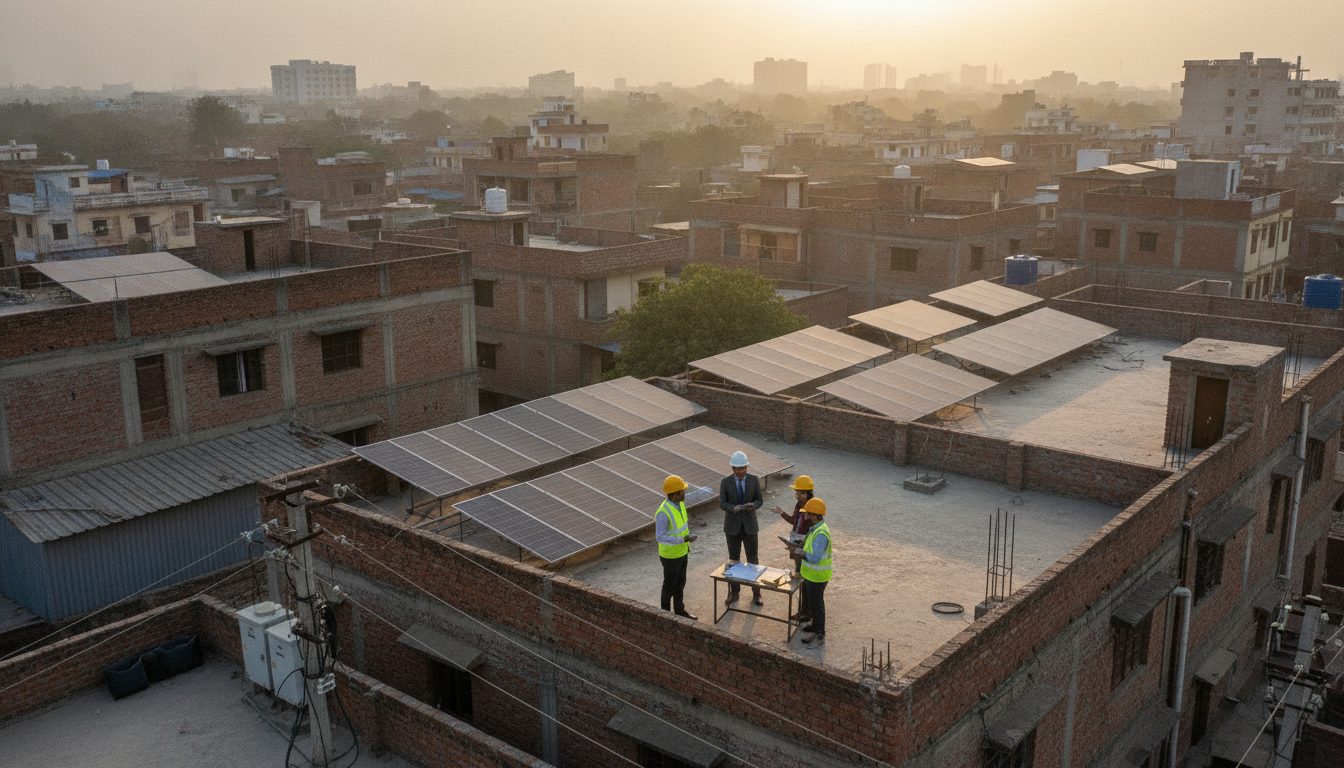
Understanding Cash Flow Bottlenecks for Solar EPCs
Cash flow crunches are the primary bottleneck for growing solar installation businesses buying bulk Balance of System components. When executing multiple rooftop or commercial projects simultaneously, working capital gets locked into inventory, advanced deposits for modules, and delayed client receivables. This leaves businesses short of liquidity for daily operations. Before taking on new projects, business owners often evaluate financial feasibility using a solar financing and loan EMI calculator to map out capital requirements against expected client disbursement cycles.
Want to see what this means for your roof? Use our free solar calculator for India to estimate system size, cost after the ₹78,000 subsidy and payback period.
Collateral-Free Government Schemes for MSMEs
Securing traditional bank loans often requires heavy physical collateral. For registered micro, small, and medium enterprises, government interventions reduce this hurdle. The CGTMSE scheme provides collateral-free credit guarantees to member lending institutions, enabling eligible solar EPC firms to access term loans and working capital lines without pledging property. This framework helps growing firms secure credit lines for purchasing inverters, mounting structures, and wiring supplies needed for execution.
Channel Financing Options with Tier-1 Banks
Managing supplier payments while waiting for end-consumer payouts requires structured credit products. Channel financing allows an EPC to bridge the gap between material delivery from manufacturers and final project commissioning. Tier-1 banks partner with approved equipment vendors to offer discounted short-term credit lines. This arrangement secures the raw materials needed for ongoing installations while extending the repayment window to match project milestone receipts.
Minimizing the Cash Conversion Cycle
Optimizing operations requires reducing the time cash stays trapped in inventory and receivables. EPCs can minimize their cash conversion cycle by negotiating structured advance payments from clients, standardizing procurement schedules for bulk Balance of System components, and maintaining lean warehouse stock. Tracking these financial metrics prevents sudden liquidity shortages during peak installation seasons.
🌟 Ready to Go Solar? Get 3 Free Quotes
Connect with verified, MNRE-empanelled solar installers near you — free, no obligation.
Get Free Solar Quotes →