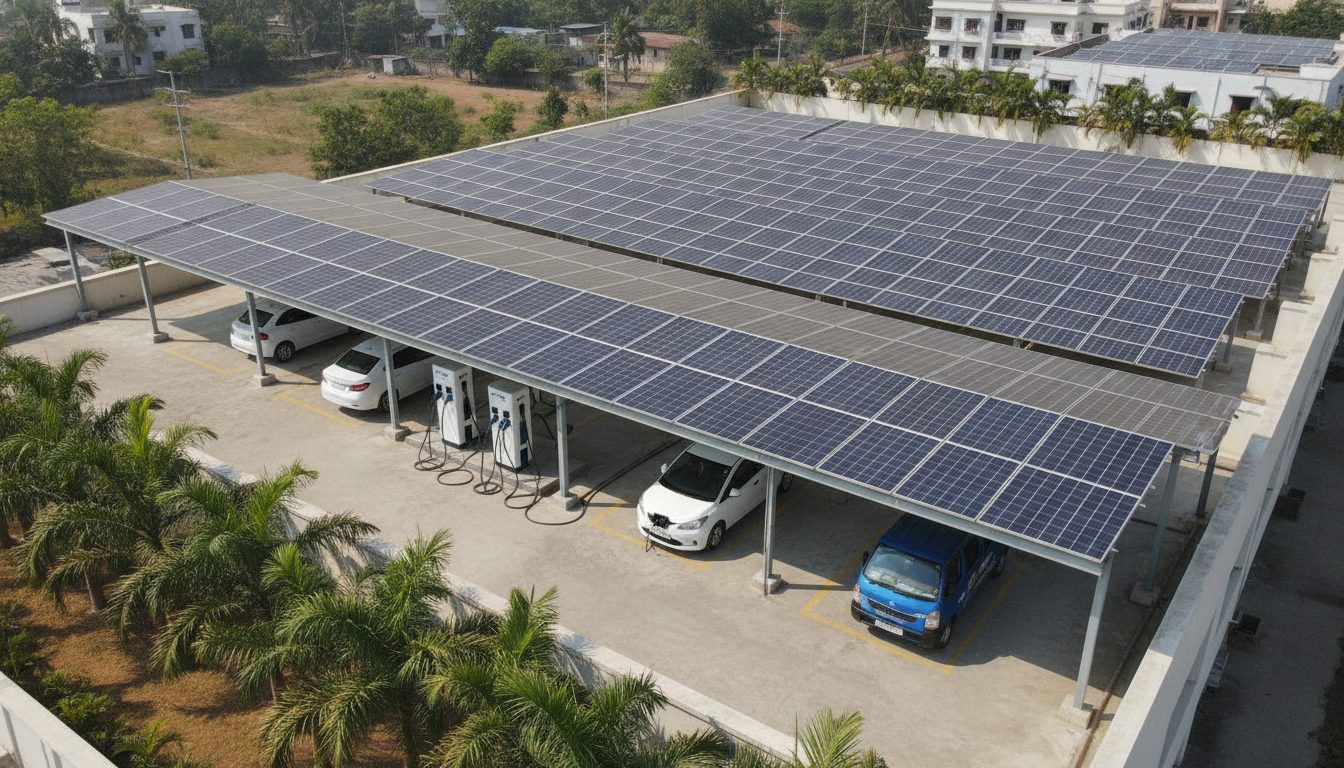
The Business Case for Commercial Solar EV Charging Integration
Combining rooftop solar plants with DC fast chargers lets commercial properties offset peak demand charges from the grid and monetize daytime energy generation. As electric vehicle adoption grows across India, commercial parking lots, retail hubs, and office complexes face rising electricity loads. Drawing power exclusively from the grid during peak hours drives up commercial tariff costs. Pairing solar arrays directly with charging infrastructure addresses this challenge by utilizing self-generated power during high-tariff daytime slots.
Property owners evaluating financial viability can use the solar ROI and payback period calculator to estimate long-term returns. Daytime solar generation aligns closely with commercial operating hours and high EV charging demand, creating a balanced energy profile that reduces reliance on utility power.
To check the numbers for your own home, try the solar calculator — enter your electricity bill and get system size, subsidy and payback in seconds.
Technical Insights on Load Balancing and Infrastructure
Managing power flows between a solar array, a battery bank, the grid, and DC fast chargers requires careful load balancing. EV charging stations demand high power spikes that can destabilize local distribution networks if not managed properly. Integrating smart energy management systems helps prioritize power sources dynamically. When solar generation is high, the system directs energy straight to the chargers or stores excess capacity for later use.
Commercial sites must also account for grid synchronization and sanctioned load limits set by state electricity boards. Proper sizing of inverters and bidirectional charging considerations allow facilities to feed surplus energy back into the grid or power site loads during grid outages. To determine the correct physical space needed for the generation plant, check the roof area required for solar panels calculator before finalizing system capacity.
Commercial Tariff Structures and Demand Charges in Major Indian States
Commercial tariff structures across major Indian states heavily penalize high peak-hour consumption through demand charges and time-of-day tariffs. States with high commercial power rates make solar integration particularly attractive. Industrial and commercial consumers face fixed charges based on maximum demand alongside energy consumption fees.
By utilizing stored or live solar power during peak tariff windows, businesses lower their maximum demand recorded by utility meters. This direct reduction in billing components accelerates the payback period of both the solar installation and the EV charging hardware.
🌟 Ready to Go Solar? Get 3 Free Quotes
Connect with verified, MNRE-empanelled solar installers near you — free, no obligation.
Get Free Solar Quotes →