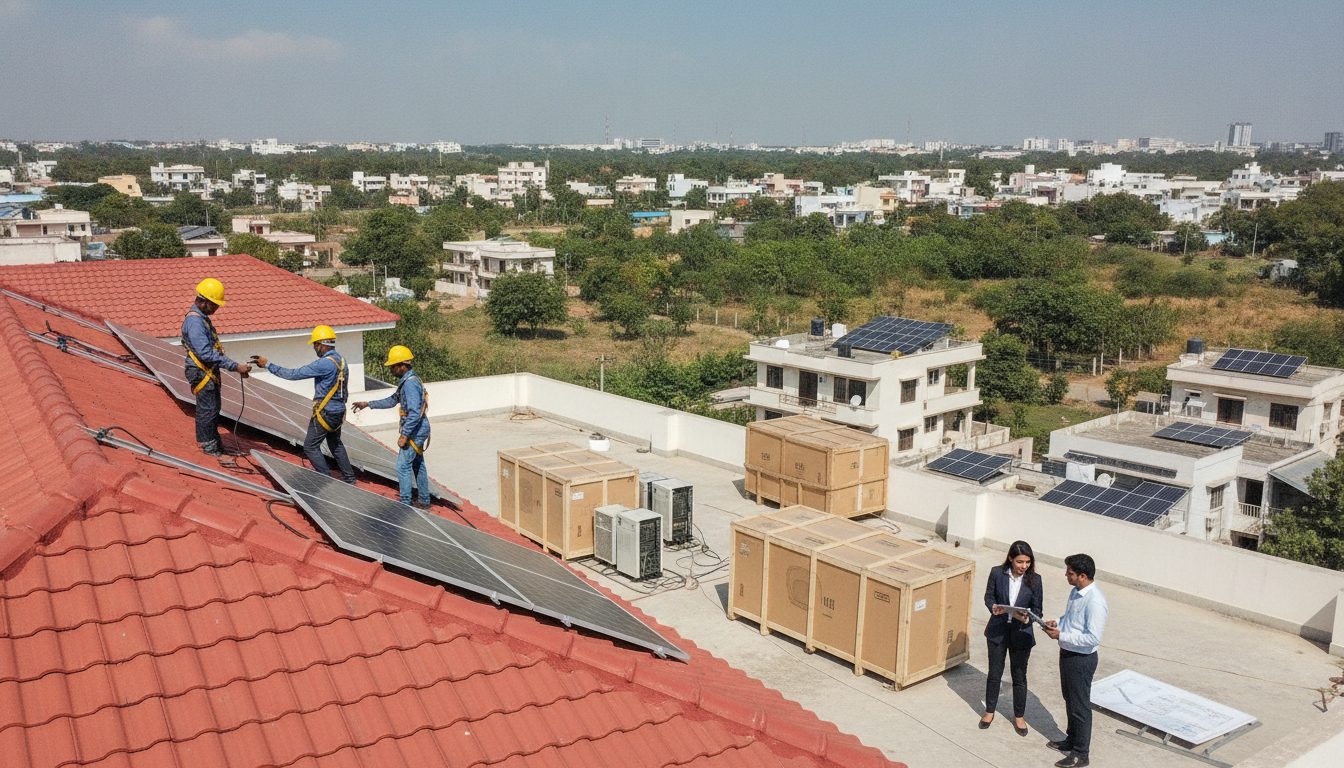
Understanding the 12% and 18% GST Split on Solar Components and Services
Navigating solar installation GST rates India requires separating the tax treatment of manufactured goods from professional engineering and construction services. Under current Indian tax laws, renewable energy equipment such as photovoltaic modules attracts 12 percent GST (HSN 8541 40 11) — this was raised from an earlier 5 percent rate effective 2022, so quotes or invoices still citing 5% reflect outdated information. Installation labor and civil works are also typically taxed at 12 percent. The main exceptions are lithium batteries, mounting structures (GI/aluminium), and comprehensive annual maintenance contracts, which fall under the 18 percent slab.
EPC firms and B2B vendors must separate these supply components clearly on customer invoices, since panels/inverters/installation and batteries/structures sit in different tax slabs. Mixing goods and services into a single lump-sum rate without a breakdown creates compliance risks during tax audits. Before finalizing project estimates, vendors often evaluate system sizing and material requirements using a solar system cost and savings calculator to ensure accurate tax calculations per line item.
Want to see what this means for your roof? Use our free solar calculator for India to estimate system size, cost after the ₹78,000 subsidy and payback period.
Claiming Input Tax Credit (ITC) Correctly for EPC Firms
Registered businesses handling commercial or residential solar projects are eligible to claim Input Tax Credit on purchases used strictly for business operations. To claim ITC successfully, vendor invoices must match details uploaded by suppliers in the Goods and Services Tax network portal. Discrepancies between purchase registers and outward tax liabilities delay refunds and invite departmental notices.
Managing cash flow efficiently requires tracking tax paid on raw materials, inverters, mounting structures, and wiring. Businesses frequently model their operational cash flows and equipment expenses alongside a solar loan and EMI calculator to maintain healthy working capital while waiting for tax credits to process.
Managing Inverted Duty Structure Pitfalls
An inverted duty structure occurs when the tax rate paid on inward supplies of inputs exceeds the tax rate collected on outward supplies of final installations. Because many key inputs and contracting services attract a 12 percent rate while the primary output or composite supply may fall under a lower slab, accumulated tax credit balances can remain locked with the tax administration.
Tax regulations permit registered taxpayers to claim refunds of unutilized input tax credit arising from inverted duty structures, subject to specific filing formulas. Maintaining accurate records of purchase invoices for modules, inverters, and structural fasteners is essential for substantiating refund applications without audit delays.
Structuring Compliant Customer Invoices
Commercial viability in the solar sector depends on precise billing practices that align with state and central tax guidelines. Invoices should explicitly itemize each hardware component alongside labor charges, separating the 12 percent items (panels, inverters, cabling, installation service) from the 18 percent items (lithium batteries, mounting structures, AMC). Providing clear HSN codes for products and SAC codes for services prevents disputes with corporate clients who also intend to claim commercial tax benefits.
Vendors providing turnkey solutions must also ensure that composite supply rules are applied correctly based on the principal supply of the project. Clear separation of supply and service contracts remains the safest method for tax compliance in the current regulatory environment.
🌟 Ready to Go Solar? Get 3 Free Quotes
Connect with verified, MNRE-empanelled solar installers near you — free, no obligation.
Get Free Solar Quotes →