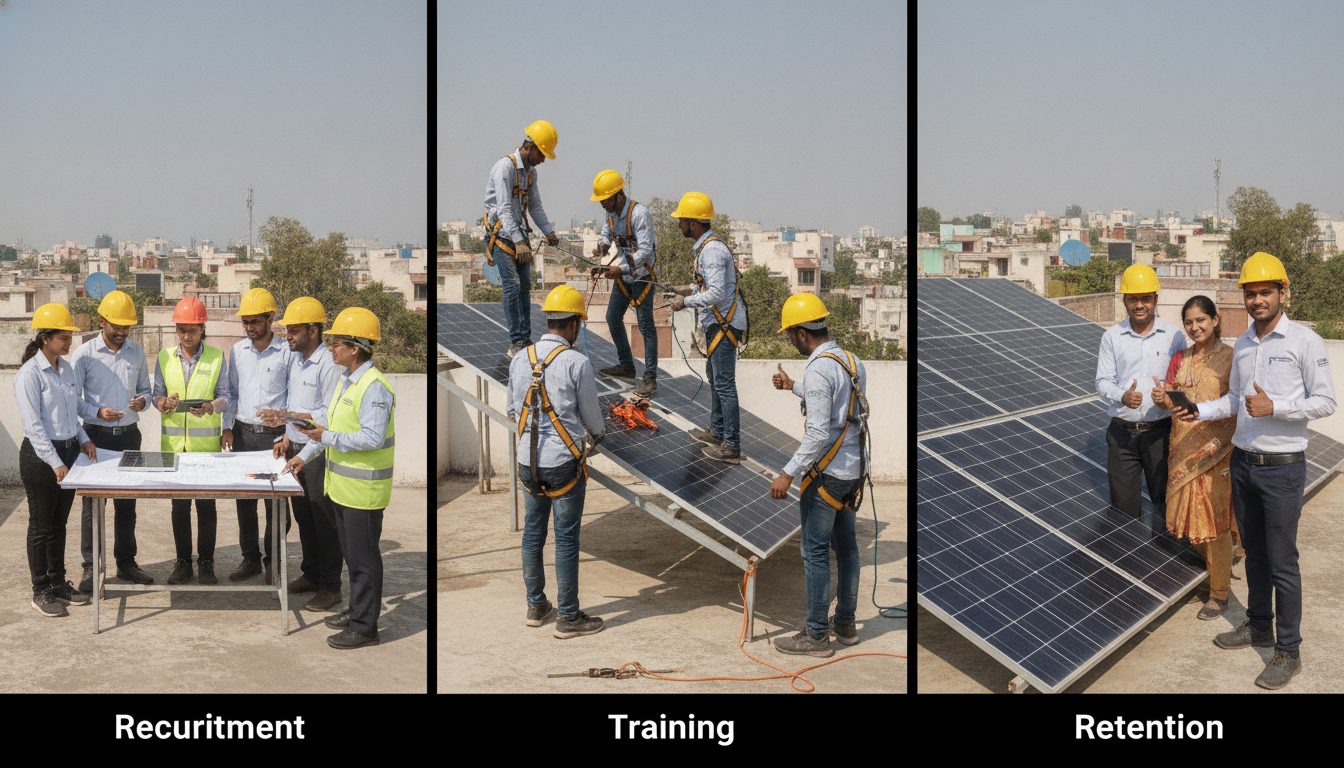
The Challenge of Finding Certified Talent
As India accelerates towards its rooftop solar targets, local EPCs and installers face a massive skill shortage of certified DC electricians and safety supervisors. Meeting this demand requires a clear strategy for solar technician training and recruitment to ensure installations meet technical standards. Without trained crew members, businesses often face delays in grid connection approvals and increased maintenance call-backs from residential clients.
Homeowners planning rooftop installations frequently check financial viability using a solar ROI and payback period calculator before finalizing an EPC. Installers need competent technicians on site to execute these designs accurately, keeping wiring losses low and generation output aligned with customer expectations.
Want to see what this means for your roof? Use our free solar calculator for India to estimate system size, cost after the ₹78,000 subsidy and payback period.
Recruiting and Training Through National Programs
Partnering with National Skill Development Corporation (NSDC) or Surya Mitra programs ensures compliance with safety mandates and brings standardized technical knowledge directly to your workforce. These government-backed initiatives pre-vet candidates on basic electrical wiring, panel mounting mechanics, and inverter configuration. Hiring graduates from these programs cuts down your internal orientation timeline significantly.
Structured onboarding should pair new recruits with senior electricians for at least two weeks of shadowing. During this period, supervisors must evaluate the technician's ability to handle module strings, DC junction boxes, and earthing strips without supervision.
Enforcing Safety Protocols on Residential Roofs
Rooftop installations carry inherent risks involving fall hazards, heavy lifting, and live electrical components. Enforcing OSHA-equivalent rooftop safety protocols is mandatory to protect crew members and limit liability for the business. Every team member must wear certified harnesses, non-slip footwear, and insulated tools rated for DC voltages.
Daily toolbox talks before starting work help reinforce hazard identification. Supervisors should inspect all ladders, scaffolding, and personal protective equipment daily. Documenting safety compliance also builds trust with homeowners who worry about property damage or workplace accidents during installation.
Retaining Skilled Installation Crews
High turnover rates disrupt project timelines and drive up operational costs for solar businesses. Retaining skilled installation crew members depends on competitive wages, clear career progression pathways, and regular upskilling workshops on emerging inverter and battery storage technologies. Installers who provide stable employment and performance bonuses find it much easier to hold onto reliable supervisors.
Creating a respectful work environment and addressing equipment needs promptly shows field staff that management values their physical safety and daily output. When technicians feel supported, they take greater ownership of installation quality and reduce costly field errors.
🌟 Ready to Go Solar? Get 3 Free Quotes
Connect with verified, MNRE-empanelled solar installers near you — free, no obligation.
Get Free Solar Quotes →