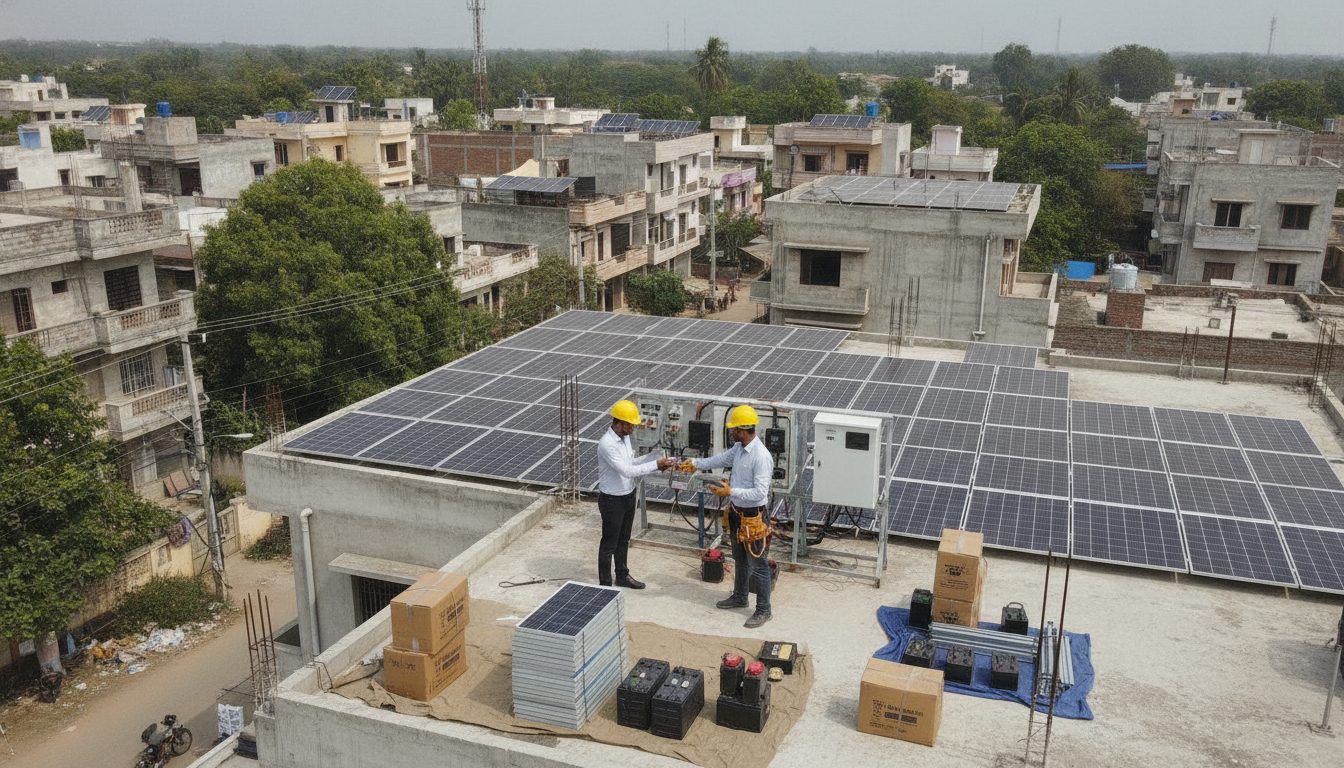
Calculating Bill of Quantities and Module Costs
With fluctuating module prices and competitive local markets, solar vendors often struggle to maintain healthy profit margins. Protecting your bottom line starts with precise Bill of Quantities calculations. Every component, from photovoltaic modules and inverters to DC cables and mounting structures, must be accounted for at current market rates. Vendors should evaluate their material procurement cycles carefully to avoid absorbing sudden component price spikes. Before finalizing quotes for homeowners, check your layout requirements using a solar roof area calculator to ensure structural material estimates remain accurate.
Want to see what this means for your roof? Use our free solar calculator for India to estimate system size, cost after the ₹78,000 subsidy and payback period.
Allocating Overheads and Labor Pricing Models
Material costs form only part of the equation for tier-2 and tier-3 installation businesses. Operating expenses including warehousing, transport, local permits, and sales overheads must be factored into every project quote. Labor pricing requires a structured approach that accounts for skilled electrical work, civil installation teams, and safety compliance gear. Small and medium businesses fail to maintain profitability when they overlook these hidden site-handling expenses during peak installation months.
Packaging Value-Added Services to Preserve Margins
Relying purely on hardware sales leaves installation businesses vulnerable to aggressive local price wars. Adding structured service packages helps protect overall margins while giving homeowners clearer value. Services such as remote performance monitoring, scheduled periodic maintenance, net metering paperwork handling, and extended warranties justify higher upfront service fees. When customers understand the long-term support included with their system, price sensitivity decreases significantly.
🌟 Ready to Go Solar? Get 3 Free Quotes
Connect with verified, MNRE-empanelled solar installers near you — free, no obligation.
Get Free Solar Quotes →