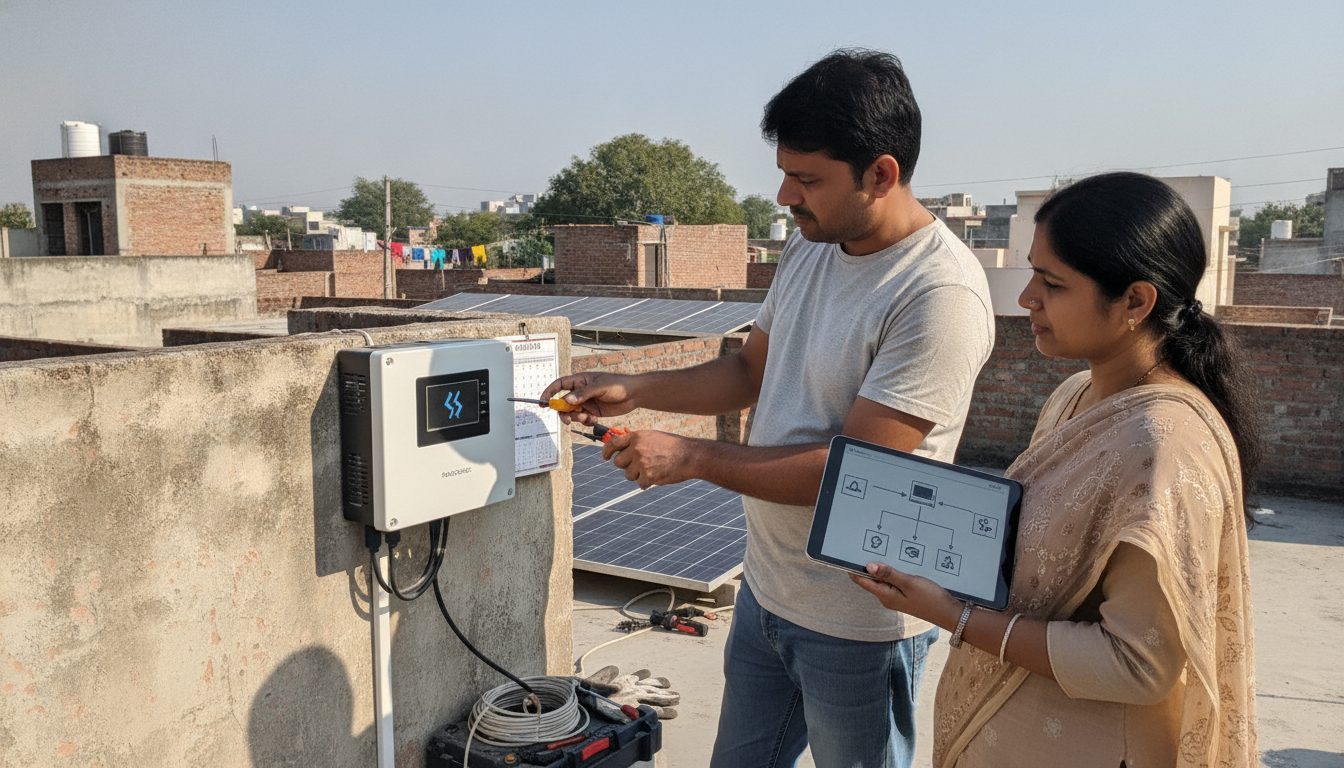
Understanding Common Residential Inverter Faults
Inverter faults like isolation errors, grid overvoltage, and phase imbalances cause unnecessary panic and generation downtime for residential users. When your rooftop system stops producing power, the LED display usually shows a specific fault code. Knowing what these codes mean helps you separate minor grid fluctuations from actual hardware damage. You can use our home inverter and battery backup size calculator to review your system specifications while checking these codes.
Not sure what size you need? Our free solar calculator works out system size, cost after subsidy and payback from your monthly electricity bill.
A Diagnostic Checklist for Popular String Inverters
Popular string inverter brands used across residential setups in India share similar diagnostic logic for common alerts. Follow this checklist when an alarm sounds:
| Fault Type | Likely Cause | Action |
|---|---|---|
| Grid Overvoltage | Local grid voltage exceeds safe operating limits. | Wait for automatic reconnection after grid stabilization. |
| Isolation Error | DC wiring moisture ingress or earth leakage. | Inspect DC cables and check for water damage. |
| Phase Imbalance | Unequal load distribution across phases. | Verify household load distribution or contact your utility provider. |
Safe Resets Versus Certified Technician Dispatch
Safe resets involve turning off the AC breaker, then the DC switch, waiting five minutes for capacitors to discharge, and powering the system back up in reverse order. This clears temporary software glitches or minor grid trips. If the error code persists immediately after a proper reboot, certified technician dispatch is mandatory. Do not attempt to open the inverter chassis or tamper with internal wiring, because high DC voltages present severe electrocution risks and void manufacturer warranties.
🌟 Ready to Go Solar? Get 3 Free Quotes
Connect with verified, MNRE-empanelled solar installers near you — free, no obligation.
Get Free Solar Quotes →