 SolarCalculators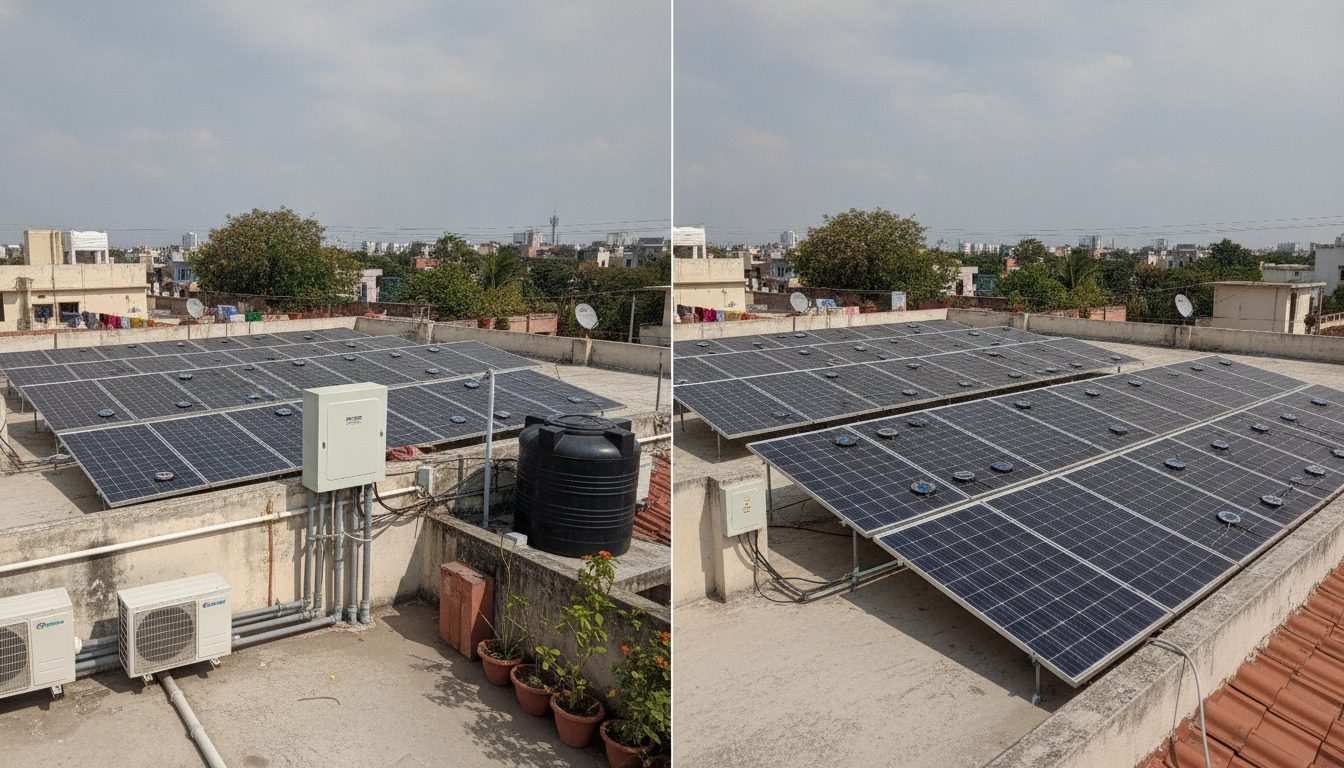
Understanding the Core Difference
When planning a rooftop solar system for an Indian home, choosing the right inverter dictates how efficiently your panels convert sunlight into usable electricity. The debate of string inverter vs microinverter comes down to architecture and placement on your roof.
A string inverter uses one central unit to convert the direct current electricity collected by an entire series or string of solar panels into alternating current for your home. By contrast, microinverters are small units installed directly beneath each individual solar panel. Each panel operates independently with its own microinverter.
Why String Inverters Dominate Indian Rooftops
String inverters remain the standard option for the vast majority of residential solar installations across India. Their primary advantage is simplicity and lower upfront cost. Because they use a single central device, the overall hardware and installation expenses stay manageable for standard household budgets.
For homeowners with clear, unshaded roof space that receives direct sunlight throughout the day, a string inverter delivers reliable performance without unnecessary complexity. Maintenance is also straightforward because technicians only need to inspect one central unit rather than checking multiple devices scattered across the roof surface.
How Microinverters Handle Partial Shading
Partial shading is a common challenge on Indian rooftops due to nearby trees, water tanks, mumty structures, or neighboring buildings. With a traditional string setup, if shade falls on just one panel, the output of the entire string drops to match the lowest-performing panel.
Microinverters solve this limitation by isolating each panel. If one panel is shaded by a passing shadow or dust accumulation, the rest of the panels continue operating at full capacity. This makes microinverters a practical solution for complex or shaded roof layouts, though they typically cost more upfront than a single central inverter.
Making Your Final Decision
Selecting between these two technologies requires balancing your budget against your roof conditions. Use this quick comparison to guide your discussion with a local installer:
| Feature | String Inverter | Microinverter |
|---|---|---|
| Cost | Lower upfront cost | Higher upfront cost |
| Shading Impact | Shade on one panel affects the whole string | Shade affects only the specific shaded panel |
| Best Suited For | Unshaded, straightforward roofs | Roofs with partial or intermittent shading |
Ask your solar vendor to conduct a shadow analysis of your roof at different times of the day before you finalize the equipment purchase.
🌟 Ready to Go Solar? Get 3 Free Quotes
Connect with verified, MNRE-empanelled solar installers near you — free, no obligation.
Get Free Solar Quotes →