Understanding IEC and BIS Safety Standards for Rooftop Solar
Adhering to strict IEC and BIS safety standards is mandatory for all rooftop solar installations to protect electrical equipment from fault currents and lightning surges. Technical engineers must design systems that comply with national guidelines, ensuring the complete safety of the premises and the grid-tied hardware. For homeowners planning an installation, verifying structural specifications beforehand helps streamline the setup process, and checking space requirements via a solar roof area calculator ensures proper physical layout planning.
The regulatory framework specifies strict protocols for both the direct current side connecting the panels and the alternating current side connecting to the grid. Proper compliance prevents catastrophic equipment failure and reduces electrical hazards during standard operations.
Want to see what this means for your roof? Use our free solar calculator for India to estimate system size, cost after the ₹78,000 subsidy and payback period.
Chemical Earthing Pit Resistance Thresholds and Strip Routing
A reliable earthing network channels fault currents safely into the ground. Chemical earthing pits must maintain a measured resistance threshold of under 5 ohms to ensure rapid discharge during a fault. Installers must use high-grade copper or Galvanized Iron strips for all interconnecting routes.
Proper routing of these strips avoids sharp bends and parallel runs with signal cables. This physical separation prevents electromagnetic induction from damaging delicate components inside the inverter housing during high-voltage events.
Surge Protection Device Installation on DC and AC Sides
Surge protection devices defend solar assets against transient overvoltages caused by nearby lightning strikes or grid fluctuations. Installers must deploy both Type 1 and Type 2 SPDs depending on the specific zone of the installation. Type 1 units handle high-energy partial lightning currents on the main distribution board, while Type 2 units provide fine protection for downstream components.
On the DC side, SPDs sit between the solar array and the string inverter. On the AC side, they protect the inverter output before it reaches the main service panel. Each device requires proper physical proximity to the protected hardware to minimize lead lengths and clamping response times.
Lightning Arresters and Direct Strike Mitigation
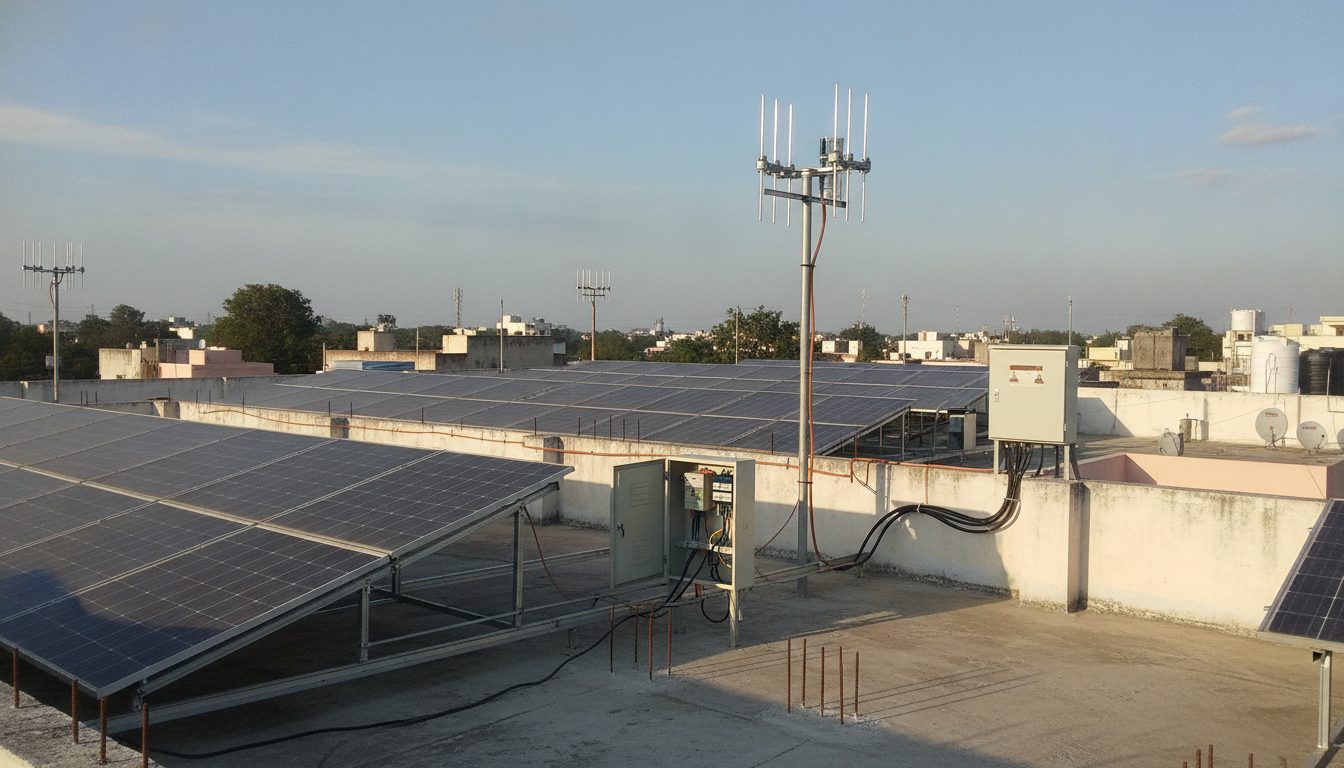
Direct lightning strikes pose a severe thermal and mechanical threat to rooftop solar arrays. Standalone lightning arresters, such as Early Streamer Emission or conventional Franklin rods, must be positioned strategically above the plane of the solar panels to create a protective cone of protection.
The down-conductor from the lightning arrester must take the most direct path to a dedicated earth electrode. This path must remain entirely separate from the electrical earthing network up to the main foundation earth to prevent dangerous back-flashover into the inverter and home wiring.
🌟 Ready to Go Solar? Get 3 Free Quotes
Connect with verified, MNRE-empanelled solar installers near you — free, no obligation.
Get Free Solar Quotes →