Understanding Modern Solar Technologies
Solar technology has shifted rapidly toward N-type TOPCon and advanced bifacial modules boasting efficiencies exceeding 22 percent. Residential buyers often struggle to calculate the actual generation delta against upfront module costs. When comparing TOPCon vs bifacial solar panels India, homeowners must look past manufacturer specifications and examine how these systems perform under local climatic conditions. You can evaluate your total setup expenses by running the numbers through our main solar system cost, savings, and subsidy calculator to plan your investment accurately.
Performance Factors in Indian Weather
Indian weather conditions test the limits of photovoltaic hardware. Temperature coefficients dictate how much power a panel loses as ambient heat rises. High rooftop temperatures reduce output across all modules, but advanced N-type architectures maintain better stability. Degradation rates also determine long-term value. Panels that lose capacity slower retain higher generation capacity over decades. Low-light performance matters during overcast monsoon months or hazy winter mornings when direct sunlight drops significantly.
Calculating Upfront Costs Versus Generation Deltas
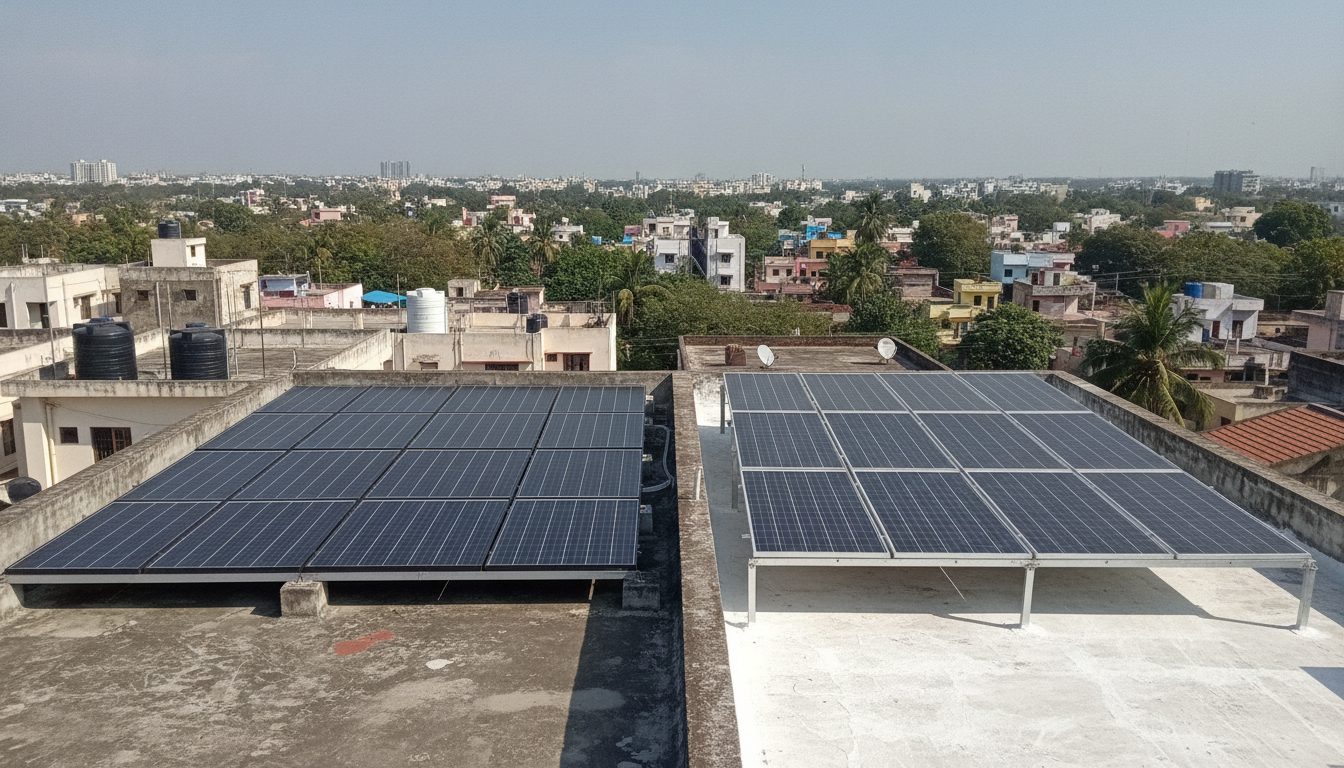
Higher efficiency modules typically demand a larger initial financial outlay. Buyers must determine if the extra generation justifies the purchase price. Bifacial panels capture light from both sides, which adds value if installed over reflective white roofs or light-colored concrete surfaces. TOPCon variants focus heavily on front-side capture with high packing density and minimal resistance losses. Before making a final purchase, homeowners should use the solar ROI and payback period calculator to estimate the exact time required to recover equipment expenses.
🌟 Ready to Go Solar? Get 3 Free Quotes
Connect with verified, MNRE-empanelled solar installers near you — free, no obligation.
Get Free Solar Quotes →