Understanding Wind Load Standards for Indian Roofs
Monsoon downpours and sudden coastal cyclones test the limits of rooftop solar installations across India. Structural failures lead directly to costly rework and rejected warranty claims for engineering, procurement, and construction firms. A proper solar module mounting structure design india relies heavily on compliance with IS 875 wind load standards. These guidelines dictate the specific pressure calculations based on geographical wind zones, building height, and terrain categories. Ignoring these engineering baselines during initial layout planning often results in lifted panels and sheared fasteners during severe weather events.
Property owners planning installations should first check their available space using a solar roof area calculator to ensure structural loads distribute evenly across the load-bearing beams. Engineers must calculate localized uplift pressures that typically peak at the edges and corners of rooftops. Designing for these specific pressure zones prevents progressive structural failure when high-velocity gusts sweep across flat terrain.
To check the numbers for your own home, try the solar calculator — enter your electricity bill and get system size, subsidy and payback in seconds.
Ballasted Versus Anchored Mounting Systems
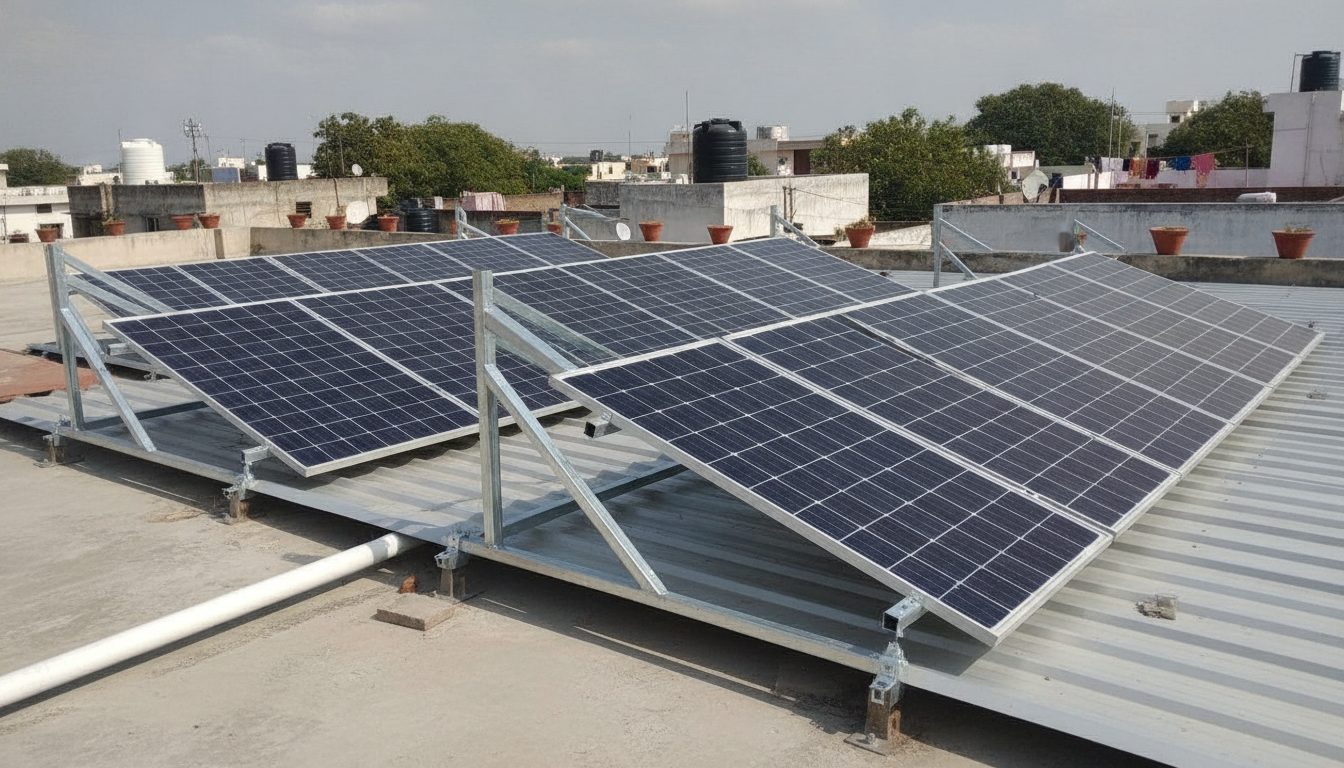
Selecting between ballasted and anchored mounting systems depends primarily on the underlying roof material. Commercial tin sheds require mechanically anchored attachments directly into the purlins to secure the framework against heavy suction forces. Drilling into metal sheets demands specialized waterproof flashing and EPDM washers to prevent leaks during heavy rains. Conversely, flat reinforced cement concrete roofs often utilize ballasted systems that rely on concrete blocks instead of roof penetrations.
Ballasted solutions protect the waterproofing membrane of flat roofs by avoiding structural holes. However, structural engineers must verify that the concrete roof can support the dead weight of both the panels and the concrete blocks. Tin sheds rarely accommodate heavy ballasted loads safely due to weight limits, making mechanical anchors the standard choice for metal profiles.
Material Specifications and Corrosion Protection
Outdoor solar structures face harsh environmental conditions ranging from coastal humidity to industrial air pollution. Using standard untreated mild steel results in rapid oxidation and structural weakening within a few monsoon seasons. Hot-dip galvanized steel provides the necessary corrosion resistance required for long-term structural integrity. The galvanization process coats the steel framework with a thick layer of zinc that sacrifices itself to protect the underlying metal from rust.
Fasteners, nuts, and bolts require equal attention regarding material grade. Stainless steel grade 304 or higher prevents galvanic corrosion where dissimilar metals touch. Checking coating thickness microns during site delivery ensures the fabricated components meet expected lifespan requirements without premature degradation.
Tilt Angle Optimization and Wind Stability
Tilt angle selection involves a careful balance between annual energy generation and aerodynamic wind resistance. Steeper tilt angles capture optimal sunlight during winter months in northern latitudes, but they also act like sails against high winds. Flatter angles reduce wind drag significantly, though they require routine cleaning to prevent dust accumulation during dry months. Engineering teams calculate the ideal angle to maximize kilowatt-hour output while keeping wind shear forces within safe structural limits.
Wind tunnel data and computational fluid dynamics help determine the optimal inter-row spacing. Proper spacing prevents wake effects from accelerating wind speeds between adjacent rows of photovoltaic modules. Maintaining these structural clearances protects the entire array from cascading uplift damage during unexpected storm surges.
🌟 Ready to Go Solar? Get 3 Free Quotes
Connect with verified, MNRE-empanelled solar installers near you — free, no obligation.
Get Free Solar Quotes →