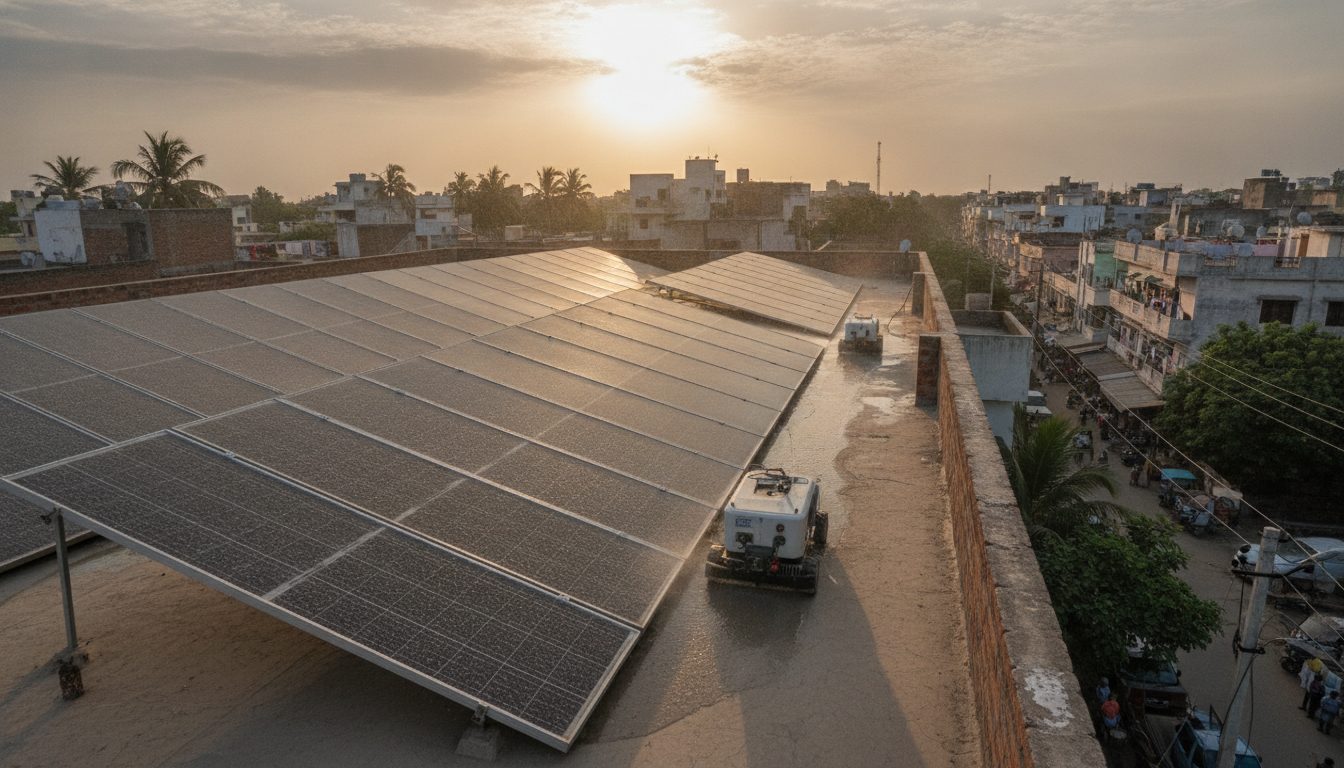
Understanding Dust Losses on Commercial Rooftops
Commercial and industrial solar plants suffer significant generation losses up to 25% due to heavy dust accumulation in regions like Rajasthan, Gujarat, and parts of South India. When dust layers block sunlight from reaching the photovoltaic cells, power output drops immediately. Plant operators who rely solely on manual cleaning often face inconsistent schedules, labor shortages, and high recurring expenses. To measure how reduced generation impacts your long-term financials, you can evaluate your system performance using a solar ROI and payback period calculator to see potential financial shifts over time.
To check the numbers for your own home, try the solar calculator — enter your electricity bill and get system size, subsidy and payback in seconds.
Capital Expenditure Versus Manual Labor Costs
Investing in automated solar cleaning systems requires a higher upfront capital expenditure than hiring traditional manual labor crews. Water-free robotic cleaning systems eliminate the recurring monthly wage costs associated with manual wiping. Manual cleaning also carries a risk of micro-cracks or scratching on the panel glass from improper handling, which leads to permanent generation drops. Automated units move at a steady, programmed pace across large arrays, ensuring even cleaning without damaging the module surface.
Calculating Payback Periods and Water Savings
Water-free robotic systems offer distinct advantages in areas where water availability is scarce or expensive for industrial operations. Traditional washing methods require tanker supplies or borewell extraction, adding hidden costs to plant maintenance. By removing the need for water, robots eliminate these operational costs while protecting the panels from hard-water mineral scaling. The payback period for these systems depends on the scale of the commercial rooftop, tariff rates, and local dust severity. Higher soiling regions see faster payback because reclaiming the lost generation quickly offsets the initial robot hardware cost.
🌟 Ready to Go Solar? Get 3 Free Quotes
Connect with verified, MNRE-empanelled solar installers near you — free, no obligation.
Get Free Solar Quotes →