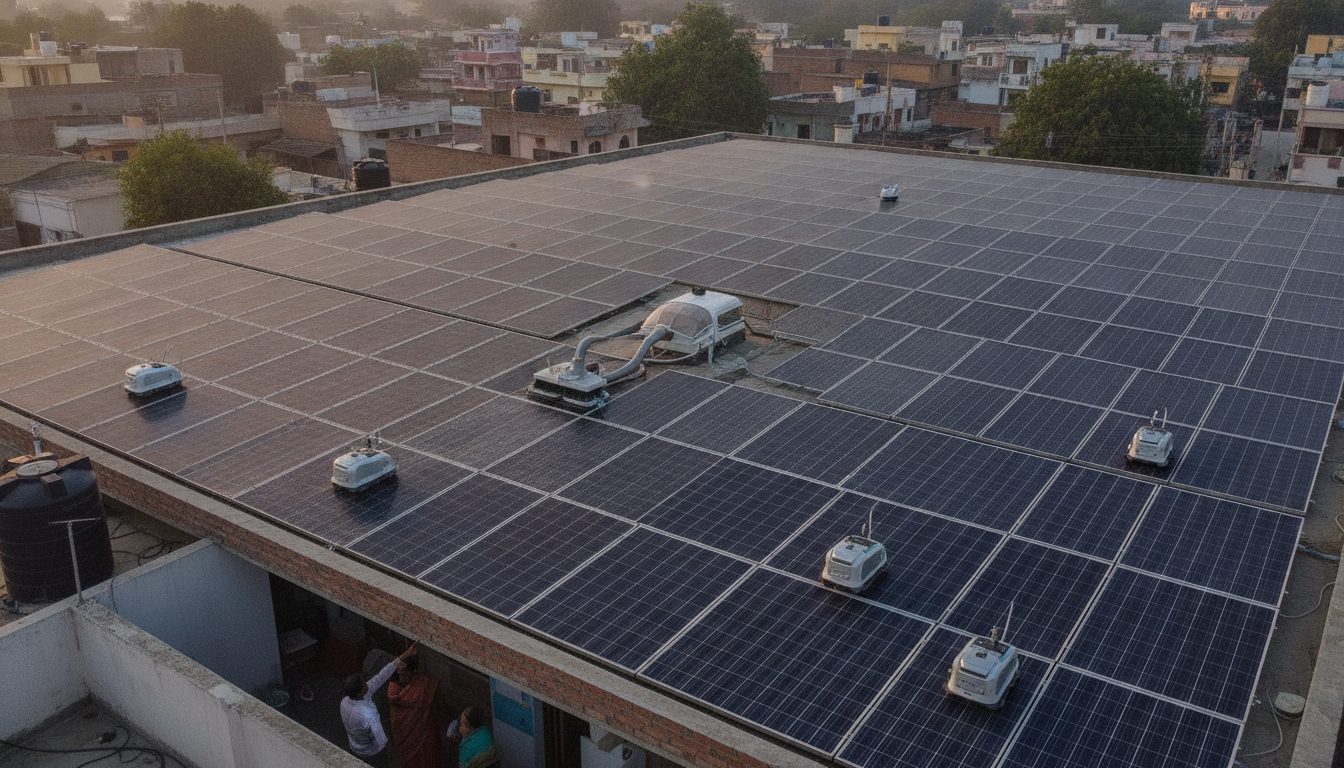
The Impact of Soiling Losses on Large Rooftops
Dust and soil accumulation can reduce daily photovoltaic generation by up to 25% in dusty Indian plains and industrial zones. When particulate matter settles on glass modules, it blocks sunlight from reaching the solar cells directly. Large commercial and industrial rooftops face rapid dust accumulation due to local traffic, dry weather, and nearby industrial activity. Traditional manual cleaning methods require heavy water usage, significant labor coordination, and recurring operational costs. Plant owners often struggle to maintain consistent schedules for manual washing, which leads to prolonged periods of reduced generation. Evaluating the true scope of these losses helps operators plan better upkeep strategies. Before upgrading your operation and maintenance workflow, you can check your overall project feasibility by using the solar ROI and payback period calculator to understand long-term financial returns.
To check the numbers for your own home, try the solar calculator — enter your electricity bill and get system size, subsidy and payback in seconds.
Economics of Autonomous Robotic Dry-Cleaning Systems
Deploying automated solar panel cleaning robots india changes the standard economics of commercial rooftop operation and maintenance. These machines operate without water, removing a major operational bottleneck in regions facing water scarcity. Robotic systems run on pre-set schedules, typically during early morning or late evening hours, to clean arrays without manual intervention. While initial capital expenditure is higher than traditional cleaning tools, recurring labor expenses drop significantly. The absence of water trucks and manual scrubbing crews reduces variable operating costs over the multi-year lifespan of the photovoltaic plant. Regular daily cleaning also prevents the formation of hardened bird droppings and stubborn grime layers that require harsh chemical washing.
Microfiber Brushes and Inverter SCADA Integration
Modern robotic units rely on specialized microfiber brush technology to sweep away abrasive dust particles safely without scratching the anti-reflective coating on glass modules. These rotating brushes use soft synthetic fibers that lift fine particles efficiently in dry conditions. For large-scale commercial O&M operators, linking these cleaning units to inverter SCADA platforms provides centralized control and visibility. Operators can monitor battery levels, movement status, and cleaning cycles directly from the control room. If a robot encounters an obstruction or mechanical fault, the SCADA system triggers an alert for on-site personnel. This level of automation ensures that extensive rooftop installations run at peak operational efficiency without requiring constant physical checks by maintenance crews.
🌟 Ready to Go Solar? Get 3 Free Quotes
Connect with verified, MNRE-empanelled solar installers near you — free, no obligation.
Get Free Solar Quotes →