Understanding Soiling Losses in Commercial Photovoltaic Plants
Dust accumulation on large commercial rooftops directly blocks sunlight and reduces electricity generation. In dusty Indian regions, soiling loss metrics can degrade commercial PV output by up to 25 percent if panels are left unwashed.
Evaluating this energy drop requires tracking output data against baseline generation figures. Before investing in maintenance upgrades, facility managers often verify system feasibility using a solar roof area calculator to plan module layouts effectively.
Want to see what this means for your roof? Use our free solar calculator for India to estimate system size, cost after the ₹78,000 subsidy and payback period.
Comparing Waterless Robotic Systems to Manual Washing Models
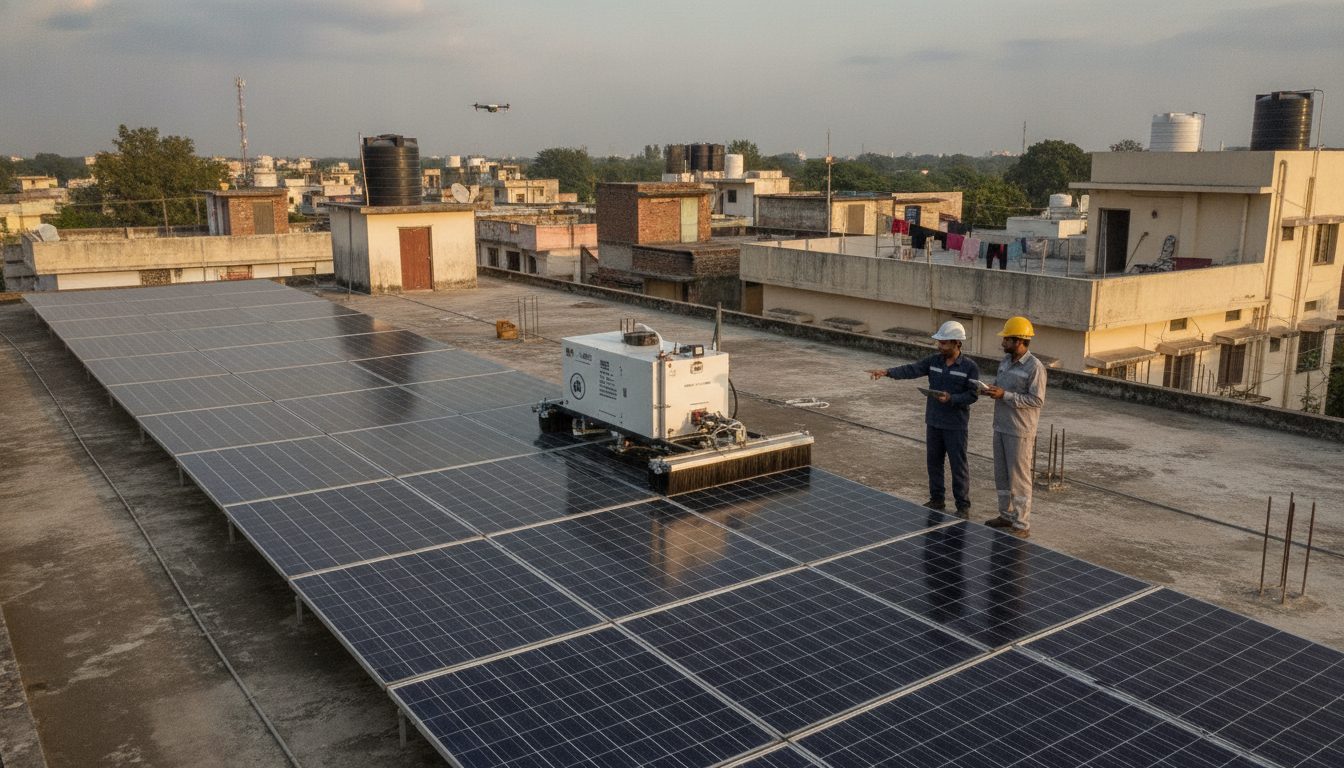
Traditional manual washing relies on contracted labor and large volumes of water, which introduces recurring operational expenses and resource management challenges. A solar panel cleaning robot commercial plant deployment removes the need for daily manual labor by using automated schedules.
Waterless robotic systems use microfiber brushes and dry-cleaning mechanisms instead of water jets. This design protects module glass from mineral deposits while eliminating water hauling costs entirely.
Financial Impact on OPEX and Payback Periods
Operational expenditures dictate the long-term profitability of commercial installations. Manual cleaning teams require ongoing wage payments, safety equipment, and continuous water sourcing, which drives up yearly expenses.
Robotic cleaning requires an upfront capital investment, but it lowers recurring OPEX significantly over the plant lifecycle. To determine how these operational savings impact overall financial returns, facility owners can run an analysis using the solar ROI and payback period calculator.
🌟 Ready to Go Solar? Get 3 Free Quotes
Connect with verified, MNRE-empanelled solar installers near you — free, no obligation.
Get Free Solar Quotes →