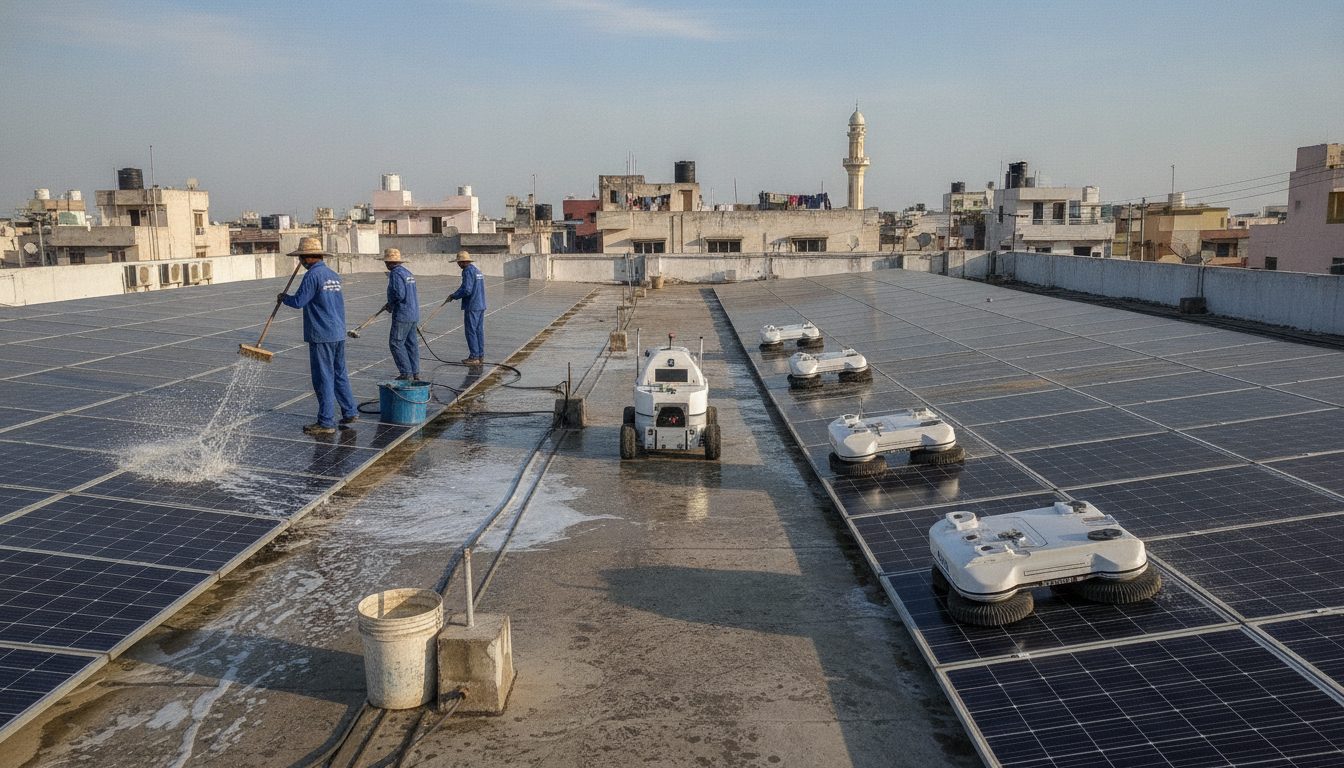
The Impact of Dust on Large Commercial Installations
Dust accumulation and soiling loss can drop commercial solar plant generation by up to 25% in dusty regions of India. Without regular removal, a thick layer of particulate matter blocks sunlight from reaching photovoltaic cells, directly cutting daily energy output and extending the time required to recover your initial investment. You can evaluate your expected returns using a solar ROI and payback period calculator to see how lost generation impacts finances.
Large commercial installations require a reliable maintenance strategy to manage these environmental losses without creating new operational risks. Property owners must weigh the ongoing yield penalties of accumulated dust against the recurring operational expenses of cleaning crews or automated hardware.
To check the numbers for your own home, try the solar calculator — enter your electricity bill and get system size, subsidy and payback in seconds.
Comparing Water Consumption and Labor Costs
Manual washing relies heavily on cleaning crews, continuous water tankers, and manual squeegees. This traditional approach incurs high recurring labor expenses and significant water consumption, which presents challenges in water-scarce industrial zones across India.
Water-free robotic systems operate entirely without liquid. They clear settled dust using rotating microfiber brushes and compressed air or dry wiping mechanisms. Eliminating water trucks and on-site cleaning teams reduces recurring operational expenditure, shifting costs from variable labor wages to a fixed hardware investment.
Micro-Cracking Risks and Structural Safety
Manual washing introduces physical stress to photovoltaic modules. Workers walking on panels, applying uneven pressure with long poles, or using cold water on hot glass surfaces frequently cause micro-cracks. These microscopic fractures reduce module lifespan and create hot spots that degrade system efficiency over time.
Automated dry cleaning systems traverse dedicated guide rails or move autonomously on tracks attached to the module frames. This controlled movement distributes weight evenly across the mounting structure, completely avoiding the foot traffic and high-pressure scrubbing that cause glass breakage and internal cell damage.
Maintenance Best Practices for Automated Fleets
Running a fleet of automated cleaning bots requires routine upkeep to ensure dependable performance across large commercial rooftops. Technicians should inspect automated tracks regularly for alignment issues, debris buildup, and mechanical wear caused by thermal expansion under intense sunlight.
- Check battery health and charging dock connections every month.
- Clean optical sensors and obstacle detection units to prevent navigation errors.
- Inspect microfiber brushes for excessive wear and replace them according to manufacturer guidelines.
Proper oversight of these robotic systems protects your hardware investment and maintains consistent daily energy yields across the entire array.
🌟 Ready to Go Solar? Get 3 Free Quotes
Connect with verified, MNRE-empanelled solar installers near you — free, no obligation.
Get Free Solar Quotes →