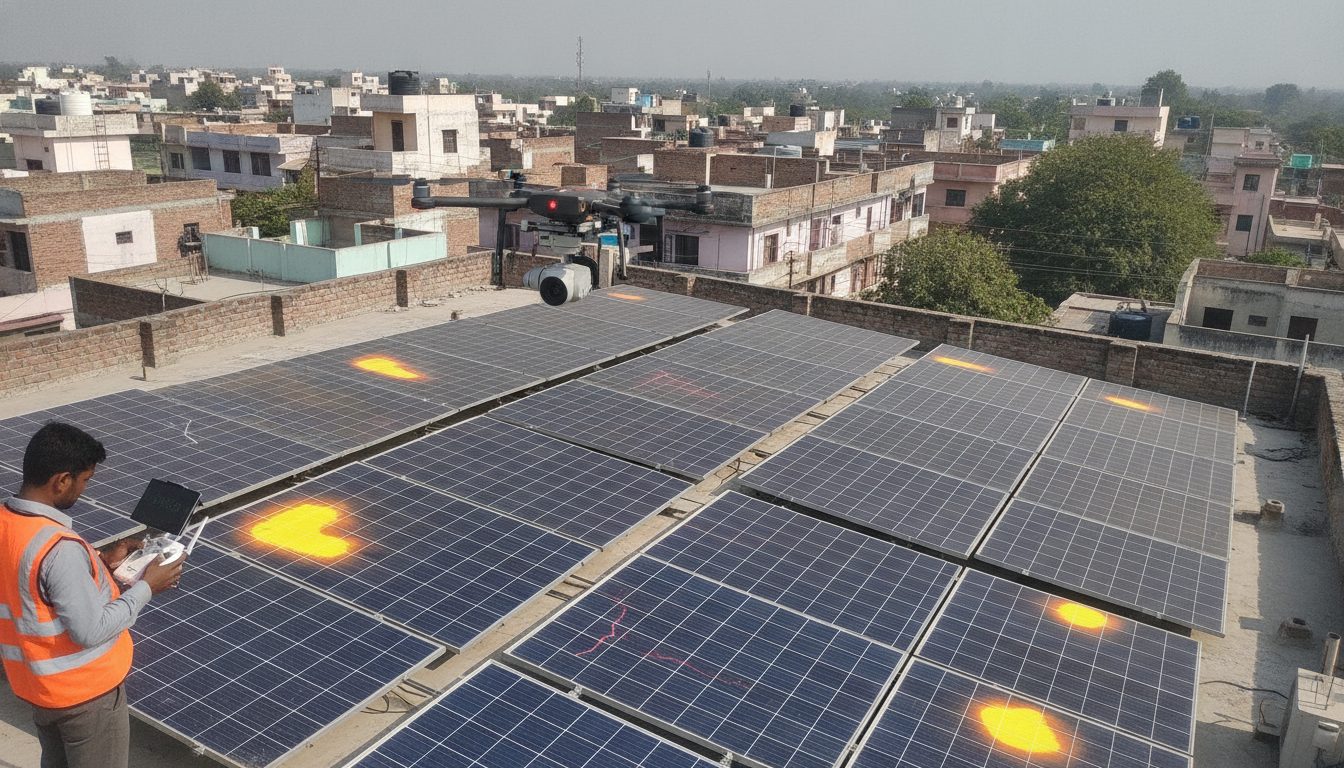
Understanding Solar Panel Hotspots and Micro-Cracks
Micro-cracks and cell hotspots are hidden defects that can drastically reduce module lifespan and energy yield. These faults typically originate from transportation damage, heavy foot traffic during installation, or external shading. Because these cracks are often invisible to the naked eye, plant operators rely on specialized methods to spot them.
Before investing in new hardware or expanding an existing setup, you can evaluate your space requirements using a solar roof area calculator to plan your panel layout properly and avoid future shading issues that trigger localized heating.
To check the numbers for your own home, try the solar calculator — enter your electricity bill and get system size, subsidy and payback in seconds.
How Infrared Thermal Drone Imaging Works
Commercial plant owners and O&M teams utilize solar thermal drone inspection hotspots detection to scan large arrays efficiently. Drones equipped with thermal infrared cameras fly over the solar installation to capture temperature differentials across the modules. Damaged cells or cracked silicon wafers impede current flow, causing the affected areas to heat up significantly compared to surrounding functional cells.
The resulting thermal maps display these anomalies clearly, allowing technicians to pinpoint exact module locations that require maintenance or replacement without manually testing every single string.
Preventing Energy Loss and Catastrophic Failures
Left unchecked, minor cell micro-cracks widen over time due to thermal expansion and contraction cycles under sunlight. This progression leads to permanent power degradation and localized burn marks on the backsheet or glass. Regular aerial infrared scans catch these issues early.
Addressing thermal anomalies promptly protects your long-term investment, maintains expected generation capacity, and prevents potential fire hazards caused by severe resistance heating in damaged PV modules.
🌟 Ready to Go Solar? Get 3 Free Quotes
Connect with verified, MNRE-empanelled solar installers near you — free, no obligation.
Get Free Solar Quotes →