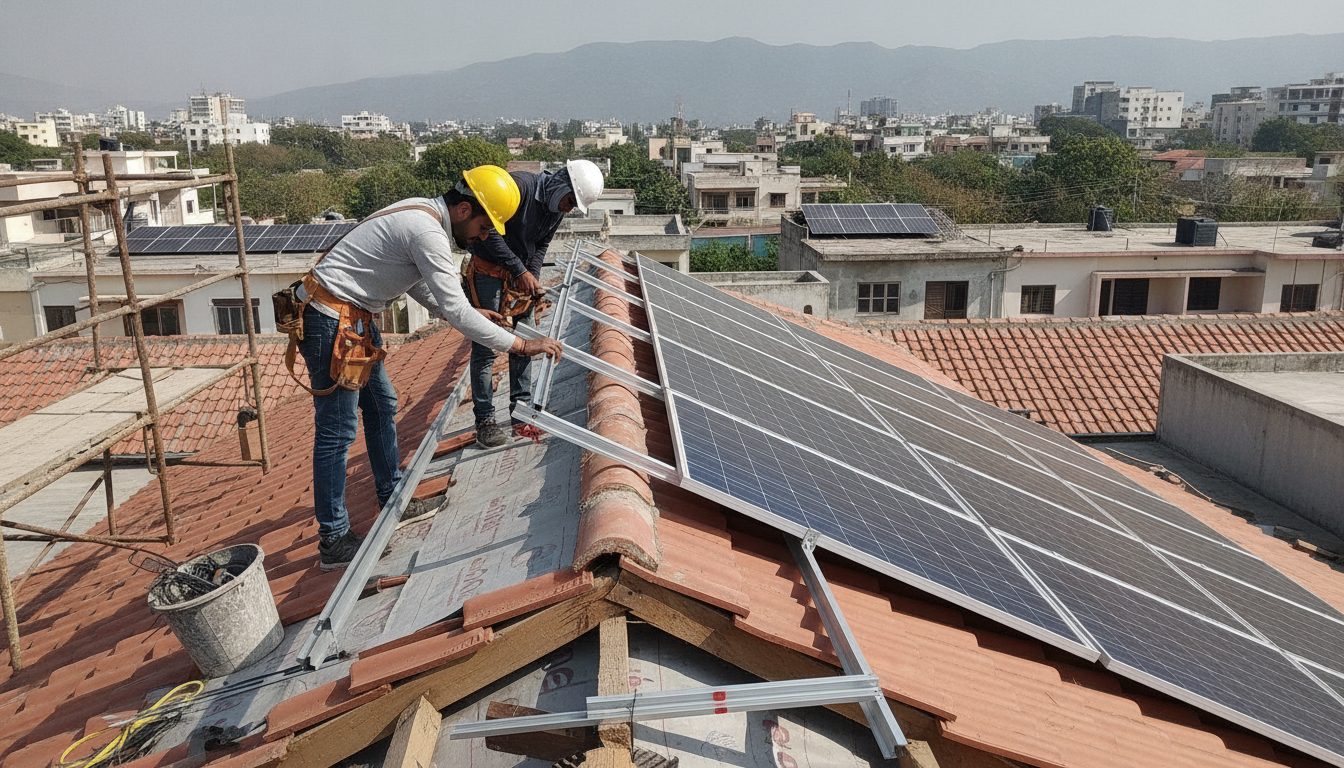
Understanding Roof Vulnerabilities During Solar Setup
Improper penetration of RCC roofs or metal sheet roofs during mounting structure installation frequently leads to severe water seepage during monsoons. Fixing solar modules requires anchoring hardware directly into the building envelope, which creates potential entry points for rainwater if sealing fails. Homeowners must ensure their installers follow strict protocols to protect the building structure while adding renewable energy generation systems.
Before signing off on any layout, you can check your available space using our solar roof area calculator to plan how mounting structures will fit across your concrete slab or metal sheet layout without overcrowding vulnerable joints.
Want to see what this means for your roof? Use our free solar calculator for India to estimate system size, cost after the ₹78,000 subsidy and payback period.
Waterproofing Methods for Flat Concrete and Tin Roofs
Different roof types demand specific engineering defenses against moisture intrusion. Installers must use chemical waterproofing layers for flat concrete roofs to seal drilled anchor points and prevent slab degradation over decades of exposure. For metal sheds, the approach must avoid drilling entirely.
Installers must use non-penetrative clamps for tin sheds to secure the mounting rails without puncturing the corrugated surface. This preserves the integrity of the metal sheets and prevents rust or leaks around the fasteners.
Structural Load-Bearing and Wind Speed Checks
Solar panels and mounting frames add dead weight to a building, alongside dynamic wind loads that pull upward during storms. Engineers must perform structural load-bearing checks to confirm the roof can support the combined weight of modules, inverters, and racking hardware safely.
Mounting structures must be engineered to withstand local wind speeds without lifting off or transferring excessive stress to the roof slab. Proper ballasting or chemical anchoring ensures the entire setup stays secure across changing seasonal weather patterns.
Securing Your 25-Year Warranty and Roof Integrity
Protecting your roof during installation is essential to maintain structural health while your solar panels operate over their 25-year lifespan. Poor installation practices can void civil warranties if water leakage damages interior ceilings or reinforcing steel bars inside concrete columns.
Homeowners should demand documentation of the waterproofing materials used around every anchor point before the installation team leaves the site. Regular post-monsoon inspections help catch minor sealant wear early, keeping both your power generation and your roof secure.
🌟 Ready to Go Solar? Get 3 Free Quotes
Connect with verified, MNRE-empanelled solar installers near you — free, no obligation.
Get Free Solar Quotes →