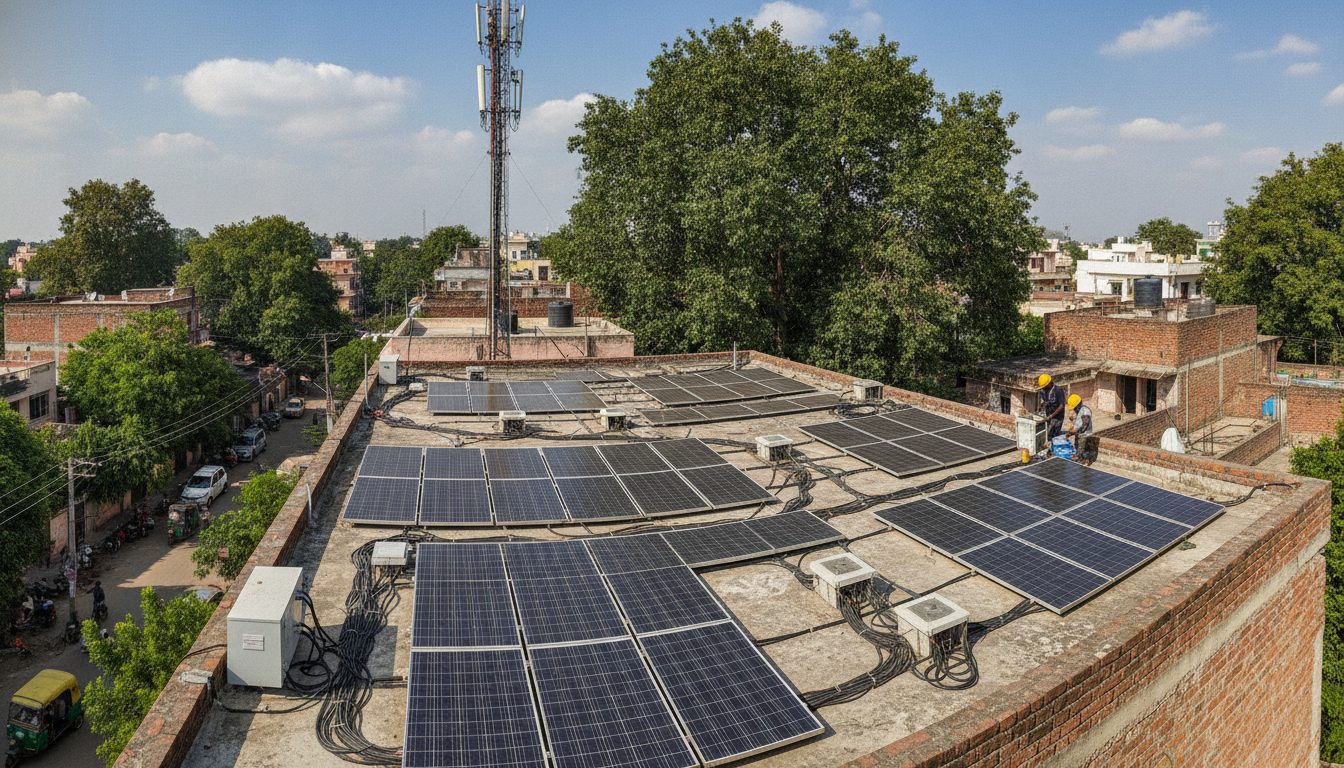
Understanding Partial Shading Risks on Indian Rooftops
Partial shading from nearby water tanks, parapet walls, and neighboring buildings drastically reduces solar generation. In traditional string inverter setups, shading on a single panel pulls down the output of the entire circuit. This happens because string panels are wired in series. The current flowing through the string drops to match the shaded module, creating a bottleneck that wastes potential energy across the array.
Indian rooftops present unique physical obstacles. Overhead water tanks, mumty structures, and varying parapet heights create shifting shadow patterns throughout the day. Before purchasing equipment, running a detailed solar panel shading analysis optimization India procedure helps identify obstruction patterns across different seasons. You can check your available space constraints by using a solar roof area calculator to plan module placement away from predictable shadow paths.
Want to see what this means for your roof? Use our free solar calculator for India to estimate system size, cost after the ₹78,000 subsidy and payback period.
The Role of 3D Simulation Tools in Layout Engineering
Rooftop design requires more than counting available square footage. Modern 3D simulation software maps physical structures and calculates exact sun paths across every month of the year. This digital modeling exposes how shadow lengths change from the winter solstice to the summer equinox. Good layout engineering focuses on placing panels outside these projected shadow zones entirely rather than relying on electrical fixes alone.
When obstructions cannot be avoided, proper spacing and string grouping prevent minor shadows from disabling large sections of the array. Designing the layout correctly at the start preserves system output without adding unnecessary hardware costs later. Smart positioning ensures that modules remain exposed to direct sunlight during peak generation hours, improving overall system productivity.
Mitigating Mismatch Losses with Module-Level Electronics
When physical shading is unavoidable due to limited roof space, module-level power electronics offer a reliable solution. Microinverters and DC power optimizers isolate each panel so that shade on one unit does not affect the others. Under this setup, unshaded panels operate at their maximum capacity while the shaded panel adjusts independently.
Power optimizers work alongside a central inverter by conditioning the DC power at the panel level before sending it to the string. Microinverters convert DC to AC right at the back of each individual panel. Both technologies eliminate string mismatch losses entirely, though they carry a higher upfront equipment cost compared to standard string inverters. Evaluating your projected generation gains helps determine if this hardware investment makes financial sense for your specific roof layout.
Why Layout Engineering Matters More Than Raw Wattage
Homeowners often focus exclusively on buying higher wattage panels to increase output. However, a high-wattage panel subjected to daily shadows from a water tank will underperform compared to a moderately rated panel placed in full sun. Electrical design and physical placement dictate real-world generation far more than the nominal wattage printed on the module specification sheet.
Investing time in proper site planning prevents persistent generation losses that basic equipment upgrades cannot fix. Evaluating structural obstructions, shade timing, and inverter architecture together creates a resilient solar installation suited to standard urban and suburban Indian rooftop conditions.
🌟 Ready to Go Solar? Get 3 Free Quotes
Connect with verified, MNRE-empanelled solar installers near you — free, no obligation.
Get Free Solar Quotes →