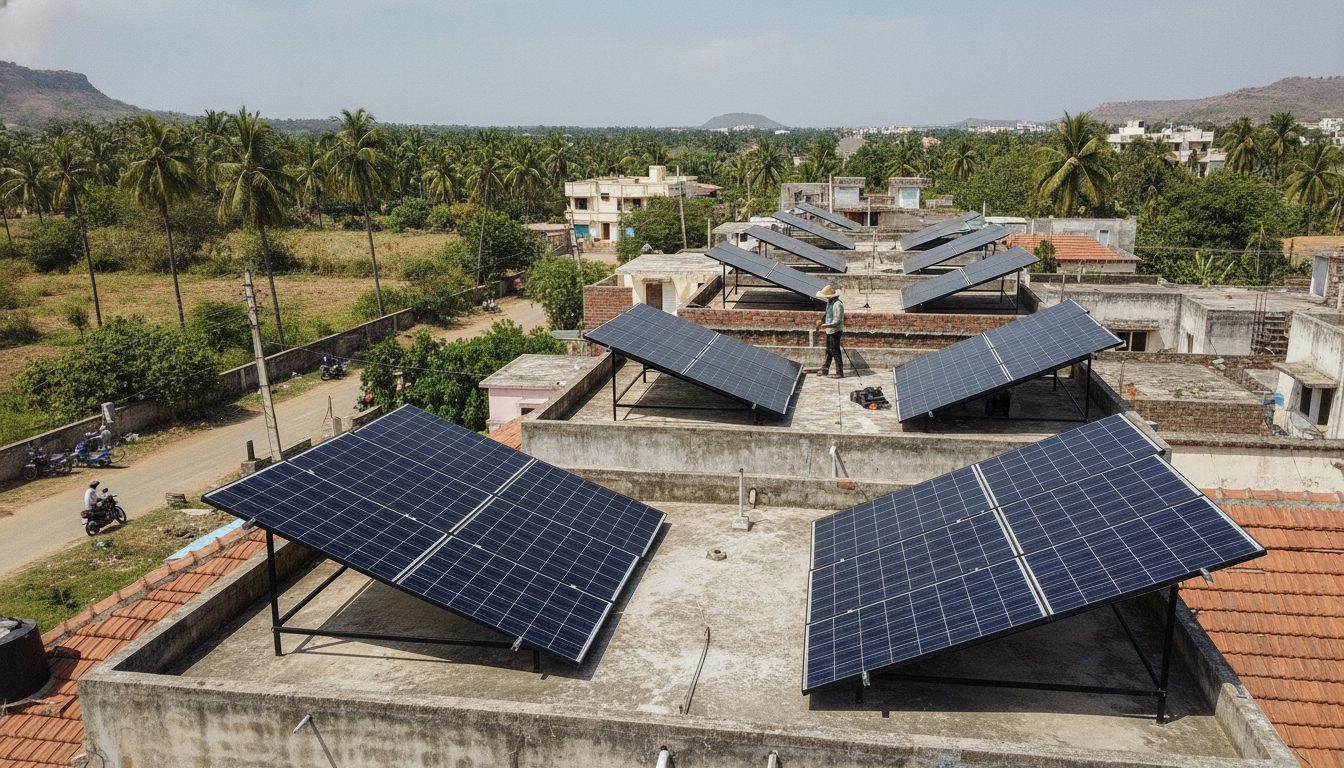
The Core Principles of Solar Panel Tilt Angle Optimization India
Energy yield heavily depends on correct geographic orientation and tilt based on latitude. Proper solar panel tilt angle optimization india ensures that photovoltaic modules capture direct sunlight efficiently throughout the year. Improper orientation reduces overall generation by up to 12% compared to properly aligned systems. Real homeowners must understand that geographic positioning forms the foundation of every high-performing installation.
For fixed-tilt installations, panels generally face true south in the Northern Hemisphere. Aligning the azimuth angle strictly toward the equator avoids daily generation losses. Even minor deviations from the optimal compass heading decrease total output over time. Before finalizing module placement, verify available space using a solar roof area calculator to ensure proper physical alignment.
Want to see what this means for your roof? Use our free solar calculator for India to estimate system size, cost after the ₹78,000 subsidy and payback period.
Optimal Tilt Angles Across Indian Climatic Zones
Different regions require specific fixed-tilt calculations to match local latitudes. Northern plains feature higher latitudes, necessitating steeper panel angles to intercept low winter sun rays effectively. Coastal regions experience heavy cloud cover and moisture during monsoon cycles, requiring angles that facilitate self-cleaning through rainwater runoff. Southern peninsulas sit closer to the equator, demanding shallower tilt angles to maintain high generation levels across all seasonal shifts.
Property owners must apply regional math rather than relying on a single national standard. Northern installations typically add a few degrees to the local latitude angle for winter optimization. Southern sites require a flatter profile to balance sun paths between equinoxes. Checking financial viability alongside these physical angles helps determine true project returns through a solar ROI and payback period calculator.
Impact of Seasonal Adjustments on Generation
Fixed-tilt systems remain stationary year-round, which introduces a trade-off between summer and winter peak generation. Manual seasonal tilt adjustments offer a way to capture more energy by shifting panel angles twice a year. Raising the tilt angle during winter months brings modules perpendicular to lower solar paths. Lowering the angle during summer months prevents excessive reflection and heat buildup on the glass surface.
While manual adjustments require physical labor or mechanical mounts, they recover a portion of the energy lost to fixed positioning. However, most residential setups use fixed mounts due to structural wind load requirements and maintenance ease. High winds in coastal zones make fixed, securely bolted frames safer than adjustable manual racks.
🌟 Ready to Go Solar? Get 3 Free Quotes
Connect with verified, MNRE-empanelled solar installers near you — free, no obligation.
Get Free Solar Quotes →