 SolarCalculators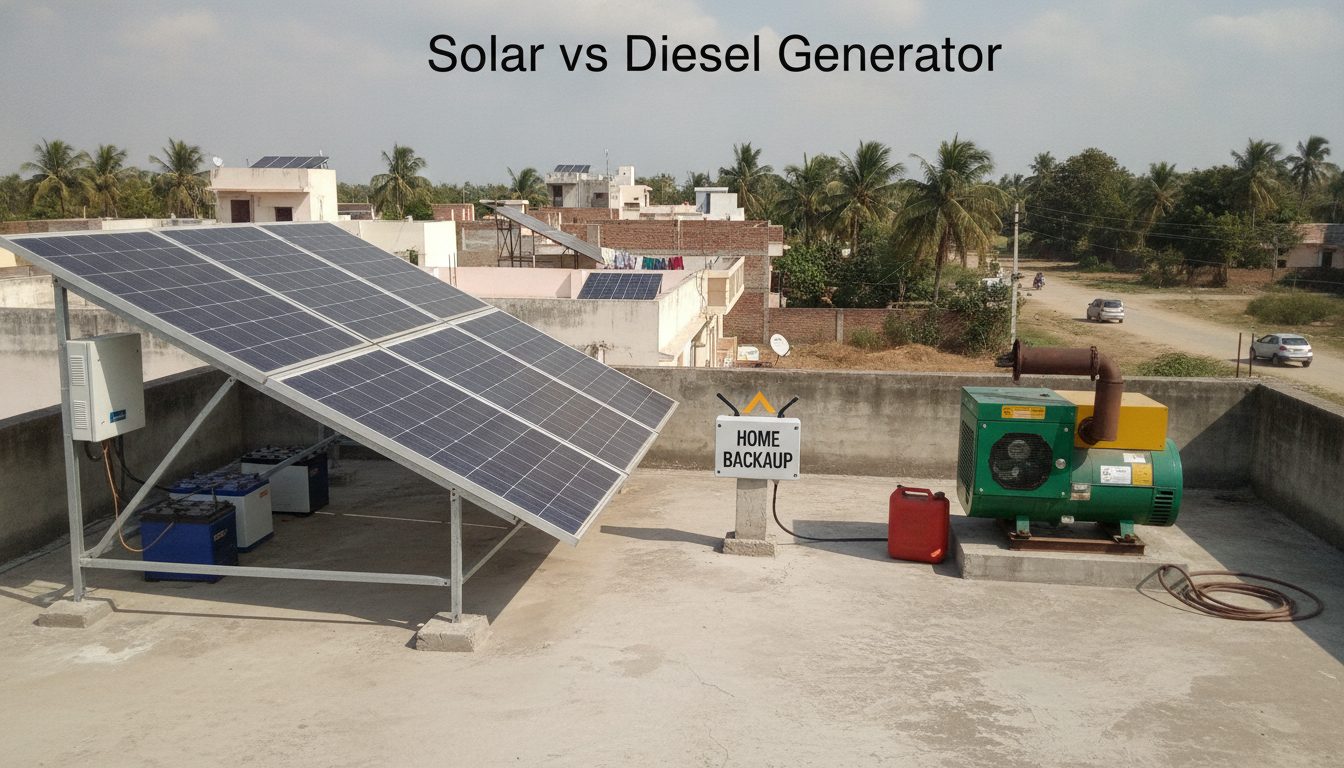
Running Cost and Fuel Dynamics
When evaluating the solar vs diesel generator cost, the primary difference lies in recurring fuel expenses versus upfront equipment investments. Running a diesel genset in India typically costs roughly ₹20-30+ per unit, depending entirely on volatile fuel prices and generator efficiency. Grid electricity supplied by residential DISCOMs usually ranges between ₹6 and 9 per unit across most Indian states.
Solar energy operates on an entirely different financial model. Once installed, sunshine is free. While panels require an initial capital investment, their marginal running cost is near zero. Over years of operation, avoiding high diesel expenditure creates substantial savings for households facing frequent power cuts.
Understanding Solar Backup and Battery Storage
Standard grid-tied rooftop solar systems shut down during a power outage for safety reasons, meaning solar panels alone do not provide backup electricity during grid failures. To use solar power during a blackout, homeowners must install battery storage paired with their inverter.
Therefore, a fair backup comparison requires looking at solar combined with batteries against a standard diesel generator. While adding storage increases the initial setup cost, it eliminates reliance on noisy, polluting diesel fuel while providing quiet, automatic backup when the grid goes down.
Government Subsidies and System Generation
The central government actively reduces upfront solar costs through the PM Surya Ghar Muft Bijli Yojana subsidy scheme. Financial support is structured as ₹30,000 for a 1kW system, ₹60,000 for a 2kW system, and ₹78,000 for a 3kW system and above.
Generation capacity scales predictably with system size. A standard 1kW rooftop solar setup generates roughly 90 to 120 units of electricity per month in India, while a 3kW system yields roughly 270 to 360 units monthly. These generation figures help homeowners offset standard grid consumption and reduce monthly utility bills significantly.
Equipment Durability and Grid Connectivity
Solar infrastructure offers long-term durability that diesel generators cannot match. PV panels come with a 25-year performance warranty guaranteeing roughly 80 percent output at year 25, alongside a 10 to 12 year product warranty. Diesel generators require frequent mechanical maintenance, oil changes, and part replacements, and they wear out much faster under heavy usage.
Homeowners can also connect systems to the local power grid through net metering, which is available in all major states under MNRE guidelines. Applications for net metering are submitted through the authorized installer or directly via the local DISCOM, allowing households to export surplus energy back to the grid.
🌟 Ready to Go Solar? Get 3 Free Quotes
Connect with verified, MNRE-empanelled solar installers near you — free, no obligation.
Get Free Solar Quotes →