 SolarCalculators
Time-of-Day (ToD) Electricity Tariffs
For years, residential rooftop solar in India followed a straightforward formula: install on-grid solar panels, export surplus electricity into the utility grid during sunny afternoon hours, and draw that credit back at night to achieve a "zero electricity bill."
That equation is being rewritten in 2026. As over 3 crore smart meters go live across major states—including Maharashtra (MSEDCL), Gujarat (UGVCL/DGVCL), Delhi (BSES/TPDDL), Karnataka (BESCOM), and Uttar Pradesh (UPPCL)—power utilities are switching on automated Time-of-Day (ToD) tariffs. Under ToD, a unit of power consumed at 8:30 PM is priced up to 40% higher than a unit exported at 1:00 PM.
How Time-of-Day (ToD) Electricity Billing Works
Unlike flat-rate billing where every unit of electricity costs the same regardless of when you turn on an appliance, smart meters record power draw in 15-minute intervals. The day is divided into three distinct tariff blocks:
| Time Period | Tariff Window | Rate Adjustment | Typical Urban Cost / Unit |
|---|---|---|---|
| 09:00 AM – 05:00 PM | Solar Hours | At least 20% Discount | ₹5.50 – ₹6.80 / kWh |
| 05:00 PM – 06:00 PM | Normal Hours | Standard Slab Rate | ₹7.00 – ₹8.50 / kWh |
| 06:00 PM – 10:00 PM | Evening Peak | 20% – 30% Surcharge | ₹9.80 – ₹13.20 / kWh |
| 10:00 PM – 06:00 AM | Off-Peak Night | Standard / Slight Rebate | ₹6.50 – ₹7.50 / kWh |
Not sure what size you need? Our free solar calculator works out system size, cost after subsidy and payback from your monthly electricity bill.
Why Standard On-Grid Solar Leaves You Exposed to Peak Surcharges
If you have a traditional grid-tied inverter without battery storage, your solar panels generate peak power precisely during the Solar Hours window (10 AM to 3 PM), when electricity has the lowest value. Your exported units are credited by the DISCOM at the discounted solar rate or average power purchase cost (APPC).
However, when your air conditioners, induction cooktops, water heaters, and televisions run full blast between 7:00 PM and 10:00 PM, the solar panels produce zero electricity. You are forced to draw electricity from the grid at the highest peak surcharge rate (up to ₹13/unit in top slabs). Homeowners with 5 kW solar plants are shocked to discover significant monthly bills despite generating thousands of solar units.
The Hybrid Solar Solution: LFP Battery Storage
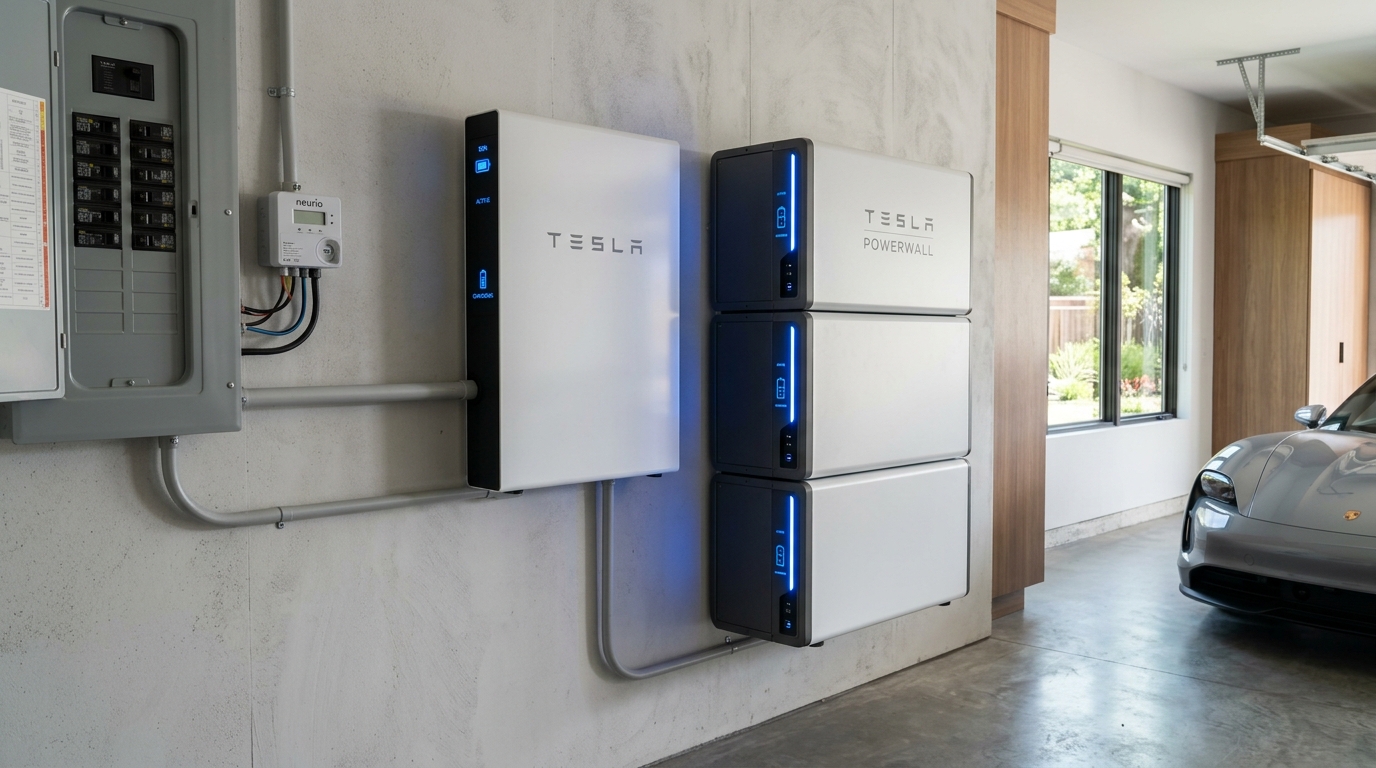
This tariff gap has sparked a rush toward Hybrid Solar Inverters with Lithium Iron Phosphate (LiFePO4 / LFP) battery storage. Rather than dumping cheap surplus power into the grid at noon, intelligent hybrid inverters store the clean energy in a wall-mounted battery pack. When 6:00 PM arrives, the system automatically disconnects from the grid and powers the entire household from the battery throughout the expensive peak window.
Economics of Adding Battery Storage in 2026:
- Dramatic Battery Cost Reductions: Global and Indian cell manufacturing scale has dropped LFP battery pack prices to approximately ₹22,000 to ₹26,000 per kWh, down over 40% from 2023 levels.
- 10-Year / 6,000 Cycle Lifespan: Modern LFP batteries outlast old tubular lead-acid batteries by over 3x and require zero water top-ups or maintenance.
- Blackout Immunity: Unlike grid-tied systems that shut down during power cuts for anti-islanding safety, hybrid inverters provide uninterrupted backup in under 20 milliseconds.
- Accelerated Payback: By offsetting ₹10 to ₹13/unit peak grid power daily, a 5 kWh battery saves an extra ₹1,600 to ₹2,200 per month, recovering its full cost within 4.5 to 5.5 years.
3 Steps to Prepare Your Home for ToD Billing
Inspect Your Electricity Bill for ToD Charges
Look at the reverse side of your latest electricity bill. If your DISCOM has installed a smart meter, you will see a table displaying "Peak Units" (TOD1) and "Off-Peak Units" (TOD2). Calculate what percentage of your load occurs after sunset.
Shift Energy-Intensive Loads to Solar Hours
Set washing machines, dishwasher cycles, EV charging, and water pumps to operate between 11:00 AM and 3:00 PM to maximize direct solar consumption and take advantage of daytime rate discounts.
Upgrade to a Hybrid Inverter with Battery Provision
If installing a new system under PM Surya Ghar, request a "hybrid-ready" or dual-mode inverter. Even if you choose to defer purchasing the battery pack today, having a hybrid inverter allows plug-and-play battery installation later without replacing your balance-of-system.
🔗 Related Calculators & Guides
Inverter & Battery Sizing Solar ROI & Payback Low Interest Solar EMI DISCOM Tariff DirectoryFrequently Asked Questions
Protect Yourself Against Peak Power Surcharges
Get custom estimates for rooftop solar and modern lithium battery storage tailored to your exact monthly power consumption and DISCOM tariff.
Compare Hybrid Solar Quotes Free →