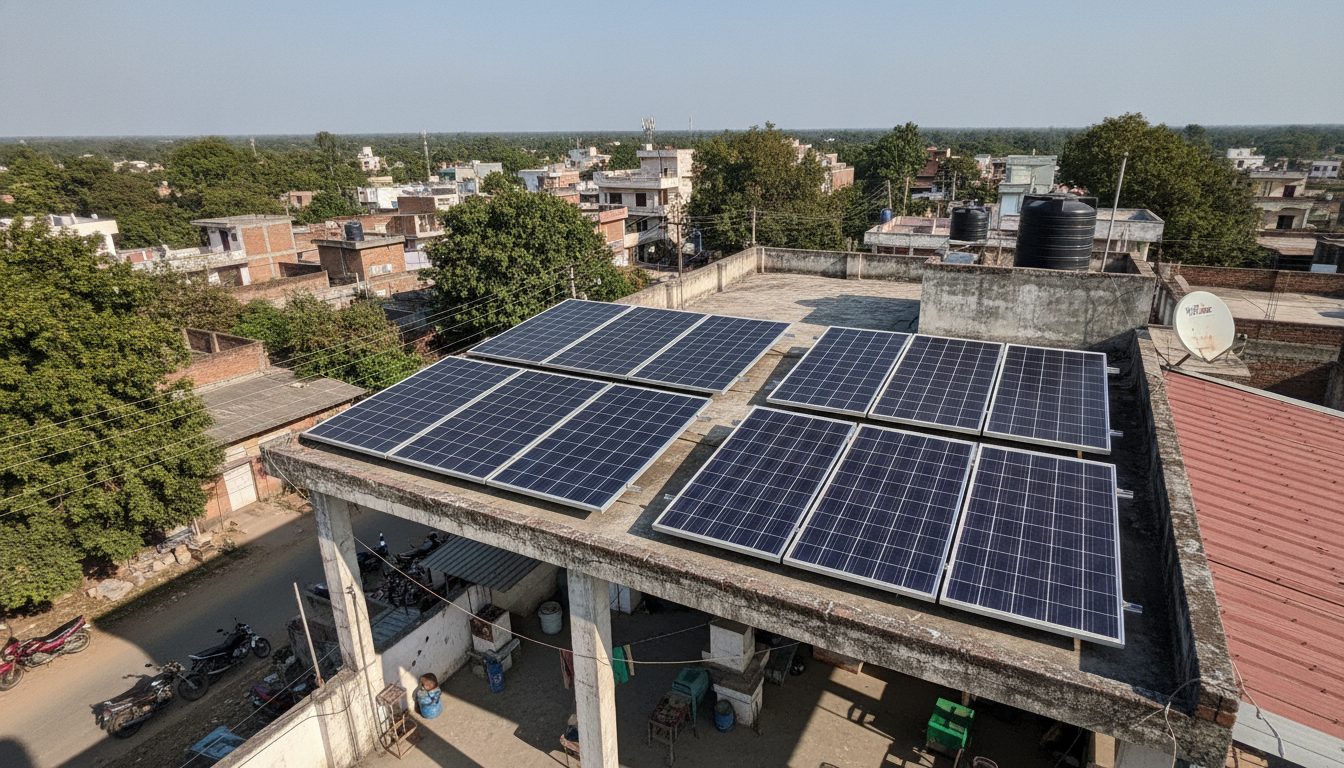
Market Adoption and Core Technology Differences
When evaluating TOPCon vs Mono PERC solar panels India, property owners and installers must look at how each technology performs under high ambient temperatures. TOPCon modules now command over 40% of the Indian commercial rooftop market due to lower temperature coefficients, meaning they suffer less efficiency loss during peak summer months compared to older wafer architectures.
Residential buyers planning a system size can check their required space using a solar roof area calculator before speaking with an installer. Both technologies fall under the Approved List of Models and Manufacturers (ALMM), which dictates which panels can be deployed across government-backed and subsidized rooftop projects in the country.
Analyzing Degradation Rates and Current Pricing
Module degradation determines how much electricity a solar array produces in its tenth or twentieth year of operation. TOPCon panels typically feature lower annual degradation rates than standard Mono PERC units, preserving higher generation capacity over decades.
Current module pricing per watt under ALMM reflects the newer manufacturing lines required for TOPCon production. While Mono PERC panels generally carry a lower initial purchase price, the pricing gap between the two technologies narrows as manufacturing scale increases across domestic and approved import facilities.
Pitching ROI to Residential and Commercial Clients
Installers often face the challenge of convincing clients to pay a higher upfront cost for newer technology. Pitching TOPCon requires shifting the focus from initial equipment expense to long-term generation gains. Commercial clients with high daytime electricity consumption benefit heavily from the improved low-light performance and temperature response of TOPCon arrays.
Homeowners can evaluate their financial returns by using the solar ROI and payback period calculator to weigh the higher initial equipment cost against future electricity bill savings over the system lifetime.
🌟 Ready to Go Solar? Get 3 Free Quotes
Connect with verified, MNRE-empanelled solar installers near you — free, no obligation.
Get Free Solar Quotes →