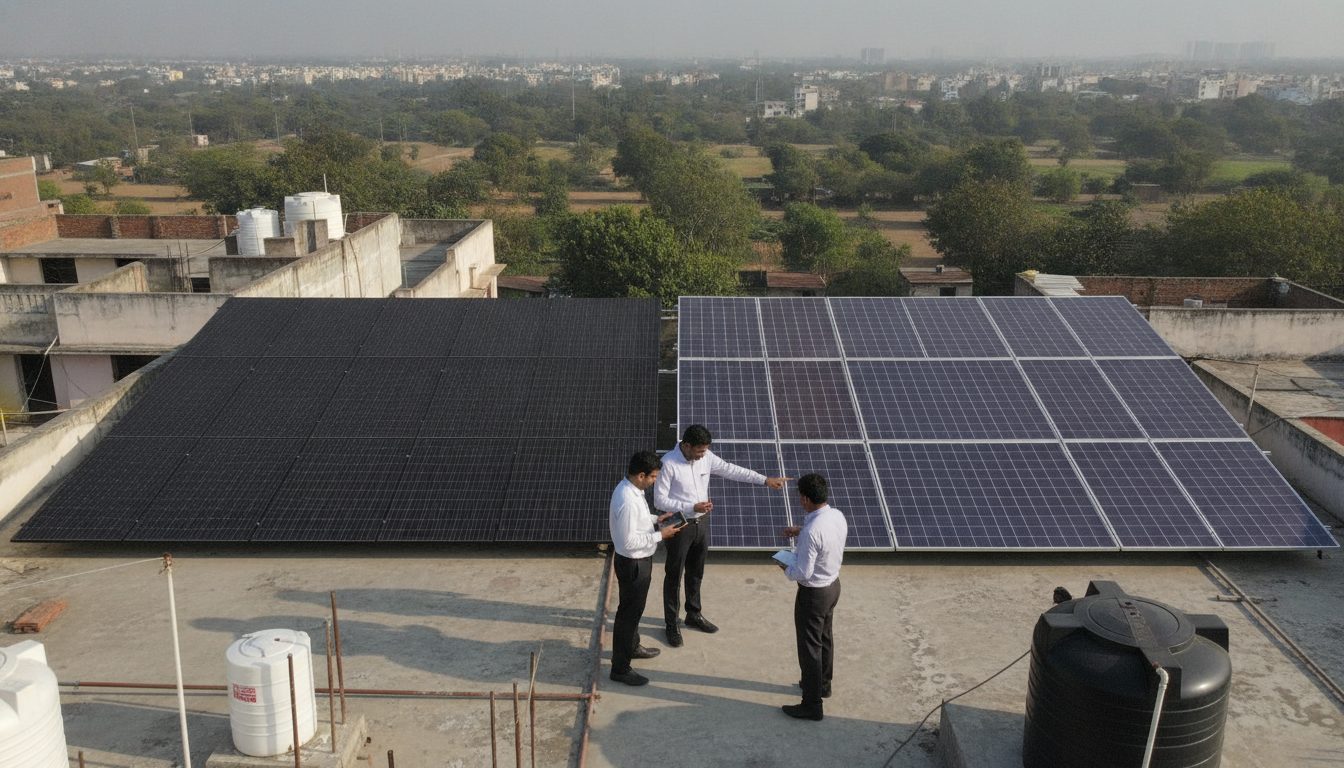
Market Shift from Mono PERC to TOPCon
TOPCon technology has largely overtaken Mono PERC in Indian wholesale markets due to higher bifaciality and lower temperature coefficients. Dealers and distributors shifting their inventory toward N-type TOPCon modules find that procurement trends now heavily favor these panels for both C&I and large residential rooftop installations. When evaluating the topcon solar panels wholesale price margin, procurement managers must look past the initial cost difference per watt and evaluate how performance parameters translate to client acquisition.
Assessing space constraints on Indian rooftops requires accurate measurements, and dealers often guide clients to use a solar roof area calculator before finalizing system capacities. Because N-type wafers degrade much slower than older P-type Mono PERC wafers, the technical justification for stocking TOPCon is straightforward for commercial buyers who track long-term energy yields closely.
B2B Procurement Strategies and Wholesale Pricing Trends
Wholesale pricing for solar modules fluctuates based on silicon supply chains, import duties, and domestic manufacturing output under Approved List of Models and Manufacturers mandates. Procuring TOPCon modules requires balancing container load quantities with localized warehousing costs. While Mono PERC panels historically offered a lower entry price point for price-sensitive retail counters, volume discounts on TOPCon lines have narrowed the gap.
Dealers managing working capital should evaluate bulk purchasing tiers carefully. Margins on N-type panels can be preserved by bundling modules with string inverters and mounting structures rather than engaging in pure price competition on the panels alone. Tier-1 manufacturers currently supply modules with improved low-light performance, which makes wholesale forecasting more reliable across cloudy monsoon months.
Pitching Higher Upfront Costs to Hesitant Buyers
Residential and commercial buyers often hesitate when faced with the higher upfront cost of TOPCon modules compared to older Mono PERC stock. Overcoming this objection involves shifting the conversation from capital expenditure to lifetime financial returns. Explain to buyers that lower temperature coefficients mean the panels lose less efficiency during peak summer afternoons in India, yielding more units of electricity over a standard twenty-five-year warranty period.
To convert hesitant prospects, sales teams can demonstrate financial feasibility using a solar ROI and payback period calculator that accounts for tariff inflation and accelerated depreciation for commercial setups. Showing exact numbers for annual electricity bill reductions helps justify the initial price premium of N-type technology.
🌟 Ready to Go Solar? Get 3 Free Quotes
Connect with verified, MNRE-empanelled solar installers near you — free, no obligation.
Get Free Solar Quotes →