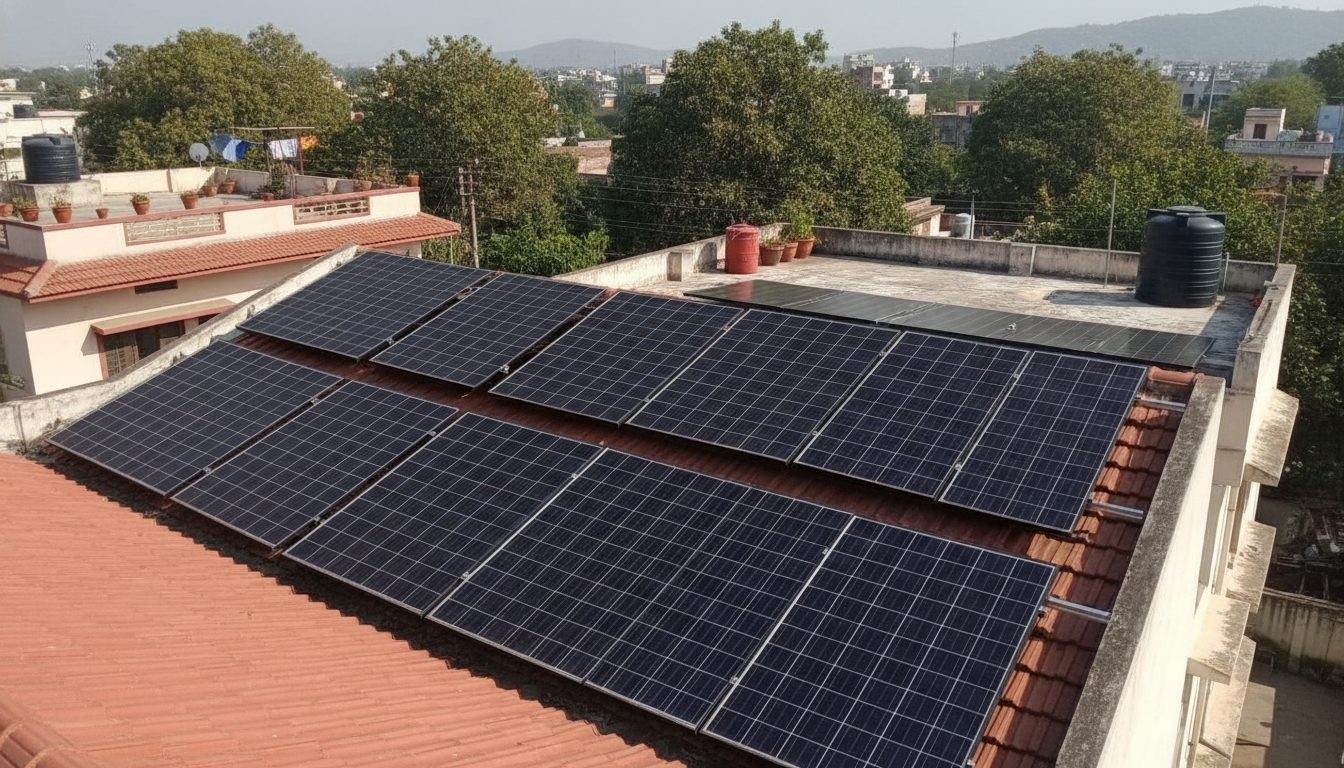
The Shift in Indian Solar Manufacturing
N-type TOPCon modules have largely replaced traditional P-type PERC panels in Indian tier-1 manufacturing due to lower degradation rates and superior bifaciality factors exceeding 80%. When evaluating TOPCon vs PERC solar panels India, installation vendors must look closely at how panel technology is shifting at the factory level. Tier-1 manufacturers are actively retooling assembly lines to produce N-type cells. Installers who rely strictly on older P-type inventories will find themselves holding outdated stock as supply chains move forward.
Understanding technical specifications helps you plan proper system sizes. Before finalizing hardware orders, homeowners and vendors often evaluate spatial requirements using a solar roof area calculator to ensure the site can accommodate these high-efficiency modules without overcrowding.
Want to see what this means for your roof? Use our free solar calculator for India to estimate system size, cost after the ₹78,000 subsidy and payback period.
Technical Comparison for Residential and Commercial Sites
Performance metrics dictate how solar assets behave over decades of operation. P-type PERC technology reached its efficiency ceiling years ago, while N-type TOPCon architecture delivers better performance under high ambient temperatures typical across most regions in India. Lower annual degradation means the modules retain a higher percentage of their original output after twenty-five years of generation.
Bifaciality is another key differentiator. While standard PERC modules capture light primarily from the front, modern TOPCon variants capture reflected ground light from the rear side with high efficiency. This dual-sided generation increases total energy yield per square meter, which proves valuable for commercial roofs with high albedo surfaces.
Commercial Arguments for Installation Vendors
Selling high-efficiency TOPCon modules helps justify higher per-watt pricing to skeptical residential and commercial clients. Customers frequently ask why premium panels cost more upfront. Installers can point to the superior temperature coefficients and lower degradation rates to explain the long-term financial return. Premium hardware commands a modest price premium, but the added energy generation over the project lifespan offsets the initial equipment cost.
To demonstrate these financial returns clearly to clients, vendors can run quick estimates using the solar ROI and payback period calculator during initial site consultations to show exact payback timelines based on local electricity tariffs.
Managing Inventory and Supply Chain Transitions
Inventory planning requires careful forecasting as manufacturing lines shift toward N-type wafers. Vendors who wait too long to phase out P-type modules risk getting stuck with obsolete stock that lacks consumer demand. Tier-1 domestic manufacturers have made N-type production their default standard, meaning procurement costs for TOPCon modules will continue to stabilize as production scales up.
Stocking modern panels also aligns with client expectations for up-to-date technology. Buyers researching rooftop solar systems read technical specifications carefully and specifically request N-type modules for their properties. Vendors who match this market demand secure more project contracts.
🌟 Ready to Go Solar? Get 3 Free Quotes
Connect with verified, MNRE-empanelled solar installers near you — free, no obligation.
Get Free Solar Quotes →