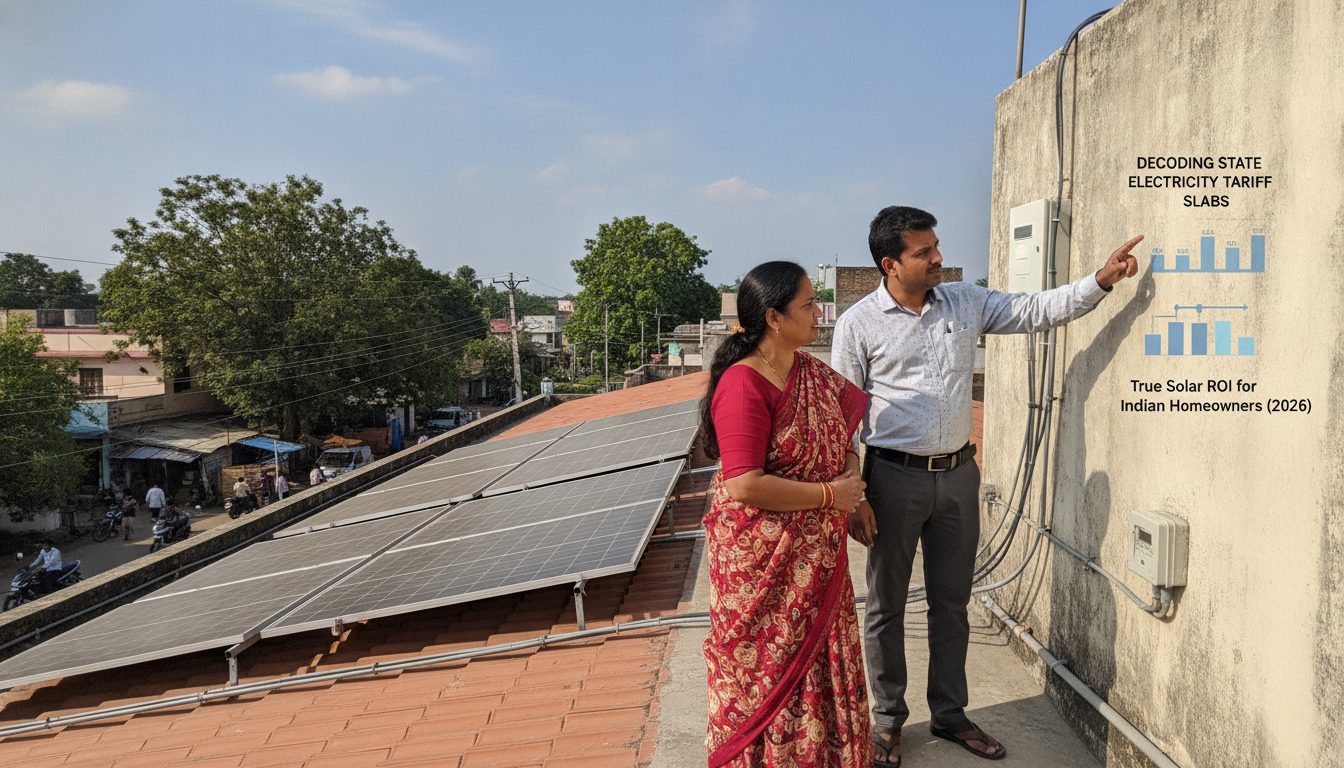
The Flaw in Using Flat Rates for Solar Savings
Many residential consumers calculate solar savings using a flat electricity rate, ignoring progressive tariff slabs and fixed charges levied by state DISCOMs. Assuming a single average cost per unit hides the true financial benefit of generating your own power. State utilities charge progressively higher rates as your monthly consumption increases. When you install rooftop solar, the electricity you generate offsets the units sitting in your highest consumption tier first. Before you estimate your returns, you can evaluate your exact financial payback using our solar ROI and payback period calculator.
To check the numbers for your own home, try the solar calculator — enter your electricity bill and get system size, subsidy and payback in seconds.
How Moving Down Consumption Slabs Changes the Math
Electricity pricing in India is structured around slabs, meaning the cost per kilowatt-hour rises sharply as you use more power. Households consuming above 500 units per month often face the highest billing tiers and additional fixed charges. By generating solar power to cover those top units, you drop your net consumption into lower-priced slabs. This shift creates an exponential increase in financial savings because you eliminate the most expensive units from your monthly bill rather than just saving on a flat average rate.
Real-World Examples from Major States
State DISCOM pricing policies directly dictate how fast your system pays for itself. In major states like Maharashtra, Gujarat, and Karnataka, residential consumers face steep tariff escalation once monthly usage crosses baseline thresholds. Net metering credits in these regions allow excess daytime generation to offset peak billing tiers. Because these states credit or adjust solar exports against high-slab rates, the financial offset is much larger than a basic flat-rate calculation suggests, significantly shortening the payback period.
🌟 Ready to Go Solar? Get 3 Free Quotes
Connect with verified, MNRE-empanelled solar installers near you — free, no obligation.
Get Free Solar Quotes →