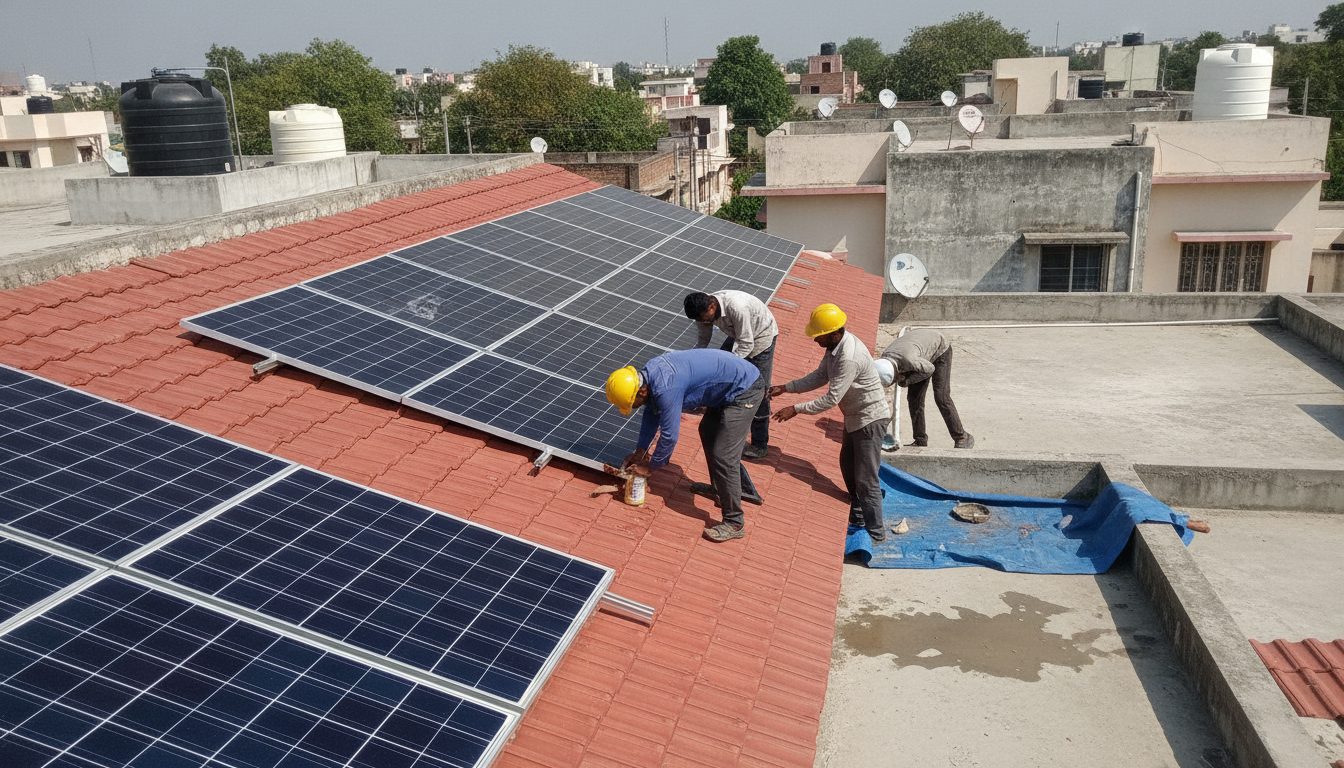
Why Roof Leaks Happen After Solar Installation
Roof leakage is one of the top post-installation complaints faced by residential solar owners, often caused by improper flashing or drilling into RCC roofs without waterproofing. When mounting structures are bolted directly into the concrete slab, monsoon rains find pathways through tiny gaps around the fasteners. Water seeps into the roof surface and eventually causes damp ceiling patches inside the top-floor rooms.
Before mounting any hardware, technicians must inspect the concrete surface condition. If you are planning an installation and want to check your available space properly, you can use the solar roof area calculator to plan your layout carefully and avoid problematic drainage zones on the terrace.
Not sure what size you need? Our free solar calculator works out system size, cost after subsidy and payback from your monthly electricity bill.
Essential Hardware for Leak-Free Mounting
Using standard hardware store fasteners on a rooftop solar array invites water damage. Proper solar panel roof leakage prevention requires specific engineering components designed to seal out rainwater permanently. Installers must use L-feet brackets secured with high-grade chemical anchors that bond firmly inside the concrete rather than relying on plastic plugs.
Every penetration point needs an EPDM rubber washer placed beneath the bracket base. EPDM rubber withstands extreme heat and heavy downpours without cracking, forming a tight waterproof seal around the bolt shank. Sealant applied carelessly over poor drilling work fails within a single summer season.
Checking Vendor Warranty and Post-Installation Liability
Fixing leaks after they appear costs time and money. Always verify warranty liabilities with the installation vendor in writing before work begins on your roof. Many standard solar quotes cover the panels and inverter for 25 years, but the workmanship warranty for waterproofing often lasts for a much shorter duration.
Ensure your contract explicitly states that the installation company bears financial responsibility for repairing any water seepage resulting from their mounting holes. Reputable vendors will re-waterproof the entire drill zone using polymer-modified mortar or specialized liquid membranes if a leak occurs during the initial monsoon cycle.
🌟 Ready to Go Solar? Get 3 Free Quotes
Connect with verified, MNRE-empanelled solar installers near you — free, no obligation.
Get Free Solar Quotes →