 SolarCalculators
Delhi Announces "Zero Upfront Cost" Solar Scheme for 2.3 Lakh Homes: How It Works & Eligibility (2026)
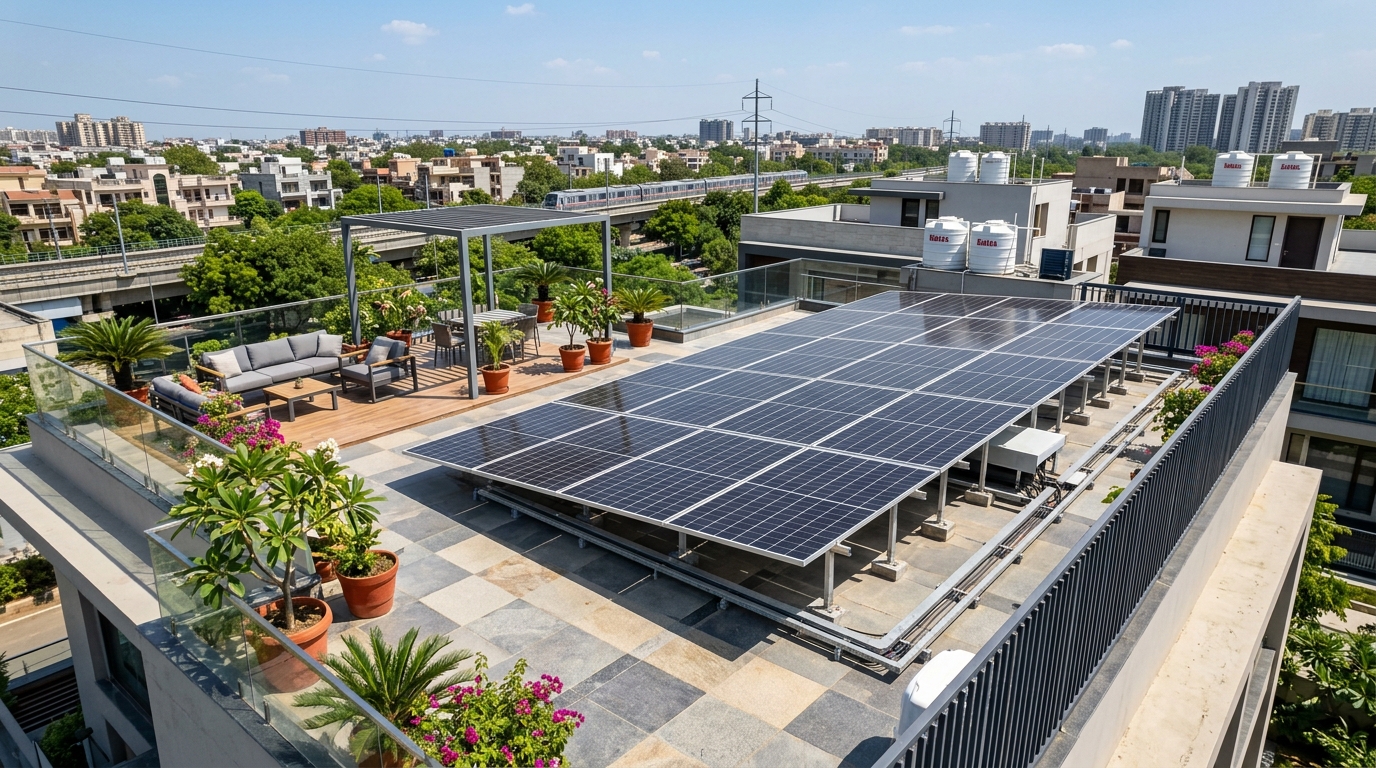
In one of the most aggressive urban clean energy drives in the country, the Delhi Government has officially rolled out its revised solar deployment roadmap targeting 2.3 lakh residential households by March 2027. The centerpiece of this initiative is a transformative "Zero Upfront Cost" installation model designed specifically for middle-class and working families consuming up to 400 units of electricity per month.
For thousands of families across East, West, North, and South Delhi who were hesitant to invest ₹1 lakh to ₹2 lakh upfront, this revised framework eliminates financial barriers by turning your rooftop into a zero-cost power generator.
- Zero Capital Investment: No down payment required for households consuming up to 400 kWh/month.
- Combined Financial Grants: Central PM Surya Ghar CFA (₹78,000 for 3kW) combined with Delhi State Government capital top-ups.
- Generation-Based Incentive (GBI): Earn ₹3.00/unit generated (for ≤3 kW) paid directly to your bank account for 5 years.
- Guaranteed Zero Bill: Total monthly electricity expenses wiped out through bi-directional net metering with BSES and Tata Power.
1. How Does the "Zero Upfront Cost" (RESCO) Model Work?
Traditionally, homeowners had to pay the full capital cost to the solar installer and wait 30 to 60 days for the government subsidy to be credited into their bank account. Under Delhi's tripartite utility-anchored RESCO framework, the process is inverted:
Selected solar EPC developers install Tier-1 DCR mono PERC/TOPCon panels, high-efficiency on-grid inverters, and lightning/earthing protection without demanding upfront money from you.
The ₹78,000 Central Financial Assistance from the PM Surya Ghar National Portal and the Delhi State subsidy are directly assigned to the installer upon successful grid synchronization.
Your home consumes solar units first. Surplus units exported to BSES or Tata Power offset your evening peak consumption, while the Delhi government credits your GBI bonus (₹3/unit) directly to your account.
Not sure what size you need? Our free solar calculator works out system size, cost after subsidy and payback from your monthly electricity bill.
2. Delhi Solar Financial Comparison (3 kW System)
| Component | Standard Purchase (CAPEX) | Delhi Zero-Upfront Model |
|---|---|---|
| Initial Out-of-Pocket Payment | ₹1,85,000 | ₹0 (Zero Down Payment) |
| PM Surya Ghar Central Subsidy | ₹78,000 (Refunded later via DBT) | Integrated upfront |
| Delhi State GBI Earnings (5 Yrs) | ~₹12,000 / year (₹60,000 total) | Credited to consumer |
| Monthly Electricity Bill | Reduced to ₹0 (Only fixed charge) | ₹0 Electricity Bill |
| Maintenance & Warranty (5 Yrs) | Vendor AMC required | Included free under RESCO agreement |
3. Eligibility Criteria for Delhi Residents
To qualify for the Zero-Upfront scheme in 2026, homeowners must satisfy the following conditions:
- Consumer Category: Domestic (residential) meter connection with BSES Rajdhani Power Limited (BRPL), BSES Yamuna Power Limited (BYPL), or Tata Power DDL (TPDDL).
- Average Monthly Consumption: Ideally between 200 and 400 units (where tariff benefits are optimized).
- Roof Rights: Ownership of a pucca concrete roof or independent floor with undisputed terrace access.
- Sanctioned Load: At least 1 kW to 3 kW existing sanctioned load on your latest electricity bill.
Calculate Your Solar Feasibility
Check Surya Ghar Subsidy → System Cost Calculator → Apartment & Society Solar → Solar Price in Delhi → Compare Verified Delhi Installers →4. How to Apply via Delhi Solar Portal
Delhi residents can register directly on the unified Delhi Solar Portal (integrated with the PM Surya Ghar National Portal). Once you enter your CA Number (Consumer Account), the portal auto-populates your sanctioned load and terrace feasibility, allowing you to select an empanelled installer with single-click approval.