 SolarCalculators
Floating Solar Power Plants in India: Design, HDPE Floats, Mooring & Cost Guide 2026
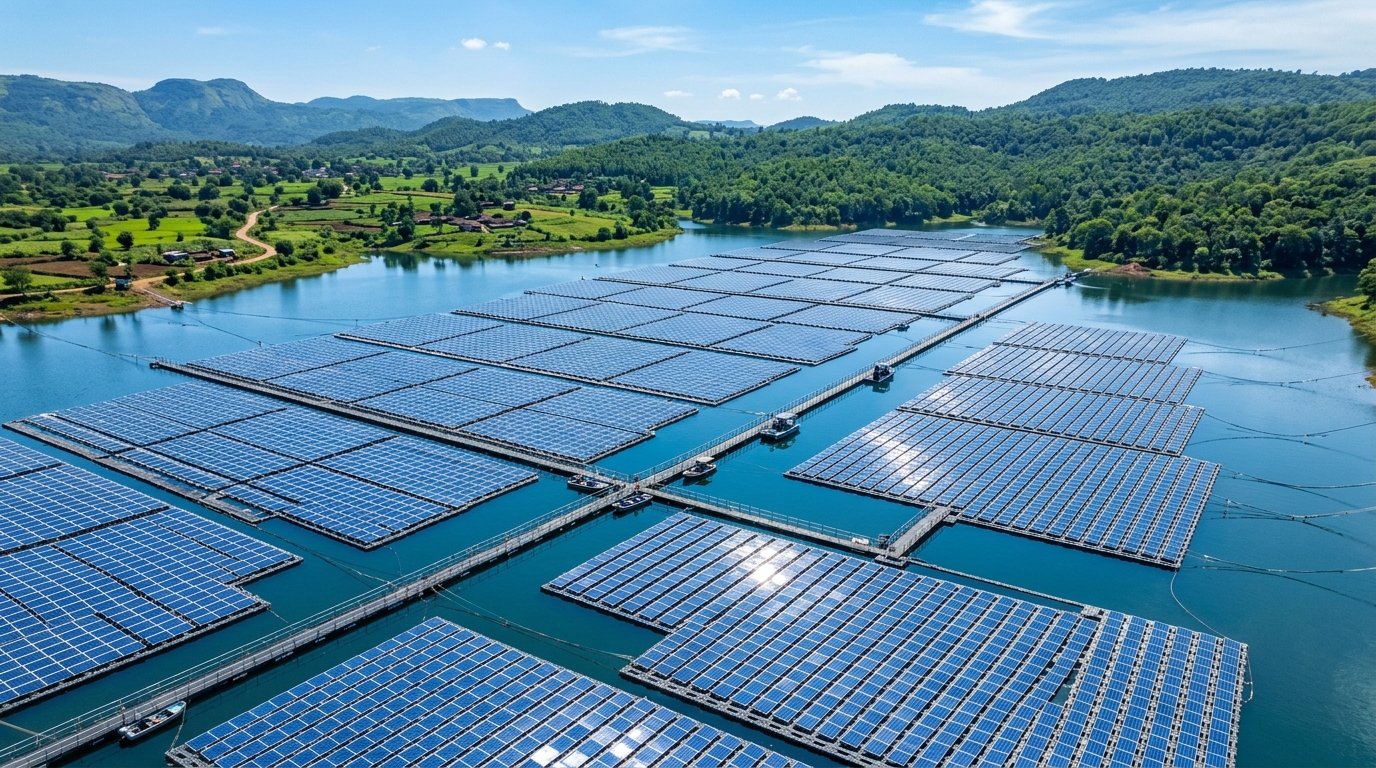
1. Anatomy of a Floating Solar Island
A floating solar power plant replaces traditional steel or aluminium ground foundation structures with specialized modular pontoon systems:
- Main Floater (Module Support): High-density polyethylene (HDPE) pontoons specifically molded with UV stabilizers (UV20+ rating) to support solar panels at an optimum tilt angle (typically 5° to 12° to balance aerodynamic wind drag against self-cleaning rainfall).
- Secondary Walkway Floater: Non-slip maintenance corridors allowing technicians to walk between module rows for O&M inspection, cleaning, and cable inspection without requiring boats for everyday checks.
- Connecting Pins & Fasteners: High-tensile stainless steel (SS316) or virgin polypropylene pins that interlock floaters into a flexible, wave-dissipating floating raft.
| Component | Material Specification | Expected Lifespan | Key Engineering Standard |
|---|---|---|---|
| Floatation Body | Virgin HDPE with UV stabilizer & carbon black | 25+ Years | ASTM D1693 (Environmental Stress Crack Resistance) |
| Fasteners & Brackets | Marine Grade Stainless Steel (SS316 / SS316L) | 25+ Years | ISO 3506-1 Corrosivity Category C5-M |
| Mooring Lines | Synthetic Polyester / Dyneema or Galvanized Steel Cable | 15 – 25 Years | ISO 18692 Deepwater Mooring Fiber Ropes |
| Solar PV Modules | Dual-Glass Bifacial TOPCon with IP68 junction boxes | 30 Years | IEC 61701 Salt Mist / Ammonia Corrosion Resistance |
2. Mooring & Anchoring Engineering: Handling Water Fluctuation
The single greatest engineering risk in floating solar is designing the mooring system to withstand extreme water level fluctuations and monsoonal wind loads. Indian hydroelectric reservoirs often experience water level variations of 8 to 15 meters between peak monsoon and summer drawdowns.
Three primary anchoring topologies are deployed based on bathymetry (water depth profile):
- Bank / Shoreline Anchoring: Steel reinforced concrete deadman anchors placed along the reservoir perimeter. Mooring lines with elastic synthetic rubbers (tensioners) expand and contract as the reservoir water rises and falls. Best for shallow or industrial quarry ponds.
- Bottom Concrete Sinker Anchoring (Catenary System): Pre-cast heavy concrete blocks (sinkers) dropped onto the reservoir bed, connected by catenary chains and heavy mooring lines. The weight of the chain rests on the seabed, providing restorative horizontal force during high winds.
- Taut Elastic Mooring: Utilizes submerged tension springs or inline elastomeric tether systems. Keeps the island strictly within an exact GPS coordinate radius, reducing footprint drift and electrical cable stress.
3. Water Conservation & Environmental Synergies
Beyond clean electricity generation, floating solar plants solve two major environmental challenges in water-stressed Indian states:
- Massive Evaporation Suppression: Covering water surfaces blocks direct solar irradiance and reduces surface wind velocity, slashing reservoir evaporation by 60% to 75%. A 10 MW floating solar plant saves approximately 30 to 45 million litres of fresh water annually.
- Algae Bloom Mitigation: By intercepting sunlight penetration, floating arrays prevent destructive cyanobacteria (blue-green algae) blooms, improving dissolved oxygen levels and reducing biological filtration costs for municipal water treatment plants.
4. Per-MW CAPEX Breakdown for Floating Solar in India (2026)
| Project Head (per 1 MWp) | Floating Solar (₹ Lakhs / MWp) | Ground-Mount Solar (₹ Lakhs / MWp) |
|---|---|---|
| Land Acquisition (3.5 - 4 acres) | ₹0.00 (Water lease ₹1.5L/yr) | ₹60.00 – ₹100.00 Lakhs |
| Solar PV Modules (580W TOPCon) | ₹145.00 | ₹145.00 |
| Mounting: HDPE Floaters vs Galvanized MMS | ₹68.00 (Floaters + Walkways) | ₹35.00 (Ground MMS + Piling) |
| Mooring & Anchoring Systems | ₹18.50 | Nil |
| Inverters, Underwater Cables & Evacuation | ₹48.00 | ₹42.00 |
| Installation, Launching & Commissioning | ₹26.00 | ₹18.00 |
| Total Turnkey Cost (Excl. Land for Ground) | ₹305.50 Lakhs / MW | ₹240.00 Lakhs / MW |
While the initial EPC capital cost of floating solar is approximately 25% to 28% higher than ground mount, eliminating multi-crore land acquisition costs and gaining +10% higher annual generation from water cooling yields an equal or superior Levelized Cost of Energy (LCOE) over a 25-year lifecycle.