 SolarCalculators
India Mandates Battery Storage for All New Solar Projects from July 2027: What It Means for Power Tariffs & Rooftop Solar
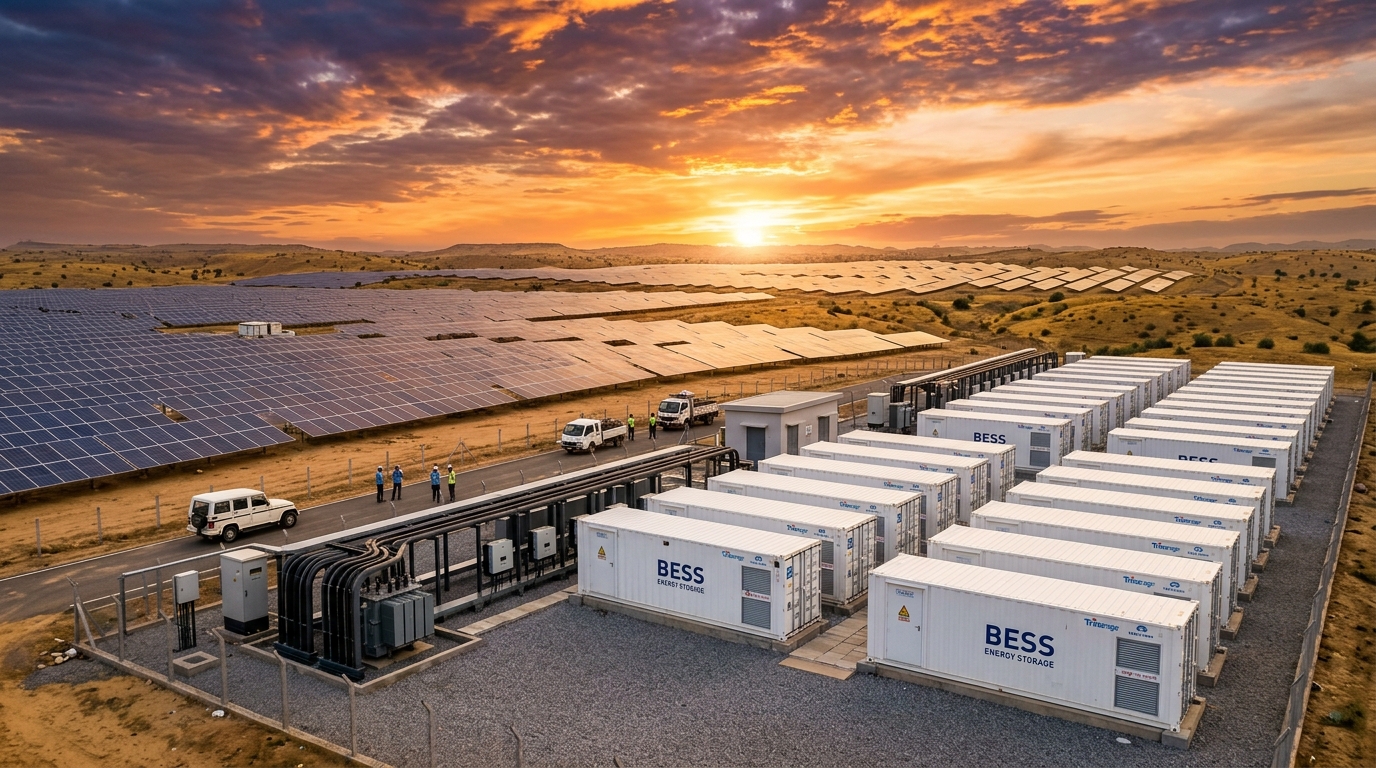
India’s meteoric rise in clean power has created an unprecedented engineering challenge. In the first half of 2026 alone, the country installed over 27 GW of renewable capacity. However, solar generation spikes dramatically between 11:00 AM and 2:00 PM—precisely when national electricity demand dips. Without adequate storage, regional transmission grids have been forced to curtail nearly 11 TWh of zero-carbon electricity over the past 15 months, wasting enough clean energy to power 10 million households.
To eliminate solar curtailment and solve the evening peak demand crisis, the Ministry of Power’s new draft rules require renewable developers to guarantee dispatchable power through co-located batteries.
Key Provisions of the July 2027 Battery Mandate
| Regulatory Milestone | Requirement | Impact on Energy Generation |
|---|---|---|
| July 1, 2027 (Phase 1) | Minimum 10% BESS of total plant capacity | 2-Hour storage duration to shift afternoon peak into early evening (6 PM – 8 PM) |
| April 1, 2029 (Phase 2) | Storage duration expands to 4 hours | Round-the-Clock (RTC) green power supply to replace coal peaking plants |
| Applicable Projects | Central & state government-tendered projects | Excludes already commissioned plants and private captive off-grid systems |
| BESS Tech Standard | Cell traceability & DCR compliance | Accelerates indigenous Lithium Iron Phosphate (LFP) and Sodium-ion giga-factories |
Want to see what this means for your roof? Use our free solar calculator for India to estimate system size, cost after the ₹78,000 subsidy and payback period.
Why This Decision Changes the Rooftop Solar Landscape
While the regulation directly targets multi-hundred megawatt solar parks, its ripple effect on ordinary Indian homeowners and commercial rooftop consumers will be profound:
1. Rapid Price Deflation for Home Solar Batteries
Utility-scale demand creates massive domestic procurement economies of scale. As major players like Tata Power, Adani Green, NTPC, and JSW Energy place gigawatt-hour battery orders, domestic battery pack assembly and supply chains will mature rapidly. Analysts project residential 5 kWh LFP home battery pack costs to decline by an additional 25% by late 2027.
2. Protection Against Rising Evening Grid Tariffs
As state DISCOMs install smart meters and enforce Time-of-Day (ToD) peak pricing (at least 10% higher for homes during evening peak hours), homes equipped with hybrid solar inverters and battery storage will enjoy complete insulation from grid tariff hikes.
3. Ending the Solar Curtailment Dilemma
In states like Rajasthan, Gujarat, and Tamil Nadu, local distribution companies frequently delayed granting net-metering approvals to prevent local grid transformer tripping. With regional grid batteries soaking up surplus power, DISCOMs will be able to approve residential rooftop applications significantly faster.
🔗 Related Calculators & Articles
Calculate Inverter & Battery Size Solar ROI & Payback Calculator Compare Verified Solar Quotes Time-of-Day Tariffs & BatteriesFrequently Asked Questions
Future-Proof Your Rooftop Solar System
Connect with certified solar installers who specialize in hybrid solar systems, high-efficiency TOPCon panels, and smart battery storage.
Get 3 Free Solar Quotes →