 SolarCalculators
Solar Power & BESS Battery Storage for Petrol Pumps in India: Diesel Generator Replacement & 2026 ROI
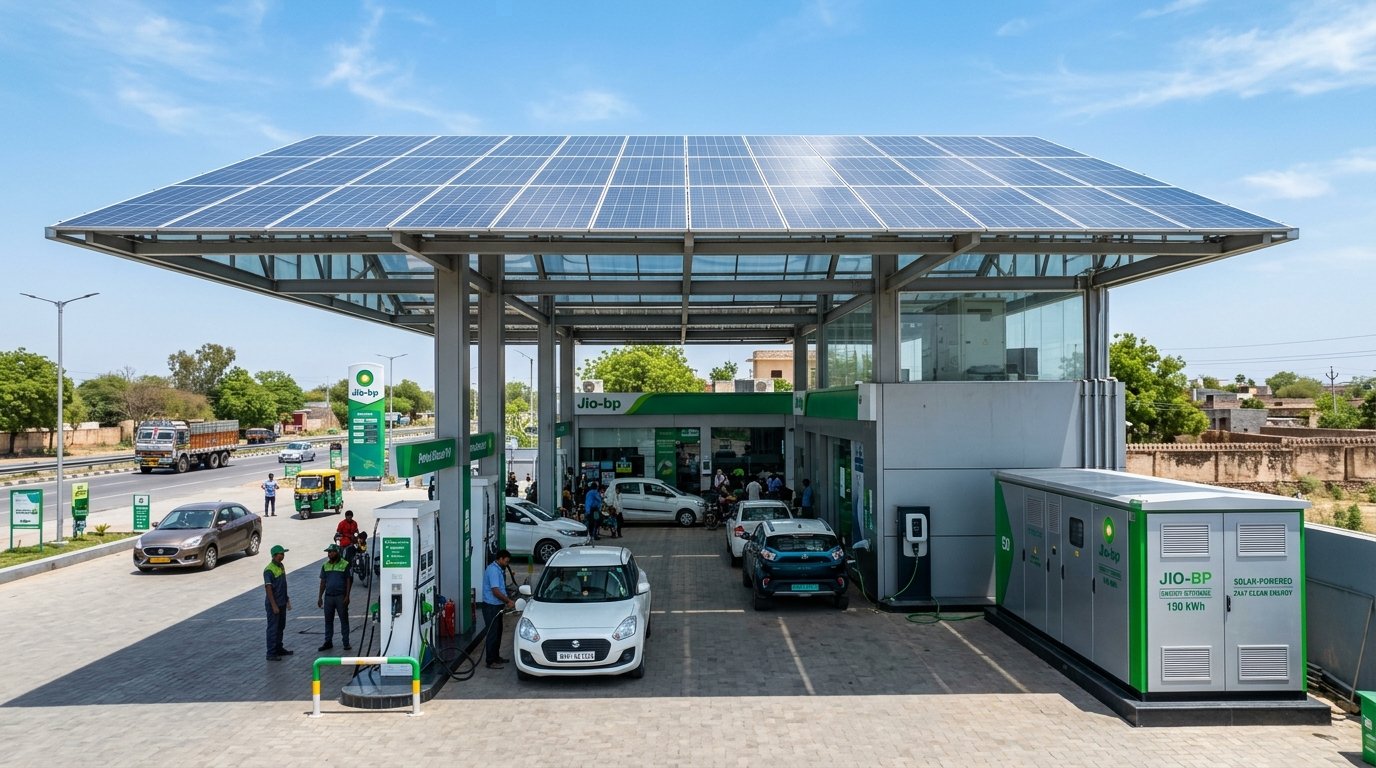
1. The Energy Challenge of Indian Fuel Outlets (IOCL, HPCL, BPCL)
Retail fuel outlets operate 16 to 24 hours daily in environments with intermittent rural or semi-urban grid power. When the grid fails, starting a 25 kVA or 40 kVA diesel generator for light operational loads (often consuming only 4–8 kW) leads to extreme engine underloading (wet stacking), burning diesel at an exorbitant cost of ₹28 to ₹36 per kWh generated.
| Equipment / Load Type | Connected Load (kW) | Operating Nature | Power Sensitivity |
|---|---|---|---|
| Submersible Turbine Pumps (STP) | 1.5 HP to 2.0 HP (1.5 kW ea.) | Intermittent high inductive inrush (3x starting current) | Requires clean sinusoidal waveform |
| Multi-Product Dispensers (MPD) | 0.75 kW per nozzle block | Continuous flow metering & pulse encoders | Extremely sensitive to voltage dips (causes metering resets) |
| Canopy & Yard LED Lighting | 2.0 kW – 4.5 kW | Continuous 12 hours night load | Standard AC load |
| POS, Automation Servers & CCTV | 1.0 kW – 1.8 kW | 24x7 Mission critical IT load | Requires zero-millisecond UPS transfer time |
2. System Architecture: Hybrid Solar + Lithium BESS vs DG Set
Modern petrol pump solar setups utilize an intelligent 3-phase hybrid inverter with built-in generator auto-start controllers and Lithium Iron Phosphate (LiFePO4) storage:
- Daytime Priority Generation: Solar panels installed directly on the high-tensile canopy structure or sales building roof power dispensers directly. Surplus generation charges the Lithium BESS.
- Zero-Millisecond Seamless Switchover: When DISCOM grid power cuts, the hybrid inverter takes over in less than 10 milliseconds. Fuel dispensing never stops, and customers experience zero transaction interruption.
- Intelligent DG Synchronization: If prolonged cloudy monsoons drain the battery below 15%, the inverter signals the DG to start, loads the generator to its optimal 70% sweet spot, fast-charges the battery in 90 minutes, and shuts down the generator automatically.
3. PESO Safety Norms & Canopy Solar Engineering
Because petrol pumps are classified as Class-1 Hazardous Zones under Petroleum and Explosives Safety Organization (PESO) regulations, solar installations must adhere to strict safety protocols:
- Flameproof / Ex-d Enclosures: DC Combiner Boxes and AC Inverters must be mounted outside Zone 0 and Zone 1 hazardous vapor perimeters (minimum 6 meters away from fuel vents and dispensing nozzles).
- Non-Penetrative Standing Seam Clamps: Canopy sheet integrity must remain 100% leak-proof without drilling holes through fuel station roof sheets.
- Class-A Dual-Glass Fire Rated Modules: Bifacial glass-glass solar panels provide superior fire retardancy and withstand high ambient fuel vapor exposure.
- Isolated Chemical Earthing: Separate earthing pits for Solar DC, Inverter AC, and Lightning Arresters (LA) maintaining resistance strictly below 2.0 Ohms.
4. Cost, Capex & Monthly Diesel Savings Analysis
| Parameter | Standard 2-Island Station (15 kW Solar + 15 kWh LFP) | Highway 4-Island Station (25 kW Solar + 30 kWh LFP) |
|---|---|---|
| Solar PV Capacity | 15 kWp (TOPCon 580W Bifacial) | 25 kWp (TOPCon 580W Bifacial) |
| Battery Storage Capacity | 15.3 kWh LiFePO4 (6,000 cycles) | 30.7 kWh LiFePO4 (6,000 cycles) |
| Total Turnkey Project Cost | ₹9,80,000 | ₹16,40,000 |
| Monthly Diesel Saved | 450 Litres (~₹42,750 / mo) | 850 Litres (~₹80,750 / mo) |
| Annual Electricity Bill Reduction | ₹1,60,000 / year | ₹2,75,000 / year |
| Total Annual Financial Savings | ₹6,73,000 / year | ₹12,44,000 / year |
| 40% Accelerated Depreciation (Tax Save) | ₹2,94,000 Tax Saved (Yr 1) | ₹4,92,000 Tax Saved (Yr 1) |
| Effective Payback Period | 1.8 Years (21 Months) | 1.5 Years (18 Months) |
5. Frequently Asked Questions (FAQs)
Q1: Does installing solar panels on a fuel canopy void OMC (IOCL/BPCL/HPCL) warranties?
No. When installed using non-penetrative Klip-Lok aluminium clamps certified for 160 km/h wind speeds, canopy structural warranties remain 100% intact.
Q2: Can the solar battery run fuel pumps during a total blackout?
Yes. A 15kW hybrid inverter can handle continuous heavy inductive starting surges of up to three 2HP submersible turbine pumps simultaneously without dropping output voltage.