 SolarCalculators
PM KUSUM Farmer Income — Earn ₹40,000/Acre Leasing Land for Solar (2026)
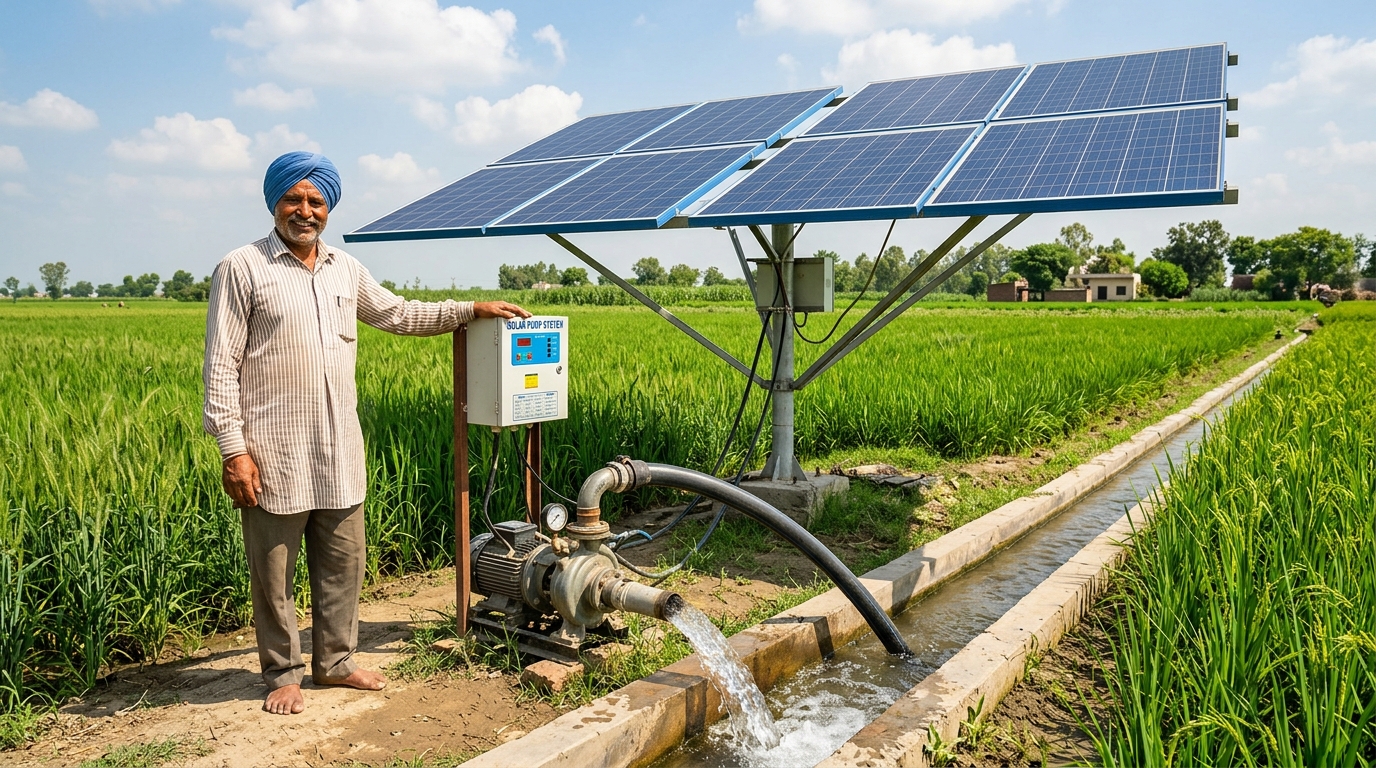
For decades, rural farmers across India have battled unreliable agricultural electricity, night-time power cuts for tubewells, and soaring diesel pump expenses. The PM KUSUM (Pradhan Mantri Kisan Urja Suraksha evam Utthaan Mahabhiyan) scheme has revolutionized the rural economy by turning farmers from mere power consumers into "Urjadata" (power producers).
In 2026, expanded budget allocations and streamlined state nodal agency (SNA) portals make it easier than ever for agricultural landowners to achieve two goals: earn ₹35,000 to ₹55,000 per acre in guaranteed annual lease rent, or install solar water pumps with up to 90% government subsidy. Here is your complete guide.
1. The 3 Components of PM KUSUM Explained
The Ministry of New and Renewable Energy (MNRE) designed PM KUSUM across three distinct models to cater to different agricultural landholders:
Farmers, farmer producer organisations (FPOs), or cooperatives can set up small ground-mounted solar plants (500 kW to 2,000 kW) on barren, uncultivable, or fallow land. If farmers lack capital, they can lease their land to private solar developers who invest 100% of the capex and pay the farmer guaranteed annual rent for 25 years.
Designed for farmers in off-grid rural regions without electricity connections. Replaces diesel-powered pumps with 3 HP, 5 HP, or 7.5 HP standalone DC/AC solar submersible pumps.
For farmers who already have an electric tubewell connection. A solar array is installed to power the pump during daylight hours, and any surplus units generated when irrigation is not required are exported back to the DISCOM grid for extra revenue.
Not sure what size you need? Our free solar calculator works out system size, cost after subsidy and payback from your monthly electricity bill.
2. Component A Land Lease: Real Earnings Breakdown for Landowners
Under Component A, setting up a 1 MW solar plant requires approximately 4 to 5 acres of contiguous land. Because solar power plants carry 25-year long-term Power Purchase Agreements (PPAs) with state power utilities (like MSEDCL, RUVNL, UPPCL, or PSPCL), developers offer ironclad lease agreements:
| Land Parcel Size | Solar Plant Capacity | Yearly Lease Rental (@ ₹40,000/acre) | 25-Year Cumulative Passive Income |
|---|---|---|---|
| 2.5 Acres | 0.5 MW (500 kW) | ₹1,00,000 / year | ₹35 – ₹42 Lakhs (with 5% escalation) |
| 5.0 Acres | 1.0 MW (1,000 kW) | ₹2,00,000 / year | ₹70 – ₹85 Lakhs (with 5% escalation) |
| 10.0 Acres | 2.0 MW (2,000 kW) | ₹4,00,000 / year | ₹1.4 – ₹1.7 Crore (with 5% escalation) |
3. Component B Solar Pump Subsidy: 90% Government Support
If you need irrigation water without high diesel or electricity bills, Component B provides unprecedented financial assistance:
- Central Government Share (CFA): 30% of benchmark cost
- State Government Subsidy: 30% to 60% (depending on state — states like Rajasthan, Haryana, and Gujarat offer up to 60%)
- Farmer Contribution: Only 10% to 40% (can be funded via Kisan Credit Card or NABARD agriculture loans)
4. Agrivoltaics: Dual Farming Under Elevated Panels
You do not have to sacrifice crop cultivation to host solar panels! Under the Agrivoltaics model, solar panel mounting structures are elevated to 8 to 10 feet with wide 6-meter inter-row spacing.
Crops that thrive under partial shade — such as turmeric, ginger, tomatoes, spinach, cabbage, and pulses — flourish beneath the panels, while solar arrays protect crops from scorching summer heatwaves and hail.
Related Agricultural Solar Tools
Solar Water Pump Calculator → Dairy Farm Solar Sizing → Poultry Farm Solar Sizing → Cold Storage Solar Sizing → Get Verified Installer Quotes →5. How to Apply Online: Step-by-Step Guide
- Visit your State Nodal Agency website (e.g., mahaurja.com in Maharashtra, energy.rajasthan.gov.in in Rajasthan, hauda.gov.in in Haryana, or upneda.org.in in UP).
- Submit your land revenue documents: 7/12 extract, Jamabandi, or Khasra/Khatauni verification.
- Select whether you wish to develop the plant yourself or lease your land to an empanelled solar developer.
- Pay the nominal application fee online (typically ₹5,000 to ₹10,000 per MW).
- DISCOM engineers conduct the feasibility survey and sign the tripartite PPA and lease agreement.