 SolarCalculators
PM Surya Sarovar Yojana: India Approves ₹5,070 Crore Scheme
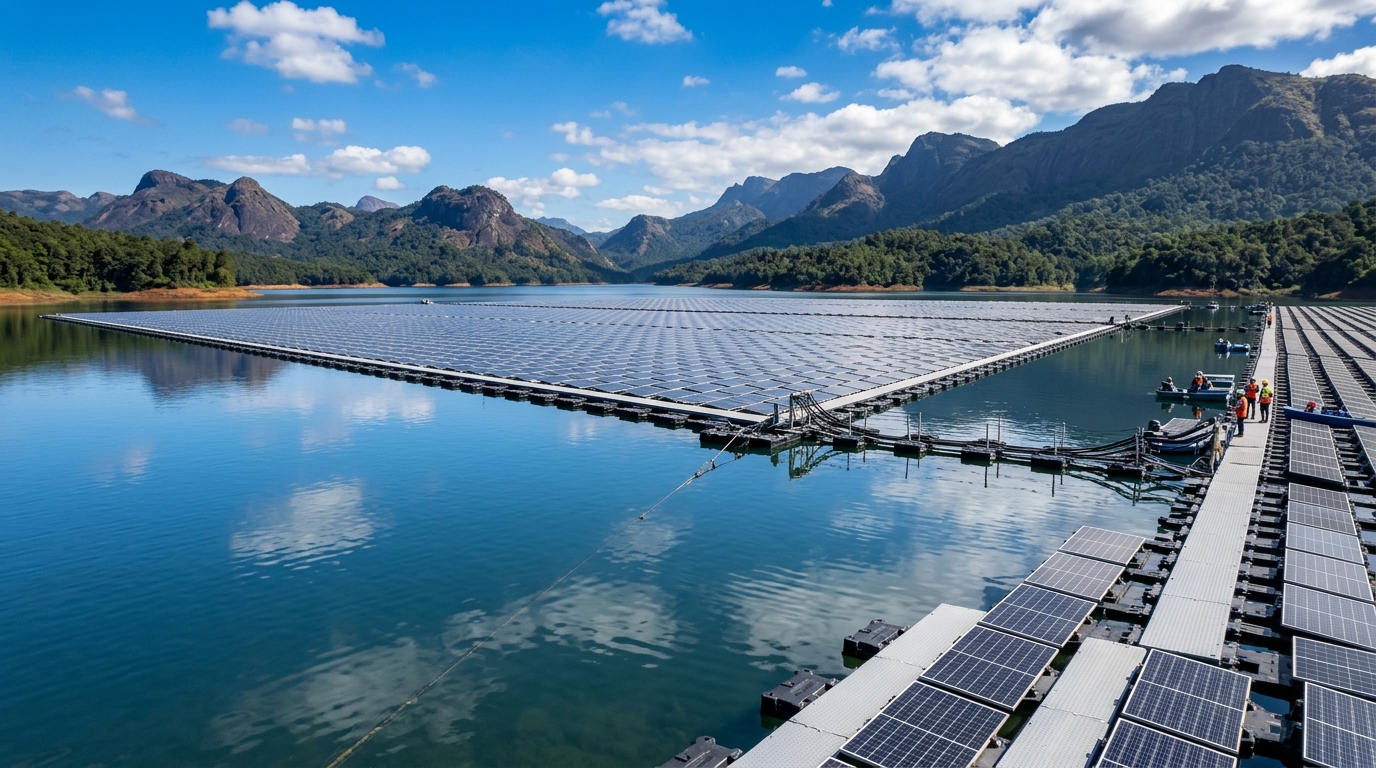
In a major boost to India's clean energy ambitions, the Union Cabinet has officially greenlit the Pradhan Mantri Surya Sarovar Yojana (PM-SSY). Backed by a central financial outlay of ₹5,070 crore, the initiative aims to deploy 5,000 Megawatts (5 GW) of Floating Solar Photovoltaic (FSPV) capacity across India’s water bodies, dams, and industrial lakes by 2030.
With India rapidly approaching 165 GW of installed solar capacity, land availability has become a pressing bottleneck in densely populated agricultural states. PM Surya Sarovar addresses this challenge head-on by transforming surface water reservoirs into dual-purpose clean energy hubs.
- Total Budget: ₹5,070 Crore dedicated Central Financial Assistance (CFA)
- Target Capacity: 5 GW Floating Solar with integrated Battery Energy Storage Systems (BESS)
- Primary Locations: Irrigation reservoirs, hydroelectric dam basins, industrial water treatment ponds
- Dual Advantage: Generates clean electricity while saving billions of litres of water from evaporation
1. Why Floating Solar? The Triple Benefit of Water-Mounted Arrays
Installing solar panels on floating High-Density Polyethylene (HDPE) pontoons offers unique engineering and environmental advantages over traditional ground-mounted solar farms:
| Factor | Traditional Ground-Mounted Solar | Surya Sarovar Floating Solar |
|---|---|---|
| Land Requirement | Requires 4 to 5 acres per MW of land | Zero Land Acquired (Installed on water) |
| Module Operating Temperature | Heats up to 55°C – 65°C in Indian summers | Water cooling lowers temp by 10°C – 15°C |
| Efficiency & Yield | Standard rated generation | +5% to +12% Extra Yield from cooling effect |
| Water Evaporation | No conservation effect | Cuts water reservoir evaporation by up to 60% |
| Algae Growth | Not applicable | Blocks sunlight, inhibiting toxic algae blooms |
Want to see what this means for your roof? Use our free solar calculator for India to estimate system size, cost after the ₹78,000 subsidy and payback period.
2. Co-Located Battery Energy Storage (BESS) Integration
Crucially, PM Surya Sarovar Yojana mandates that projects must include co-located Battery Energy Storage Systems (BESS) with at least 2 hours of storage duration. This requirement directly aligns with the Central Electricity Authority’s (CEA) grid-reliability directives.
By pairing floating arrays with large-scale lithium iron phosphate (LiFePO4) battery banks, state utilities can store excess midday generation and discharge electricity directly into the grid during the 6:00 PM to 10:00 PM evening peak-demand curve, displacing expensive diesel and thermal peaking plants.
3. Target States & Early Landmark Installations
India already operates several world-class floating solar plants that serve as blueprints for the PM Surya Sarovar rollout:
- Omkareshwar Reservoir, Madhya Pradesh (600 MW): One of the world's largest floating solar projects on the Narmada river basin.
- Ramagundam, Telangana (100 MW): NTPC’s flagship floating solar station installed over a thermal power plant reservoir.
- Kayamkulam, Kerala (92 MW): Built across backwaters, delivering power to coastal Kerala with minimal land impact.
Under PM-SSY, major new tenders will be released by SECI and state agencies in Maharashtra, Odisha, Gujarat, Karnataka, and Tamil Nadu.
Explore Sizing & Subsidy Calculators
Solar Cost Calculator → Carbon Offset Calculator → Check Surya Ghar Subsidy → Compare Installer Quotes →4. What This Means for EPC Installers and Developers
For the Indian solar industry, the ₹5,070 crore outlay opens lucrative EPC opportunities across anchoring systems, UV-stabilised HDPE floaters, sub-aquatic cabling, and battery containerisation. Furthermore, state governments can monetize non-revenue reservoir surfaces by leasing water rights to independent power producers (IPPs).