Solar Carport Structure Design, Cost & ROI: Residential & Commercial Guide (2026)

Founder & Renewable Energy Engineer
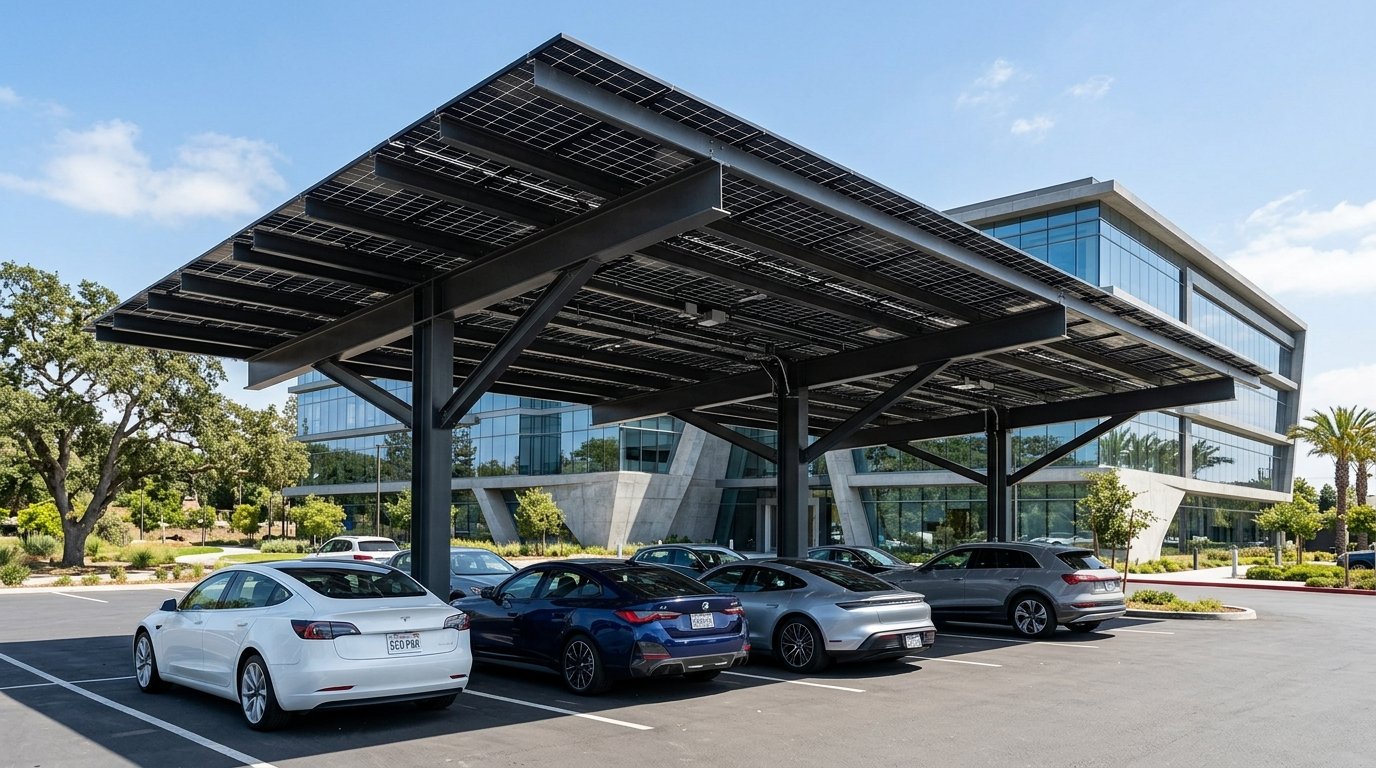
⚡ What is a Solar Carport? A solar carport is an overhead canopy structure built over parking bays with photovoltaic solar panels acting as the roof. In 2026, solar carports have become the highest ROI real estate optimization for Indian tech parks, shopping malls, hospitals, factories, and luxury residential villas — generating clean electricity while providing sheltered parking and integrated EV charging.
1. Why Solar Carports are Booming in India (2026 Trends)
As rooftop space fills up in commercial establishments and high-end residential homes, expansive open parking lots represent underutilized land assets. Direct sunlight on parked cars in Indian summers pushes cabin temperatures above 65°C to 70°C, accelerating dashboard degradation and causing high AC power draw upon ignition.
Solar carports solve three critical infrastructure needs simultaneously:
- 100% On-Site Solar Generation: Generates 4 to 4.5 units (kWh) per kW daily without consuming valuable building terrace area.
- Thermal Protection for Vehicles: Keeps vehicles 15°C to 20°C cooler, enhancing EV battery lifespan and passenger comfort.
- Direct EV Fast-Charging Hub: Directly powers AC Level-2 (7.4 kW / 22 kW) or DC Fast Chargers (30 kW / 60 kW) from solar power, eliminating peak grid demand charges.
2. Structure Engineering: Cantilever vs T-Frame vs 4-Leg Design
| Structure Typology | Key Structural Features | Parking Efficiency | Typical Application |
|---|---|---|---|
| Single-Post Cantilever (L-Frame) | One central rear HDG steel pillar with cantilevered solar purlin arm | Maximum (Zero door-ding obstruction) | Corporate VIP parking & luxury villas (2 to 10 cars) |
| T-Frame (Double-Bay Cantilever) | Central pillar spine dividing two opposite parking rows | High (Optimizes steel weight per car) | Commercial mall & tech park open parking (20 to 200 cars) |
| 4-Leg Portal Frame (Box Structure) | Four corner hot-dip galvanized columns with cross-bracing | Moderate (Requires pillar spacing planning) | High-wind coastal zones & heavy commercial bus/truck bays |
3. Waterproofing Technologies: Dual-Glass vs Gutter Rail Systems
Unlike standard rooftop solar where rainwater drains onto concrete slabs below, a carport roof must be 100% watertight to keep vehicle owners dry during monsoon downpours:
- Integrated Aluminium Gutter Rails: Specialized interlocking aluminium extrusion profiles with high-grade EPDM rubber seals channel rainwater directly into vertical downspouts.
- Frameless Dual-Glass (Bifacial) Modules: Clear translucent glass-glass panels allow 10% to 20% natural ambient daylight through while generating electricity from both top and reflected ground light.
4. Cost, Capex Breakdown & Payback in India (2-Car vs 50-Car)
| Parameter | Residential Villa (2-Car / 5 kW) | Commercial Office Park (50-Car / 100 kW) |
|---|---|---|
| Solar Capacity (kWp) | 5.0 kW (9x 580W TOPCon Modules) | 100.0 kW (172x 580W Bifacial Modules) |
| Structure Material | Hot-Dip Galvanized IS 2062 Grade Steel | Structural C/Z Purlins & Heavy HDG Columns |
| Total Turnkey Capex | ₹2,95,000 (~₹59,000/kW) | ₹44,00,000 (~₹44,000/kW) |
| Annual Generation | ~7,500 kWh (Units) | ~1,50,000 kWh (Units) |
| Annual Electricity Savings | ₹75,000 / year (@ ₹10/unit) | ₹18,00,000 / year (@ ₹12/unit C&I tariff) |
| 40% Accelerated Depreciation (Yr 1) | Not applicable (Domestic) | ₹17,60,000 Tax Write-off |
| Simple Payback Period | 3.9 Years | 2.4 Years (Post-Tax Benefits) |
💡 Pro Tip on EV Charging: A 100 kW solar carport produces ~400 kWh of solar energy per sunny day — enough to provide 100% full charges for eight 50 kWh electric vehicles (e.g. Tata Nexon EV, BYD Atto 3) every single day completely for free.
Written by Deepak Chopade
Founder & Renewable Energy Engineer at SolarCalculators.in, researching MNRE PM Surya Ghar subsidy regulations, industrial C&I solar models, and renewable engineering across India.