 SolarCalculators
Solar Inverter High-Voltage Tripping (253V+): Why Solar Trips at Peak Afternoon & 5 Proven Fixes (2026)

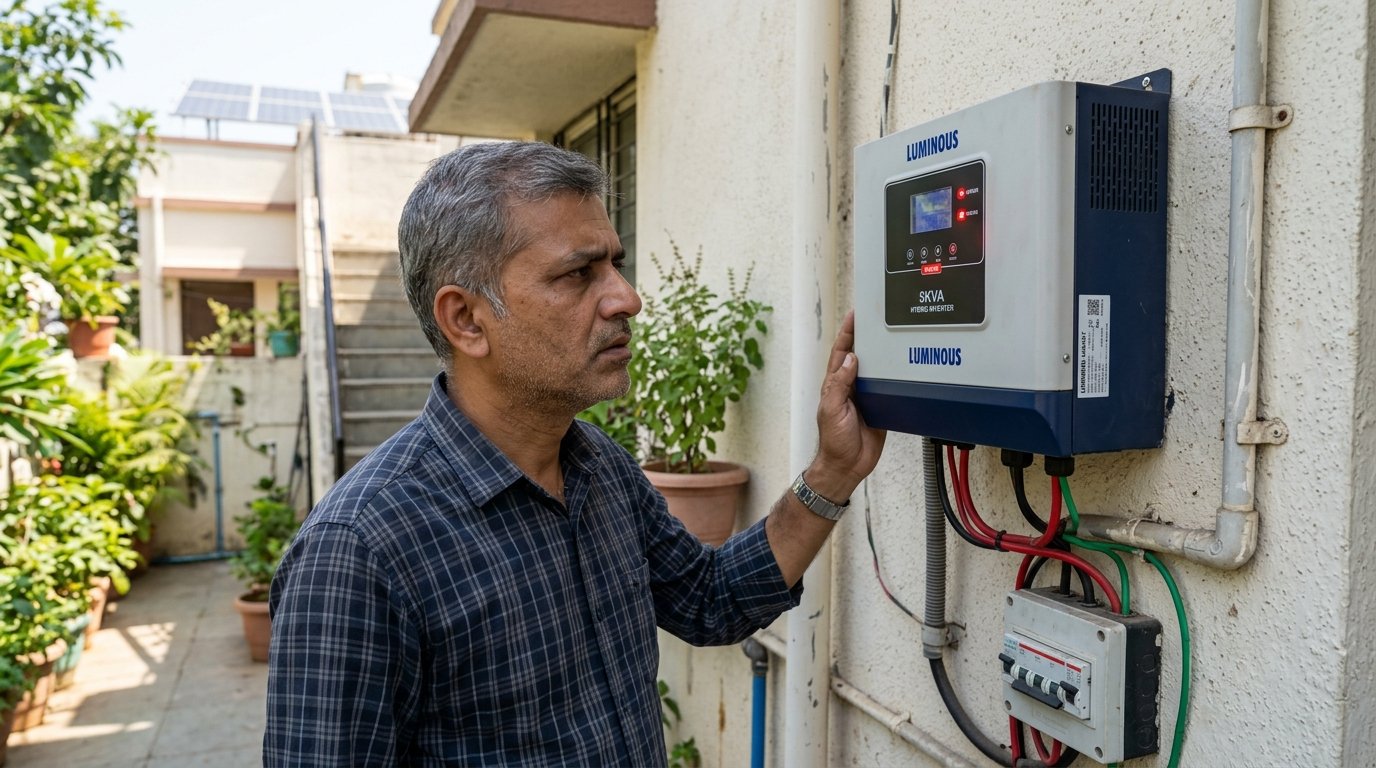
Key Highlights & 30-Second Takeaway
Essential technical & policy facts for solar consumers in India:
- The Cause of Afternoon Tripping: When multiple rooftop solar plants in a neighborhood export power simultaneously onto a thin LT line, the line voltage spikes above 253V, forcing inverters to shut down for grid safety.
- Costly Generation Loss: Inverters trip during peak sunshine hours (12 PM to 2:30 PM), wiping out up to 25% of your daily electricity credits.
- Proven Solutions: Lowering transformer off-load tap switch, increasing AC cable gauge (reducing Ohmic drop), and enabling Volt-VAr reactive power control.
One of the most frustrating issues reported by rooftop solar owners across residential neighborhoods in Maharashtra, Gujarat, Kerala, Punjab, and Uttar Pradesh is afternoon inverter tripping. Your solar system works flawlessly in the morning, but precisely between 12:00 PM and 2:30 PM — when solar radiation is at its peak — the inverter screen turns red, displaying errors like Grid Overvoltage, VAC High, or Error 253V.
This technical guide explains why grid overvoltage occurs on local Low-Tension (LT) distribution lines and provides 5 actionable steps to permanently resolve the issue.
1. Why Does Grid Voltage Spike to 255V+ at Midday?
To push solar power back into the utility grid, the inverter must maintain an output voltage slightly higher than the prevailing grid voltage. When multiple homes on the same local transformer generate excess electricity simultaneously:
- Local power demand drops while solar generation peaks.
- Ohmic resistance in long or undersized service cables creates an artificial voltage rise.
- Once line voltage touches the statutory CEA limit of 253V (230V + 10%), the inverter enters anti-islanding safety mode and disconnects to protect household electronics.
2. The 5 Proven Fixes for Solar Inverter Tripping
Submit an official application to your local junior engineer (JE) to lower the distribution transformer secondary tap by 2.5% to 5% (e.g. from 245V down to 230V base).
Replace thin 4 sq.mm aluminum wires between your inverter and net-meter with 6 sq.mm or 10 sq.mm heavy copper cables to eliminate local resistance voltage buildup.
Modern inverters (Growatt, Solis, Sungrow, Deye, Havells) have dynamic Volt-VAr capability that absorbs reactive power to stabilize line voltage without disconnecting.
Run air conditioners, water pumps, and EV chargers during peak hours to consume power locally before it pushes line voltage over the trip threshold.
⚡ Technical Sizing & Cable Tools:
AC & DC Wire Sizing Calculator Cable Loss Calculator Inverter Sizing Calculator Solar Generation SimulatorFrequently Asked Questions