Solar Panel Anti-Soiling & Hydrophobic Nano-Coatings: Cost vs Generation Gain (2026 Guide)

Solar Technology & Energy Specialist
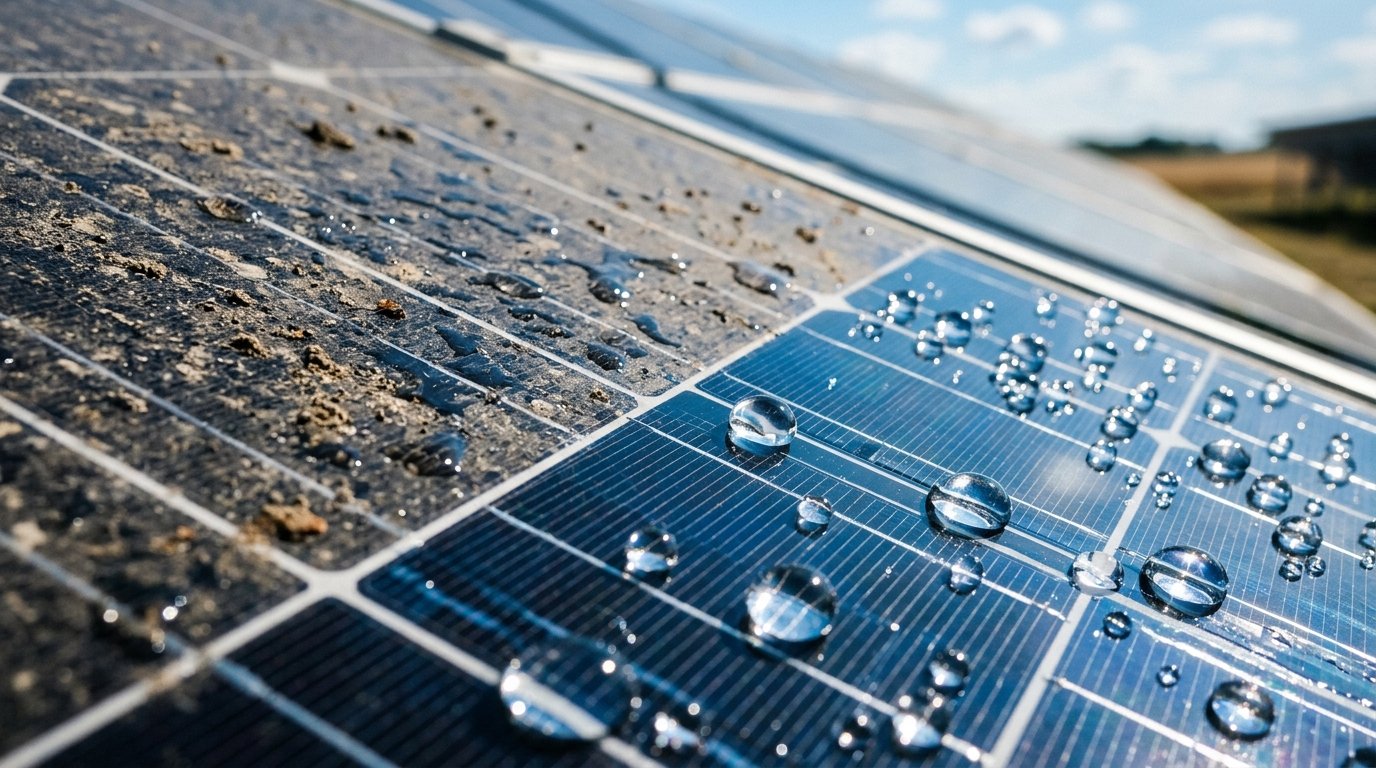
⚡ The Dust Problem in India: In dusty urban centers (Delhi-NCR, Ahmedabad, Jaipur, Kanpur) and industrial mining/cement belts, airborne dust, PM2.5 particulate matter, and bird droppings cause 15% to 30% monthly solar output loss. Hydrophobic and Photocatalytic Nano-Coatings create a microscopic repellent barrier on solar glass, allowing dust to slide off naturally during morning dew and rainfall, slashing manual cleaning frequency by 60% to 70%.
1. Why Solar Soiling is Severe in the Indian Subcontinent
India's tropical climate features long dry spells (October through May) with minimal rainfall. High atmospheric dust density, vehicular emissions, and seasonal agricultural crop burning (stubble burning) deposit sticky organic and inorganic particulate layers on solar panels.
A dusty panel not only loses optical light transmission (reducing kilowatt-hour generation), but partial bird-dropping or leaf soiling creates reverse-biased hot-spots that permanently burn silicon cell bypass diodes.
2. Nano-Coating Technologies: Hydrophobic vs Hydrophilic (Photocatalytic)
| Technology Type | Chemical Mechanism | Water Contact Angle | Best Environment |
|---|---|---|---|
| Hydrophobic Nano-Coating (Silica / Silane based) | Creates a water-repellent lotus-leaf effect; water beads up into spherical droplets that roll down picking up dust particles. | > 105° – 115° (High Water Beading) | Residential rooftops, tilted structures (>10° tilt), moderate rainfall regions. |
| Hydrophilic Photocatalytic (Titanium Dioxide - TiO2) | Under sunlight UV exposure, breaks down organic bird droppings and dirt; water sheets flat across glass, washing dirt away without water spotting. | < 10° – 15° (Complete Water Sheeting) | Industrial factory rooftops, low tilt angles (5°–10°), heavy chemical/oil smoke zones. |
3. Field Performance Data: Coated vs Uncoated Panels in India
| Operating Condition | Standard Uncoated Solar Glass | Nano-Coated Solar Glass | Performance Advantage |
|---|---|---|---|
| 30 Days Without Washing (Dry Season) | -18.5% Output Loss | -4.2% Output Loss | +14.3% More Generation |
| Light Morning Dew / 10 Min Rain | Leaves dirty muddy streaks on glass | Self-cleans 90% of surface dust | Maintains peak generation automatically |
| Manual Washing Frequency Needed | Every 7 to 10 Days | Every 30 to 45 Days | 65% Reduction in Labor & Water Costs |
| Abrasion Resistance (Sand Dust) | Standard ARC coating wears out | 9H Hardness protective silica layer | Prevents glass micro-scratches from dry wiper blades |
4. Cost vs Benefit ROI Analysis for a 100 kW Factory Roof
| Cost & Return Factor | Financial Estimate (100 kW System / 175 Panels) |
|---|---|
| Total Glass Surface Area | ~4,800 sq ft (~450 sq meters) |
| Professional Nano-Coating Application Cost (@ ₹18/sq ft) | ₹86,400 one-time (3-year warranty) |
| Annual Solar Generation Recovered (+12% average yield boost) | 17,500 extra units (kWh) / year |
| Annual Value of Recovered Electricity (@ ₹11.00/unit C&I tariff) | ₹1,92,500 / year |
| Annual Water & Cleaning Labor Cost Savings | ₹35,000 / year |
| Total Annual Financial Gain | ₹2,27,500 / year |
| Simple Payback Period | Under 5 Months! |
5. Application Rules: How to Apply Nano-Coating Correctly
- Deep Decontamination: Clean the panel glass thoroughly using de-ionized RO water and isopropyl alcohol (IPA) to eliminate all oil, silicone, and mineral scale residue.
- Dry & Cool Surface: Apply only during early morning (6 AM to 9 AM) when glass surface temperature is below 30°C. Never apply on hot afternoon glass!
- Microfiber Cross-Hatch Application: Apply the liquid nano-solution using a high-density lint-free applicator pad in horizontal and vertical cross-hatch strokes.
- Curing Time: Allow 2 to 4 hours of natural sunlight curing before any water exposure.
Written by Shraddha
Solar Technology & Energy Specialist at SolarCalculators.in, researching MNRE PM Surya Ghar subsidy regulations, industrial C&I solar models, and renewable engineering across India.