 SolarCalculators
Solar-Powered EV Charging Station with BESS in India: Sizing, Cost & 2026 ROI Analysis
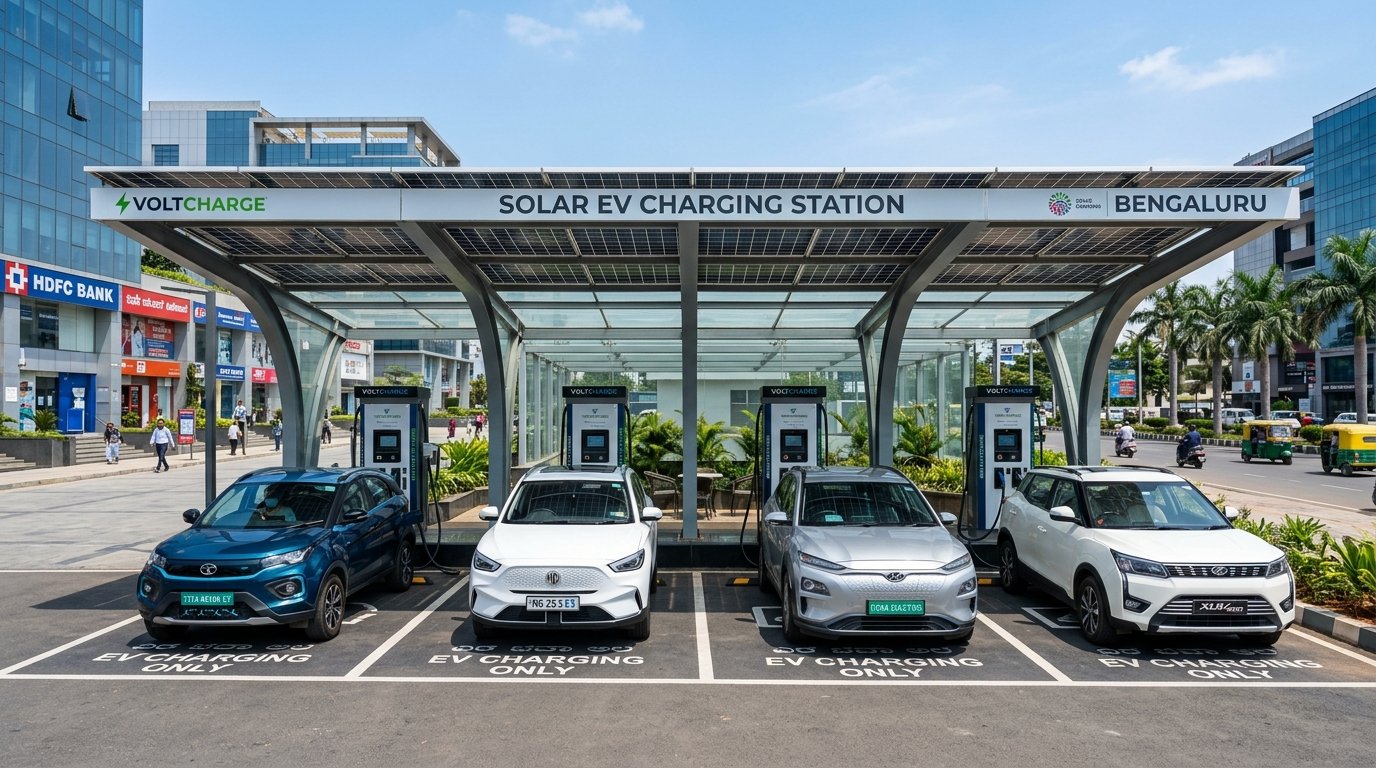
1. The Power Bottleneck of Modern EV Fast Charging
Deploying dual-gun DC Fast Chargers (60 kW, 120 kW, or 240 kW CCS-2) creates massive, spiky electrical demand spikes. When two electric SUVs (e.g., Tata Curvv EV, Mahindra XUV400, or BYD Atto 3) plug in simultaneously, the sudden 120 kW inrush load spikes the facility's instantaneous MDI (Maximum Demand Indicator).
In most Indian DISCOMs (such as MSEDCL, BESCOM, Tata Power, and UPPCL), exceeding your sanctioned load incurs punitive penalties of 150% to 200% of standard fixed demand charges. Solar + BESS serves as a dynamic load buffer—smoothing peak grid draws while supplying green megawatt-hours directly to EV batteries.
| Charger Configuration | Simultaneous Peak Load | Solar Canopy Recommended | BESS Battery Storage | Daily Dispensing Potential |
|---|---|---|---|---|
| 2x 30 kW DC Fast + 2x 7.4 kW AC | 75 kW | 50 kWp | 60 kWh LFP | 350 – 450 kWh / day |
| 2x 60 kW Dual Gun CCS2 | 120 kW | 100 kWp | 120 kWh LFP | 600 – 800 kWh / day |
| 4x 60 kW + 2x 120 kW Bus/Fleet Hub | 360 kW | 250 kWp | 300 kWh LFP | 1,800 – 2,500 kWh / day |
2. System Topology: AC-Coupled vs DC-Coupled Architecture
Designing a high-efficiency solar EV hub requires choosing between AC-coupled or DC-coupled power routing:
- DC-Coupled Architecture: Solar panels generate high-voltage DC (600V–900V DC) and feed directly into the common DC bus of the EV charger through a bi-directional DC-DC buck/boost converter. This eliminates DC-to-AC and AC-to-DC conversion losses, boosting round-trip efficiency by 7% to 9%.
- AC-Coupled Microgrid: Solar strings feed standard grid-tied inverters into a 415V 3-phase AC bus. A central BESS hybrid bi-directional inverter (PCS - Power Conversion System) synchronizes with the grid and EV chargers. This is the preferred configuration for brownfield sites retrofitting existing commercial connections.
3. Peak Shaving & Time-of-Day (TOD) Tariff Optimization
Under the revised Electricity (Promoting Renewable Energy Through Green Energy Open Access) Rules and state TOD tariff structures, peak evening slots (6:00 PM to 10:00 PM) carry a 20% to 25% surcharge over base industrial tariffs, whereas solar hours (9:00 AM to 4:00 PM) receive a solar rebate.
The automated Energy Management System (EMS) executes three primary operational states:
- Direct Solar Charging (09:00 - 15:00): Vehicles plugged in receive 100% direct solar energy. Any excess PV output charges the BESS at zero marginal electricity cost.
- Grid Peak Shaving (17:00 - 22:00): During high customer rush and evening TOD tariffs, the BESS discharges to cap the grid draw strictly below the contract demand limit, completely avoiding demand penalty surcharges.
- Overnight Grid Top-Up (00:00 - 05:00): If winter or monsoon solar generation was insufficient, the EMS charges the BESS during the lowest off-peak tariff window (typically ₹4.50–₹5.20/kWh) for early-morning commuter traffic.
4. Complete CAPEX Breakdown for a 100 kW Solar + 120 kWh BESS EV Hub
| Component / Engineering Work | Specifications | Estimated Cost (₹ Lakhs) |
|---|---|---|
| 100 kWp Bifacial Solar Array | 580W N-Type TOPCon Panels + Elevated Carport Structure | ₹42.00 |
| 120 kWh Lithium BESS | LiFePO4 Chemistry, 1C rating, Liquid Cooled, 6000 cycles | ₹31.50 |
| EV Charging Hardware | 2x 60 kW Dual Gun CCS2 Fast Chargers + 2x 22 kW Type-2 AC | ₹18.00 |
| Electrical Infrastructure & Substation | 160 kVA Transformer, HT/LT Panels, VCB, Dual Source Metering | ₹12.50 |
| Smart EMS & CMS Software Integration | OCPP 2.0.1 compliant Gateway, Dynamic Load Balancing | ₹3.50 |
| Civil, Flooring, Canopy Fabrication & Cabling | Paving, earthing pits, bollards, fire suppression system | ₹8.50 |
| Total Turnkey CAPEX | Comprehensive Turnkey Hub | ₹116.00 Lakhs |
5. Revenue Model & Payback Period
Assuming an average dispensing rate of 700 kWh/day at a consumer tariff of ₹18.00/kWh (standard highway commercial rate across India):
- Gross Annual Revenue: 700 kWh/day × 365 days × ₹18/kWh = ₹45.99 Lakhs
- Blended Cost of Energy: Solar supplies ~450 kWh/day @ ₹2.20/kWh (LCOE), Off-peak grid supplies ~250 kWh/day @ ₹7.50/kWh = Blended ₹4.09/kWh
- Annual Energy Procurement Cost: 255,500 kWh × ₹4.09 = ₹10.45 Lakhs
- Annual O&M, Insurance & CMS Network Fee: ₹4.50 Lakhs
- Net Annual Operating Profit (EBITDA): ₹45.99L - ₹10.45L - ₹4.50L = ₹31.04 Lakhs/year
- Simple Payback Period: ₹116.00L ÷ ₹31.04L = ~3.7 Years
When factoring in the 40% accelerated tax depreciation in Year 1 for commercial corporate entities under Section 32 of the Income Tax Act, the post-tax payback drops to under 3.1 years.