 SolarCalculators
Solar Telecom Tower Hybrid Microgrids: DG Diesel Offset & 2-Year Payback 2026
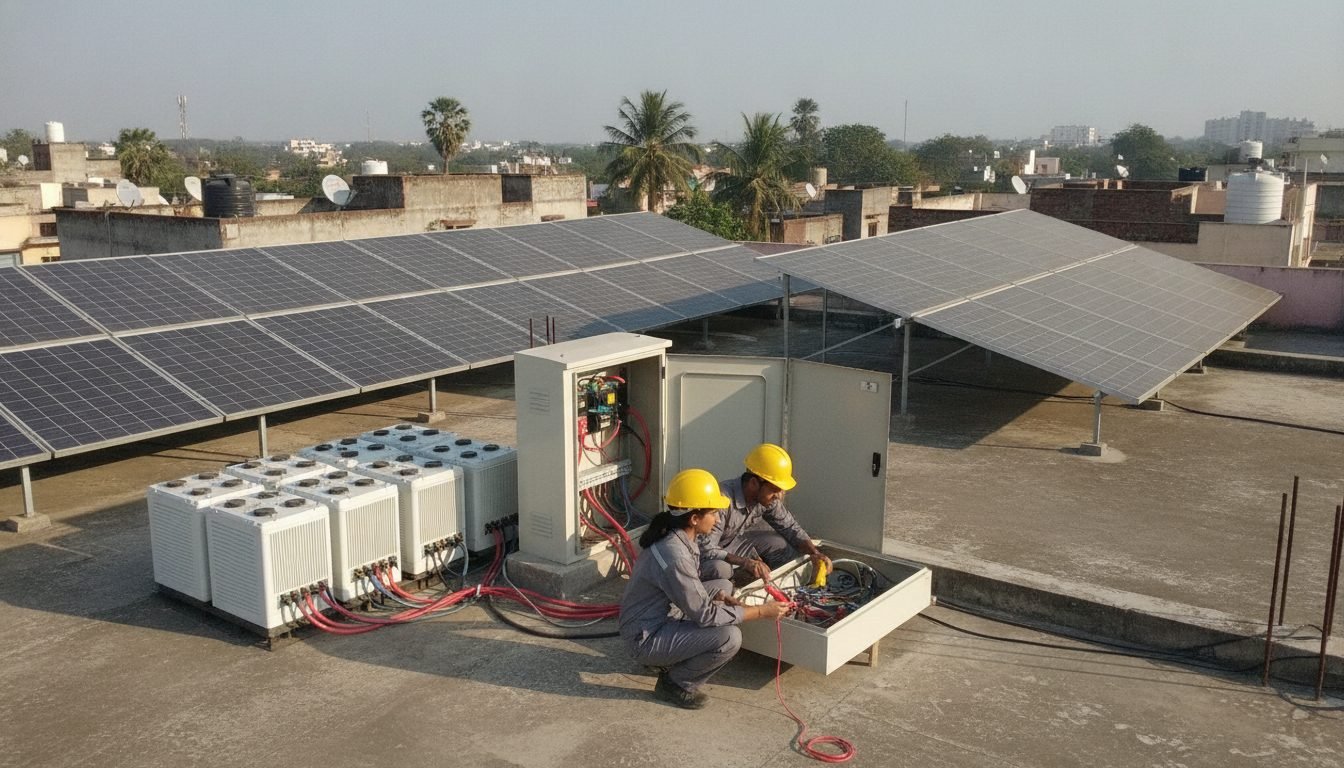
⚡ The Telecom Energy Challenge: India operates over 750,000 telecom towers powering 4G and 5G networks across the country. In rural and semi-urban geography, towers face 8 to 16 hours of daily grid power cuts, forcing telecom tower companies (Indus Towers, ATC India, Summit Digitel) to burn over 600 to 1,000 liters of diesel every month per site. Installing a 6 kW to 12 kW Solar PV system directly integrated into the -48V DC telecom bus with Lithium LiFePO4 batteries cuts diesel consumption by 75% to 85%, delivering a capital payback in under 22 months.
1. Base Transceiver Station (BTS) Load Architecture
Modern 4G/5G telecom shelters house Baseband Units (BBU), Remote Radio Heads (RRH), microwave backhaul links, and shelter air conditioners. Unlike standard buildings, telecom infrastructure operates strictly on a -48V DC negative-ground power bus:
| Equipment Type | Operating Voltage | Continuous Power Draw | Duty Cycle |
|---|---|---|---|
| 4G / 5G BBU & RRH Radios | -48V DC | 1,800W – 3,200W | 24 Hours (Mission Critical) |
| Microwave Backhaul Link | -48V DC | 150W – 300W | 24 Hours (Continuous Transmission) |
| DC Inverter Air Conditioner (Free-Cooling) | -48V DC or 230V AC | 800W – 1,500W | Thermostatic (Cycles above 32°C) |
| Total Continuous Load | -48V DC | 2,800W – 4,500W (~3.5 kW avg) | ~84 kWh / day energy requirement |
2. System Topology: DC-Coupled Solar Integration
Traditional setups fed solar AC power through standard inverters into the AC input of the telecom rectifier, incurring multiple conversion losses (DC to AC, then AC back to DC). Modern high-efficiency telecom sites deploy DC-Coupled Solar Architecture:
- Modular 48V MPPT Solar Chargers: Solar strings (operating at 150V–300V DC) connect directly to hot-swappable 48V/50A modular MPPT rectifier slots inside the existing power plant rack (e.g., Delta, Vertiv, Eltek).
- 98% Conversion Efficiency: Power flows directly from solar panels to the -48V DC bus and battery bank with only a single conversion step, delivering 8% to 12% higher overall efficiency than AC-coupled solar.
- Remote SNMP Telemetry: MPPT modules communicate with the Site Automation Controller (SAC) via RS-485 / CANbus, transmitting real-time PV generation, battery state-of-charge (SOC), and diesel generator fuel level to central Network Operating Centers (NOC).
3. LiFePO4 Lithium Batteries vs Legacy Lead-Acid VRLA
Replacing bulky 2V VRLA lead-acid battery banks with 48V 100Ah/150Ah Lithium Iron Phosphate (LiFePO4) modules transforms site operational economics:
| Battery Parameter | VRLA Lead-Acid (2V / 500Ah Bank) | LiFePO4 Lithium (48V / 300Ah Bank) |
|---|---|---|
| Cycle Life (at 80% DOD) | 1,200 – 1,500 Cycles | 4,500 – 6,000 Cycles (3x longer life) |
| High-Temperature Tolerance | Degrades rapidly above 27°C (requires 24x7 AC cooling) | Operates up to 50°C without air conditioning |
| Round-Trip Efficiency | 75% to 80% | 95% to 98% |
| Charge Acceptance Rate | Slow (8–10 hours required for full charge) | Fast Charge (1.5 to 2.5 hours full recharge) |
4. Complete CAPEX & Diesel Offset Economics (10 kW Solar + 15 kWh LFP)
| Financial & Operational Parameter | Conventional DG + Grid Site | Solar + Lithium Hybrid Site |
|---|---|---|
| Solar PV Installed | Nil | 10 kWp (Elevated on shelter roof / tower compound) |
| Storage Capacity | 48V 400Ah VRLA | 48V 300Ah LiFePO4 (15.36 kWh) |
| Turnkey Solar Retrofit Cost | ₹0.00 | ₹6,80,000 (₹6.80 Lakhs) |
| Daily DG Run Hours (Average) | 12 Hours / day | 1.5 Hours / day (Overcast / monsoon top-up only) |
| Monthly Diesel Consumed (@ 2.5 L/hr) | 900 Litres / month | 112 Litres / month (87.5% Diesel Reduction) |
| Monthly Fuel Cost (@ ₹92/Litre) | ₹82,800 / month | ₹10,304 / month |
| Monthly Diesel Savings | Baseline | ₹72,496 / month (₹8.70 Lakhs / year) |
| Simple Payback Period | N/A | 9.3 Months (< 1 Year Payback!) |